

What Is Located Beneath Soil Layers: A Complete Guide
What is located beneath soil layers is a question that matters far more than most Houston homeowners realize. The ground beneath your home is not just dirt. It is a complex, layered system that directly influences the stability, strength, and long-term health of your foundation. Understanding what lies beneath the surface helps you make smarter decisions about your property, especially in a region like Houston where expansive clay soils are notorious for causing foundation movement.
If you have ever wondered about drainage issues, soil shifting, or foundation settling, you may want to start by reading our guide on
landscaping around your house to prevent water because the layers underground play a major role in how water moves around and beneath your home.
The Soil Profile: What Lives Underground
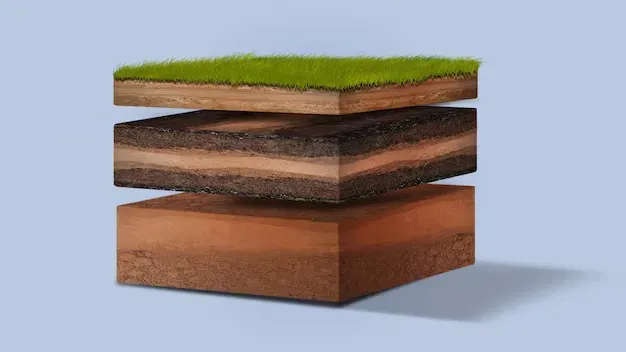
Scientists and engineers use the term soil profile to describe the complete vertical cross-section of the ground from the surface all the way down to solid rock. Each distinct layer within this profile is called a soil horizon. These horizons differ from one another in color, texture, chemical composition, and biological activity. Together, they tell the full story of the earth beneath your feet.
The table below gives you a quick overview of every horizon, what it contains, and why it matters for your foundation before we explore each one in detail.
| Soil Horizon | Common Name | Primary Composition | Foundation Relevance |
|---|---|---|---|
| O Horizon | Organic Layer | Decomposed leaf litter, humus | Minimal direct impact; affects surface drainage |
| A Horizon | Topsoil | Humus and mineral particles | Affected by drought and flooding; drives surface moisture |
| E Horizon | Leaching Layer | Sand, silt, quartz particles | Influences downward water movement through the profile |
| B Horizon | Subsoil | Clay, iron oxides, calcium carbonate | Primary driver of foundation movement in Houston |
| C Horizon | Parent Material | Partially weathered rock fragments | Transition zone used in deep pier anchoring |
| R Horizon | Bedrock | Solid igneous, sedimentary, or metamorphic rock | Most stable layer; ultimate anchor point for deep piers |
O Horizon: The Organic Layer
The O horizon sits at the very top of the soil profile. It is made up of decomposing organic material including fallen leaves, dead plant matter, and humus. While it is relatively thin in most environments, it plays a key role in nutrient cycling and surface water absorption. In many Houston yards, this layer is minimal due to landscaping, concrete coverage, and regular ground maintenance. Although it has little direct bearing on your foundation, it does influence how quickly rainwater infiltrates or runs off the surface, which in turn affects the moisture levels in the layers below.
A Horizon: Topsoil
Just below the organic layer is the A horizon, commonly called topsoil. This is the dark, rich layer where seeds germinate, grass roots anchor, and most biological activity takes place. It contains a mix of humus and mineral particles and is typically 2 to 8 inches deep in most residential settings. In Houston's climate, this layer can expand and contract significantly depending on moisture levels. While topsoil itself is not the most structurally significant layer, its ability to absorb and hold water directly influences how much moisture reaches the more problematic clay-rich layers beneath it.
E Horizon: The Leaching Layer
The E horizon is a transitional layer found beneath the topsoil in older soils and forested environments. It is lighter in color and lower in organic content because nutrients and clay particles have been washed downward by water movement over long periods of time. What remains is mostly sand, silt, and quartz particles. Not all soil profiles contain this layer, and it is more commonly found in forest soils than in typical urban or suburban settings. When present, it affects how water drains through the ground profile and how quickly moisture reaches the subsoil below.
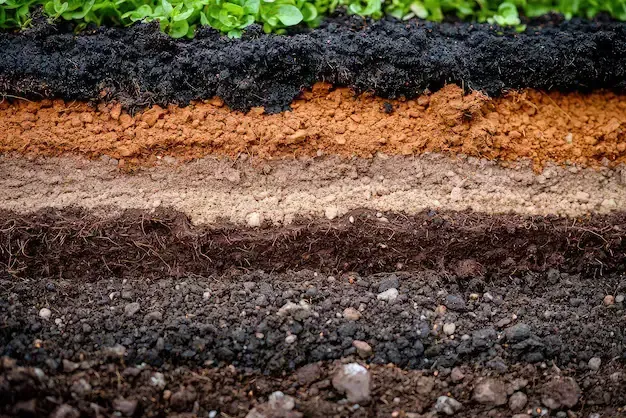
B Horizon: Subsoil
The B horizon, or subsoil, is one of the most important layers when it comes to foundation performance. This layer is rich in minerals including iron, aluminum oxides, and calcium carbonate that have migrated down from the layers above over thousands of years. It often carries a brownish or reddish tint from iron oxidation. The subsoil holds a high concentration of clay minerals, which is why it is especially relevant in Houston. Clay-rich subsoils absorb water and expand considerably when wet. When they dry out during the summer months, they shrink and pull away. This cyclical movement is one of the primary reasons Houston foundations shift, settle, and crack over time.
C Horizon: Parent Material
Beneath the subsoil lies the C horizon, sometimes called regolith or parent material. This layer consists of partially broken down rock that has been slowly weathered over thousands of years through temperature changes, moisture cycles, and glacial activity. Plant roots generally do not penetrate this layer, and organic material is virtually absent at this depth. The C horizon is the raw geological material from which the upper soil layers were originally formed. In foundation engineering terms, it represents a transitional zone between the biologically active upper layers and the solid bedrock below. Depending on its compaction and density, it can sometimes provide a reliable base for foundation pier systems.
R Horizon: Bedrock
The deepest layer in the soil profile is the R horizon, or bedrock. This is solid, unweathered rock such as granite, limestone, sandstone, basalt, or quartzite depending on the region. Bedrock has not been significantly altered by weathering and does not contain soil in the traditional sense. It is the ultimate foundation of the earth's surface and the most stable, load-bearing material available underground. When bedrock is close enough to the surface, it can serve directly as a base for construction. In Houston, bedrock lies considerably deeper underground, which is why the soil conditions in the upper layers matter so much for the long-term health of residential and commercial foundations.
Why These Layers Matter for Your Home's Foundation
Understanding what is located beneath soil layers is not just an academic exercise. It has direct, practical implications for homeowners across the Greater Houston area. The depth, composition, and moisture content of each horizon determine how well the ground can support the weight of a structure over time.
In Houston specifically, the B horizon's high clay content is the dominant factor behind most foundation problems. Clay soils classified scientifically as Vertisols swell significantly when wet and shrink when dry. As the seasons shift from rainy periods to dry Texas summers and back again, foundations built on these soils experience constant upward and downward pressure. Over time, this leads to slab cracking, uneven floors, sticking doors and windows, and visible wall separations throughout the home.
The deeper C horizon and R horizon are less problematic on a day-to-day basis but become critically important when deep foundation repair solutions such as piers are needed. Piers must reach stable, compacted soil or bedrock to effectively transfer the weight of your home away from the unstable upper layers that shift with moisture changes. If you are already seeing signs of foundation movement, our residential foundation repair services are designed to address exactly these kinds of soil-driven issues, from slab leveling to deep pier installation that anchors your home in stable ground far below the active clay zone.
The Role of Moisture in Soil Layer Behavior
Moisture is the single most important variable in how soil layers interact with your foundation. Water infiltrates from the surface through the O and A horizons, moves through the E horizon where present, and accumulates in the clay-dense B horizon below. When the B horizon becomes saturated, the clay swells and pushes upward on your concrete slab. During dry Texas summers, that same clay layer contracts and pulls away from the foundation edges, creating voids that allow the slab to shift downward unevenly.
This is why proper drainage management around your home is not optional in Houston. Water that pools near the foundation or drains toward the structure rather than away from it accelerates the expansion and contraction cycle and speeds up foundation damage considerably. Managing surface grade, gutters, and downspout extensions are all critical steps in protecting the underground soil environment surrounding your home.
What Lies Even Deeper: Bedrock and Foundation Engineering
While most homeowners focus on topsoil and subsoil, the R horizon plays a crucial role in major construction projects and deep foundation repair work. Bedrock is composed of igneous, sedimentary, or metamorphic rock that has remained largely unchanged for millions of years, making it the most reliable load-bearing material available anywhere underground.
In foundation engineering, reaching stable rock or highly compacted soil far below the active clay layers is the goal of deep pier systems. Steel pressed piers and helical piers are driven through the unstable upper horizons until they make contact with this denser, more reliable material. This anchors the foundation securely against further movement caused by clay expansion and contraction in the soil horizons above.

How Soil Layers Vary Across Houston
Houston sits atop a geological region with particularly thick clay deposits in the upper soil horizons. The expansive nature of these clays is well-documented and is the primary reason foundation repair is so prevalent across the Greater Houston area from Sugar Land to The Woodlands and from Pearland to Katy.
The exact depth and composition of each soil layer varies by neighborhood and individual lot. Low-lying areas near bayous typically have waterlogged soils with poor natural drainage, while elevated areas may have slightly better-draining conditions. Regardless of location, the presence of clay-rich subsoil across the region means virtually every Houston home faces some level of risk for foundation movement over time, particularly during prolonged dry spells or heavy seasonal rainfall.
Final Thoughts
What is located beneath soil layers is a story written in geology, water, minerals, and time. For Houston homeowners, it is also the story of your foundation. The more you understand about how these underground layers behave, the better equipped you are to recognize problems early and take action before they become expensive structural repairs.
At Two Brothers Foundation Repair, we have spent over 20 years working with Houston's unique soil conditions. Whether you are seeing early warning signs or dealing with significant foundation damage, our expert team is ready to evaluate your property and recommend the right solution. Contact us today for a free inspection and a fully transparent assessment.