


Let Two Brothers Keep Your Soil From Shrinking Away
Foundation Watering Systems in Houston, Texas
☼
Watering Your Foundation Sounds Strange Until You Understand Houston Clay
Most drainage work is about getting water away from your house. Foundation watering is the opposite, and both are correct, because the enemy in Houston is not water. It is change.
Our clay swells when it takes on water and shrinks when it dries out. A slab sitting on soil that goes from saturated in May to cracked and pulling away in August moves twice a year, every year. That repetition is what opens cracks and racks door frames.
Watering evens out the extremes. Rather than letting the soil around your slab dry hard and shrink away, a watering system keeps its moisture level roughly steady through a Houston summer.
Want a system set up before the next dry season? Call 832-710-6957 for a free assessment.
Why Houston Homeowners Call Two Brothers
- 20+ years watching Houston clay move under real houses
- A+ BBB accredited and fully insured
- Prevention, not just repair, and we say when you do not need us
- Free written assessment, no obligation and no pressure
- Licensed structural engineers on the projects that need them
- We check drainage too, because watering a wet side of the house is wrong
Prefer to write? Use the contact form and we will call you back.
The Cycle Is the Problem, Not the Dryness
This is the idea the whole service rests on, and it is worth getting straight before you spend anything.
A foundation sitting on permanently damp clay is not in much danger. A foundation sitting on permanently dry clay is not in much danger either. Both are stable conditions, and a house can sit on either for decades.
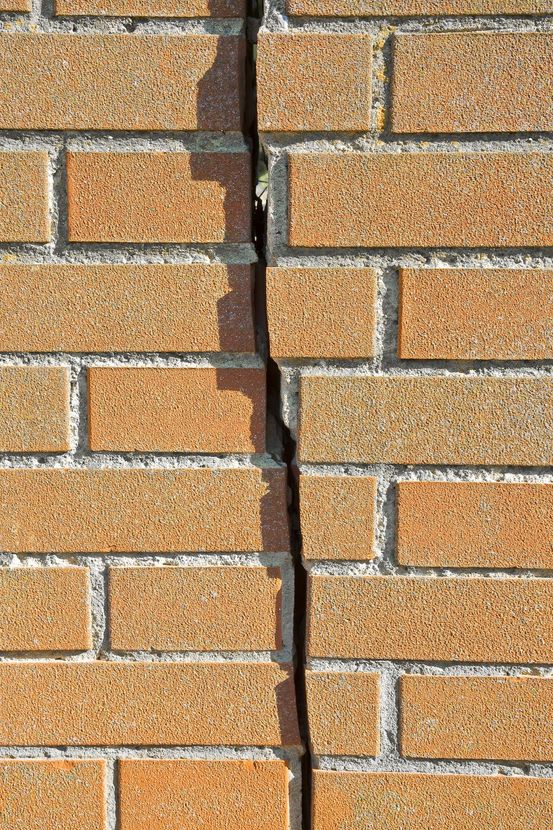
What damages foundations is the journey between the two. Clay expanding in spring lifts sections of your slab. The same clay contracting in August drops them. Concrete does not bend, so it cracks, and the cracks do not close back up when the soil returns.
Houston delivers that cycle reliably every year, and drought summers deliver it hard. A foundation watering system does not make the soil wet. It reduces how far the soil swings, which reduces how far your foundation moves.
Signs Your Foundation Needs Watering
Most of these show up in the height of a Houston summer and ease off after the first serious rain, which is exactly the pattern that identifies them.
Soil Pulling Away From the Slab
A visible gap between the ground and your foundation, sometimes wide enough to drop a coin into. The clearest sign the clay has shrunk and stopped supporting the edge of your slab.
Free structural assessment ›Cracks That Open in Summer and Close in Winter
Seasonal cracking is the signature of moisture cycling. If your doors stick every August and free up by December, the soil under your house is doing exactly what watering is meant to moderate.
Cracked foundation repair ›Deep Cracks Opening in the Yard
When you can see fissures in the lawn or beds during a dry spell, the same shrinkage is happening under your slab where you cannot see it.
Yard drainage systems ›Large Trees Close to the House
A mature tree draws a great deal of moisture out of the soil, and it does it on one side of the house. That creates uneven drying, which is the most damaging kind.
Root barrier installation ›You Have Already Had Foundation Repair
Piers stabilize the sections they support. The soil around the rest of the house keeps cycling. Watering protects the investment you already made.
Residential foundation repair ›One Side of the House Drier Than the Other
Sun exposure, a driveway on one side, or a tree on the other. Uneven soil moisture around a slab produces uneven movement, which is worse than uniform dryness.
Foundation drainage solutions ›Seeing these patterns? A system is far cheaper than the repair it is meant to avoid.
Call 832-710-6957Too Dry, Too Wet, or About Right
Both extremes cause damage, and they look different. Knowing which way your soil is going tells you whether you need watering or drainage.
| Factor | Soil Too Dry | Soil Too Wet | Consistent |
|---|---|---|---|
| What the clay does | Shrinks and pulls away | Swells and pushes up | Stays roughly stable |
| Effect on the slab | Loses support, settles | Lifted unevenly, heaves | Minimal movement |
| Visible outside | Gap at the slab, cracks in the yard | Standing water, soggy ground, mud | Ground meets the slab evenly |
| Season it appears | Late summer and drought | Spring and after heavy rain | Year round |
| What it needs | A watering system | Drainage correction | Maintain what you have |
| Common mistake | Ignoring it until cracks appear | Adding a watering system on top | Assuming it will stay that way |
Plenty of Houston homes are too dry on one side and too wet on another. That is why we walk the whole perimeter before recommending anything.
Our Foundation Watering System Process
Free On-Site Assessment
We walk the full perimeter, look at soil condition on every side, note trees, sun exposure, hardscaping, and where drainage already puts water. Written proposal, no obligation.
Checking Drainage First
Adding water to a side of the house that already stays wet makes things worse, not better. Where drainage problems exist, those get identified before any watering is designed. See our foundation drainage solutions.
Designing the Layout
Line placement set back from the slab rather than against it, routed around obstacles, and zoned so that drier sides can be watered differently from damper ones.
Installation
Soaker or drip line installed at a consistent set-back and depth, connected to a supply, with a timer so the schedule runs whether or not anyone remembers it.
Setting the Schedule
Short, frequent, consistent watering rather than occasional soaking. We set a starting schedule and explain how to adjust it through the seasons and during water restrictions.
Follow-Up and Adjustment
We check performance after installation and adjust. If you have had foundation work done, see our process for how watering fits alongside it.
You Can Absolutely Overwater a Foundation
This is the part that almost nobody selling foundation watering tells you, and it is the reason a badly run system can do real damage.
The logic that gets people into trouble is understandable: if dry soil shrinking away is bad, then wet soil must be good, so more water must be better. It is not.
Saturated clay swells with enormous force and pushes upward against your slab. That is heave, and it damages foundations just as effectively as settlement does. It simply does it in the other direction.
The two most common ways homeowners cause this themselves are running a hose right up against the slab, which concentrates water in one narrow band, and switching the system on hard during a drought scare after months of nothing, which delivers exactly the sudden swing the system was supposed to prevent.
Which is why a foundation watering system is a consistency device, not a volume device. Short, regular, evenly distributed, set back from the slab, and adjusted through the year. Done that way it protects the house. Done as an occasional deluge, it becomes another source of the cycling you were trying to stop.

Watering Prevents Movement. It Does Not Reverse It.
Worth being direct about this, because it is where expectations most often go wrong.
A watering system reduces how far your soil swings, which reduces future movement. What it will not do is lift a foundation that has already settled, close cracks that have already opened, or put right damage that happened over the last decade.
If your foundation has already moved, watering is what you do after the repair, not instead of it. Piers stabilize what has settled. Watering protects the rest of the house and the work you just paid for.
There is also a case where watering is simply the wrong service. If the soil around your slab is staying wet, adding more water is actively harmful, and what you need is drainage.
We will tell you which of those you are looking at during the assessment, including when the answer is that your soil is fine and you do not need a system at all.
Five Myths About Foundation Watering
This service confuses people more than any other on our list, because it appears to contradict everything else a foundation company tells you about water.
Water is bad for foundations, so watering must be wrong
Water arriving in the wrong place is bad. Pooling against the slab, roof runoff dumped at the corner, a leaking line underneath. Controlled, even moisture that stops the clay drying out and shrinking away is a different thing entirely. Drainage and watering are not contradictory, they are the same goal from opposite directions: keep soil moisture steady. The unifying idea: stability, not dryness.
Put the hose right against the foundation
One of the most common self-inflicted problems. Water applied in a narrow band tight against the slab saturates that strip while the soil further out stays dry, producing exactly the uneven condition you are trying to avoid, and risking heave right at the edge. Lines are set back from the slab, not against it. Also avoid: letting the line sit under mulch where you cannot see whether it is working.
Water heavily when it gets really dry
This is the cycle, reproduced deliberately. Months of nothing followed by a heavy soak takes soil from shrunken to swollen in days, which is a bigger swing than the drought would have caused on its own. Consistency is the entire point. A little, often, on a timer, beats a lot occasionally when someone remembers. Practical answer: a timer, because human memory is the weak link.
My sprinklers already handle it
Lawn irrigation is designed to wet grass roots across an open area, on a schedule set for turf health. It is usually not reaching the soil at the foundation perimeter, and where it does, coverage is uneven around the house. The two systems have different targets and different schedules. Worth checking: is the soil at your slab damp after an irrigation cycle? Often it is not.
Watering will fix my existing cracks
It will not. Watering reduces future movement, but it does not lift a settled slab or close cracks that have already opened. Where damage exists, the repair comes first and watering protects it afterward. Anyone selling watering as a cure for existing settlement is overselling it. Right sequence: assess, repair if needed, then maintain with watering.
Foundation Watering System Options
From the simplest arrangement to a fully automated one, and where each makes sense.
| Option | How It Works | Suits You If |
|---|---|---|
| Manual soaker hose | Hose laid at a set-back, turned on by hand | Budget-led, and you are genuinely consistent |
| Timer-controlled soaker | Same, with a timer running the schedule | Most homes. Removes the memory problem |
| Drip line system | Emitters delivering measured flow along the run | More even distribution, better control |
| Zoned system | Separate control for different sides of the house | Sun, trees, or paving make sides behave differently |
| Buried line | Line installed below the surface rather than laid on top | You want it out of sight and out of the mower's way |
| Sensor-assisted | Soil moisture readings inform the schedule | You want the schedule to respond to conditions |
Most Houston homes are well served by a timer-controlled system, zoned where one side of the house dries out faster than the others.
What Affects Foundation Watering System Cost
This is one of the least expensive items on our services list, and it is preventive rather than corrective, which is an unusual and good combination.
The main driver is perimeter length and how many zones the house needs. A rectangular house with uniform conditions is a simple run. A house with a shaded north side, a paved south side, and a mature oak at one corner needs a more considered layout.
- Perimeter length to be covered
- Number of separately controlled zones
- Line type, from soaker hose through to drip and sensor-assisted systems
- Whether the line is surface laid or buried
- Timer and controller specification
- Obstacles to route around, such as patios, walkways, and beds
- Water supply connection points available
- Whether drainage correction is needed first on any side
Worth factoring in separately: the ongoing water usage, and the fact that Houston area water restrictions can affect when systems may run. We cover both at the assessment so there are no surprises on the first bill.
Every assessment and written estimate is free. If financing would help, we offer payment plans.
Six Questions to Ask Before You Install One
A badly designed watering system can hurt a house. These questions separate a considered install from a hose laid in a flowerbed.
Have you checked whether any side of my house is already too wet?
Adding water where drainage is already failing makes things worse. A contractor who walks the whole perimeter before designing is doing it properly.
How far back from the slab will the line sit?
Not against it. Water applied tight to the foundation concentrates moisture in a narrow band and can cause heave at the edge. Ask for the set-back and why.
Will it be zoned?
If one side of the house has a tree and another has a driveway, they will not need the same schedule. A single zone for the whole perimeter overwaters somewhere and underwaters somewhere else.
What schedule are you setting, and how do I adjust it?
You want short and frequent rather than occasional and heavy. Ask for a starting schedule in writing and guidance on adjusting through the seasons.
What happens during water restrictions?
Restrictions are a fact of life here. A contractor who has not raised it has not thought about how the system will actually run in a drought year.
Do I actually need this?
The question worth asking outright. If your soil stays reasonably stable and drainage is sound, a system may be unnecessary. An honest answer to this tells you a lot about who you are dealing with.
We are happy to answer all six on the phone, including the last one.
Call 832-710-6957For Property Managers, HOAs, and Portfolio Owners
Across a portfolio, foundation movement is a predictable, recurring capital expense driven largely by one variable you can influence cheaply.
Watering systems are among the lowest-cost preventive measures available on a building, and unlike most maintenance they act on the cause rather than the symptom. On sites where several units have already needed foundation work, they protect that spend.
We assess whole sites in one visit and provide written documentation showing which buildings show drying stress, which need drainage instead, and what a phased program would look like across a budget cycle.
Call 832-710-6957 to Discuss a Property
Residential and Commercial Foundation Watering
Every slab in Houston sits on the same clay. We handle both property types.
Residential
Single family homes and townhomes, particularly those with mature trees, previous foundation repair, or a history of seasonal cracking. See our residential foundation repair services.
Commercial
Apartment complexes, retail, offices, and institutional buildings where foundation movement across multiple structures is a recurring capital cost. See our commercial foundation repair services.
Two Bros Foundation Repair Service Areas
Foundation watering systems available across the Greater Houston area. Click any location to learn more about our foundation repair services in that area.
- Houston
- Sugar Land
- Katy
- Pearland
- League City
- Spring
- The Woodlands
- Conroe
- Cypress
- Tomball
- Humble
- Kingwood
- Friendswood
- Missouri City
- Pasadena
- Baytown
- Clear Lake
Water restrictions vary between municipalities and utility districts across the metro. We confirm what applies at your address.
View All Service AreasClient Testimonials: What Our Customers Are Saying
Good experience with Two Brothers Foundation repair! The team was very professional and very polite. They answered all my questions, and the working crew did a good job cleaning up the dirt that was dug out. I'd definitely recommend them to anyone asking for a good, reputable foundation repair company!
I had Two Brothers repair my home's foundation back in 2018, and it has had no problems since, now 7 years later. They were quick to answer even now as I look to sell the property and transfer the service. Would recommend to anyone who needs their foundation repaired.
Aaron & Jacob were very professional and walked me through the entire process. They made sure I was informed at each step and made sure they left the work area in an excellent condition when completed. Glad to be back on a level foundation again.
Related Foundation Services in Houston
Watering handles one half of soil moisture. These handle the other half and the damage already done.
Root Barrier Installation
Where a mature tree is drawing moisture out from under one side of your slab, a barrier addresses the cause directly.
Learn more ›Foundation Drainage Solutions
The opposite problem. Where soil stays too wet, watering is wrong and drainage is right.
Learn more ›Structural Foundation Assessments
Free elevation survey establishing whether seasonal movement has already caused measurable change.
Learn more ›House Leveling and Lifting
Where the soil cycle has already settled part of the house, watering comes after the repair.
Learn more ›Gutter and Downspout Drainage
Roof runoff is the uncontrolled version of watering, delivered in the wrong places at the wrong times.
Learn more ›Cracked and Leaking Foundation Repair
For cracks the seasonal cycle has already opened in your slab.
Learn more ›Frequently Asked Questions (FAQs)
Still have questions about foundation watering systems? See some of our frequently asked questions below or contact us today.
Why would I water my foundation?
Because Houston clay shrinks when it dries out, and shrinking clay pulls away from your slab and removes support. That causes settlement. A watering system keeps soil moisture around the foundation reasonably steady through a dry summer, so the ground swings less and the foundation moves less. The goal is stability rather than wetness.
Can you overwater a foundation?
Yes, and it causes real damage. Saturated clay swells with considerable force and pushes upward against the slab, which is heave. That damages a foundation just as effectively as settlement, in the opposite direction. The two most common causes are running a line tight against the slab and switching a system on heavily during a drought scare after months of nothing.
How far from the foundation should the line be?
Set back from the slab rather than against it, so moisture spreads through the soil supporting the foundation instead of concentrating in a narrow band right at the edge. The right distance depends on your soil, grading, and landscaping, which is why we set it during the assessment rather than applying a single number to every property.
How often should a foundation watering system run?
Short and frequent beats long and occasional, because consistency is the whole point. A schedule that delivers a modest amount regularly holds soil moisture steady, whereas heavy watering after a long gap recreates the swing you are trying to avoid. We set a starting schedule and explain how to adjust it seasonally.
Will my sprinkler system do the same job?
Usually not. Lawn irrigation is designed to wet turf across an open area on a schedule set for grass health, and it frequently does not reach the soil at the foundation perimeter, or reaches it unevenly around the house. Check whether the ground at your slab is actually damp after an irrigation cycle. Often it is not.
Will watering fix my existing foundation cracks?
No. Watering reduces future movement but does not lift a settled slab or close cracks that have already opened. Where damage exists, the repair comes first and watering protects it afterward. Anyone selling watering as a cure for existing settlement is overselling it.
What about water restrictions?
Restrictions vary between municipalities and utility districts across the Houston area and can change during drought. Because foundation watering uses modest amounts on a regular schedule rather than heavy irrigation, it is often more manageable under restrictions than lawn watering, but you should confirm the rules that apply at your address. We raise this at the assessment.
Do I need a system if I have already had foundation repair?
It is worth considering. Piers stabilize the sections they support, but the soil around the rest of the house keeps cycling seasonally. Maintaining more consistent moisture reduces stress on both the repaired and unrepaired portions, which protects the work you have already paid for.
Do you offer free foundation watering assessments?
Yes. We walk the full perimeter, check soil condition on every side, note trees, sun exposure, and existing drainage, and tell you whether watering, drainage, or nothing at all is what your property needs. Written proposal at no cost and no obligation. Call 832-710-6957.
Still have questions?
Still have questions about protecting your foundation through Houston's dry season? Give us a call or fill out the form on our contact page.
Contact us