


Let Two Brothers Support What Is Not Built Yet
Helical Pier Installation in Houston, Texas
☼
Is Your Retaining Wall Leaning, Cracking, or Bulging?
A leaning retaining wall is not a cosmetic problem. It is a structural failure already in progress, and the pressure behind it only increases with every Houston rain.
Most retaining wall repair in Houston is quoted by landscapers who build walls. We are a foundation company. We look at what the soil is doing, why the wall is losing the argument with it, and whether your home's foundation is at risk from the same movement.
Seeing lean, cracks, or soil pushing through the face? Call 832-710-6957 for a free on-site assessment.
See our full range of residential foundation repair services, or our foundation drainage solutions, which address the water pressure that causes most wall failures.
Why Houston Property Owners Call Two Brothers
- 20+ years working in Houston's expansive clay
- A+ BBB accredited and fully insured
- Structural, not decorative. We assess soil and load, not just appearance
- Free written assessment, no obligation and no pressure
- Licensed structural engineers on the projects that need them
- Honest repair or replace advice, including when to do neither yet
Prefer to write? Use the contact form and we will call you back.
Why Retaining Walls Fail in Houston
A retaining wall has one job: hold back a mass of soil that wants to move. In Houston, that soil is expansive clay, and when it takes on water it does not just get heavier. It expands, and it pushes.
Lateral earth pressure is the force trying to tip your wall over. Add saturated clay after a Houston storm, and a wall that has no way to release water behind it is no longer a retaining wall. It is a dam holding back both soil and water at once.
Almost every failed retaining wall in Houston traces back to one of three things: no working drainage behind the wall, a footing that does not reach below the active soil zone, or a wall built with no batter to lean into the load.
Those are structural and soil problems, which is why we treat retaining wall repair as foundation work rather than landscaping.
Signs Your Retaining Wall Needs Repair
Retaining walls rarely fail suddenly. They warn you for months first. Find what you are seeing below.
Leaning or Tilting Outward
The clearest sign of a failing retaining wall. Lateral soil pressure is winning. Once a wall starts rotating forward it does not stop on its own, and the rate usually accelerates after each heavy rain.
Free structural assessment ›Bulging or Bowing in the Middle
The wall is holding at the ends and failing in the center. Common on long unreinforced block runs and on wood tie walls that have lost their deadmen anchors to rot.
Commercial foundation repair ›Cracks Through Blocks or Mortar Joints
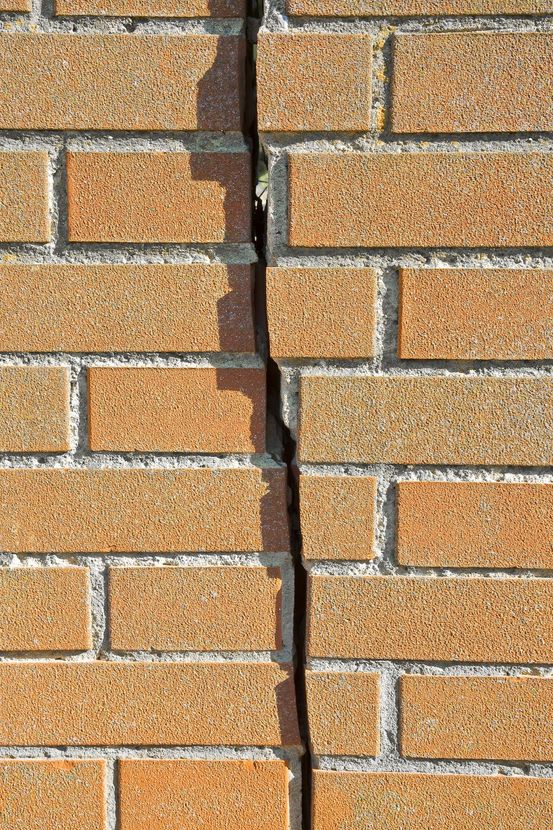
Stair-step cracking through mortar joints means differential movement. Cracks straight through the block face mean the units themselves are being overloaded, which is more serious.
Cracked foundation repair ›Soil or Water Pushing Through the Face
Material escaping through the wall means the backfill is migrating and voids are forming behind it. The ground above the wall is losing support even where the face still looks intact.
Foundation drainage solutions ›Separation at Corners or Between Sections
Gaps opening where wall sections meet indicate parts of the wall are moving at different rates. Corners carry concentrated load and usually fail first.
Residential foundation repair ›Sinking or Cracking in the Ground Above
The most urgent sign. If the patio, driveway, or yard above the wall is settling, the retained soil mass is already moving. This is where a wall problem becomes a foundation problem.
House leveling and lifting ›Seeing two or more of these? Get it assessed before the next storm season.
Call 832-710-6957Retaining Wall Repair vs Replacement
The question every Houston property owner asks first, and the one most contractors answer in whichever direction pays better. Here is how the decision actually works.
| Condition | Repair Is Usually Viable | Replacement Is Usually Needed |
|---|---|---|
| Degree of lean | Slight, and stable over time | Pronounced, or measurably worsening |
| Cracking | Hairline, in mortar joints only | Wide cracks through block faces |
| Bulging | Localized to one small area | Along most of the wall length |
| Footing | Sound and below the active soil zone | Undersized, shallow, or failed |
| Drainage | Absent but retrofittable | Absent and the wall is already compromised |
| Material condition | Blocks sound, wall built correctly | Rotted timbers, crumbling block, no reinforcement |
| Wall height | Lower walls under moderate load | Taller walls where failure risk is high |
We will tell you honestly which side you are on. A repair sold on a wall that needs replacing fails again, and we would rather not be the company that did it.
Our Retaining Wall Repair Process
Free On-Site Assessment
We measure the lean, inspect the footing where accessible, check what drainage exists, and evaluate the soil and load conditions behind the wall. You get a written proposal with no obligation.
Identifying the Real Cause
Water pressure, inadequate footing, missing batter, failed anchors, or overloading from something built too close above. Repairing the symptom without the cause buys you a few seasons at most.
Repair or Replace Recommendation
A straight answer on whether your wall is worth stabilizing or should be rebuilt, with the reasoning shown so you can judge it yourself rather than take our word for it.
Relieving the Pressure
Almost every repair starts here. Gravel backfill, drainage pipe, and functioning outlets so water leaves rather than accumulates. Our foundation drainage solutions team handles this side of the work.
Structural Stabilization or Rebuild
Depending on the assessment, that means anchoring and stabilizing the existing wall, sometimes with helical tie-back anchors, rebuilding failed sections, or a full replacement built with correct footing depth, batter, and drainage from the start.
Backfill, Compaction, and Follow-Up
Backfill goes in compacted lifts, not dumped loose. We return to confirm the wall is holding and the drainage is performing. See our process for how we work.
When a Failing Retaining Wall Threatens Your Foundation
This is the part landscapers do not tell you, because it is outside what they do.
A retaining wall holds a mass of soil in place. If your house, driveway, patio, or pool sits on or near that retained soil, the wall is not just protecting a slope. It is part of what keeps the ground under those structures stable.
When the wall starts rotating outward, the soil behind it begins moving with it. That movement shows up above as settling, cracking, and sloping. By the time a homeowner connects the crack in the house to the lean in the wall, both problems need fixing.
Any retaining wall repair we assess includes a look at what the movement has already done to nearby structures. If the foundation has been affected, you will hear it from us at the assessment, not after the wall work is done.

The Part Most Companies Skip: Drainage Behind the Wall
You cannot see it, it does not photograph well, and it adds cost to a quote. So it is the first thing cut when a contractor is competing on price, and it is the single most common reason Houston retaining walls fail early.
A wall with no drainage layer behind it collects every inch of rain the retained soil takes on. Clay drains slowly, so that water stays. Hydrostatic pressure builds against the back of the wall and adds to the soil load already pushing on it. The wall was engineered to resist soil, not soil plus standing water.
A retaining wall built or repaired without working drainage behind it is not a repair. It is a countdown.
Every wall we repair or rebuild gets a drainage assessment, and where drainage is the cause, correcting it is part of the scope rather than an upsell afterward.
Five Myths About Retaining Wall Repair
Most retaining wall advice in Houston comes from people who install walls, not people who diagnose why they fail.
A leaning wall can be pushed back and re-set
Rarely, and almost never as a standalone fix. The lean is a symptom of pressure that is still there. Straightening a wall without relieving the load behind it means the same force starts working on it again immediately. What actually works: relieve the pressure first, then stabilize or rebuild.
Small cracks in a retaining wall are cosmetic
On a house wall, often true. On a retaining wall, less so. A retaining wall is under constant lateral load, so a crack is a place where the structure has already yielded. Cracks in retaining walls tend to widen where cracks in other walls sit still. The test: is it changing? Mark it, date it, and check after the next heavy rain.
Any landscaper can repair a retaining wall
Plenty build attractive walls. Fewer calculate embedment depth, batter, or drainage capacity for Houston clay. A wall is a structure holding back tons of moving soil, and repairing a failed one is a structural problem before it is an appearance problem. Ask any contractor: what caused this wall to fail, and how does your repair address that cause?
A wall that has stood for years is not at risk
Retaining walls fail gradually and then quickly. Years of small seasonal movements accumulate invisibly until the wall reaches the point where it can no longer resist the load. Age is not evidence of stability, it is just time under pressure. Worth knowing: Houston's wet-dry cycle means every season adds another movement cycle.
Retaining wall repair is a landscaping expense
It is when the wall is decorative. It is not when the wall retains soil that supports your driveway, patio, pool, or home. In that case it is protecting the same ground your foundation sits on, and the cost of ignoring it is not a landscaping cost. How to tell: what is above the wall, and what happens to it if the soil moves?
Retaining Wall Types and How They Fail
Different wall types fail in different ways. Knowing which you have tells you a lot about what is going wrong.
| Wall Type | How It Typically Fails | What Repair Usually Involves |
|---|---|---|
| Segmental block | Rotation outward, separation between courses, bulging mid-run | Drainage retrofit, stabilization, rebuilding failed courses |
| Poured concrete | Cracking through the face, tilting as a single mass | Crack repair, drainage correction, structural stabilization |
| Wood tie or timber | Rot at ground contact, failed deadman anchors, forward lean | Usually replacement, since rotted members cannot be stabilized |
| Brick or masonry | Stair-step mortar cracking, face separation, bowing | Repointing, drainage, reinforcement or partial rebuild |
| Boulder or stacked stone | Individual units displacing, gaps opening, slumping | Reset units, correct base and drainage, rebuild sections |
| Gravity walls | Sliding at the base, forward rotation under saturated load | Base correction, drainage, added mass or anchoring |
Not sure what you have? Send a photo when you call and we can usually tell you before we arrive.
What Affects Retaining Wall Repair Cost in Houston
We do not publish flat pricing, because a leaning wall and a failing wall of identical length are not the same job. These factors set the number.
The single biggest cost driver is not the wall. It is whether the cause has to be corrected too. A wall that failed purely from age is a different job from a wall that failed because there is no drainage behind it and never was.
- Wall length, height, and how much of it has failed
- Wall type and material, since timber and block repair very differently
- Whether drainage has to be installed or retrofitted
- Footing condition and whether it reaches below the active soil zone
- Repair versus partial rebuild versus full replacement
- Site access for equipment and material
- What sits above the wall and has to be protected during work
- Engineering and permitting where wall height requires it
Taller walls in the City of Houston can trigger permit and engineering requirements. We will tell you at the assessment whether yours does, rather than discovering it mid-project.
Every assessment and written estimate is free. If financing would help, we offer payment plans.
Six Questions to Ask Before You Hire a Retaining Wall Contractor
Retaining wall work in Houston attracts everyone from structural contractors to two guys with a skid steer. These six questions sort them quickly.
What caused this wall to fail?
If the answer is vague, or amounts to age, keep looking. A contractor who cannot name the cause cannot design a repair that addresses it, and the wall will fail the same way again.
What drainage will be behind the wall when you are done?
You want to hear about gravel backfill, drainage pipe, and where the water actually exits. If drainage is not in the scope, you are buying the same failure again on a delay.
How deep is the footing, and is that below the active soil zone?
Houston clay moves seasonally near the surface. A footing that sits inside that zone moves with it every wet and dry cycle. Depth matters more here than in most markets.
Does this wall need a permit or engineering?
Wall height can trigger permitting and engineered design requirements. A contractor who has not raised it either does not know or is hoping you will not ask.
Have you checked whether the movement affected anything else?
If the retained soil supports a driveway, patio, pool, or the ground near your home, that soil has been moving too. A wall-only assessment can miss a foundation problem that is already underway.
Are you insured, and what does the warranty actually cover?
Confirm insurance, and get the warranty terms in writing including what is covered, for how long, and whether it transfers if you sell. Ask specifically whether drainage work is included.
We are happy to answer all six on the phone before you book anything.
Call 832-710-6957For HOAs, Property Managers, and Builders
Retaining walls on managed property carry liability that residential walls do not. A wall along a shared slope, a parking area, or a walkway is a safety exposure as much as a maintenance item.
We provide written assessments suitable for board review and budget planning, including the honest version of how long a wall can reasonably be monitored before it needs work.
We also work with builders and general contractors who need the structural and drainage side handled on a wall that is failing on a property they are responsible for.
Call 832-710-6957 to Discuss a Property
Residential and Commercial Retaining Wall Repair
When retained soil moves, the damage shows up in whatever sits above it. We handle both property types.
Residential
Sloped lots, terraced yards, pool surrounds, and walls holding soil near the home. Where movement has already reached the house, see our residential foundation repair services and concrete slab foundation repair.
Commercial
Apartment complexes, retail sites, parking structures, and institutional properties where a failing wall is both a structural and a liability concern. See our commercial foundation repair services.
Two Bros Foundation Repair Service Areas
Retaining wall repair available across the Greater Houston area. Click any location to learn more about our foundation repair services in that area.
- Houston
- Sugar Land
- Katy
- Pearland
- League City
- Spring
- The Woodlands
- Conroe
- Cypress
- Tomball
- Humble
- Kingwood
- Friendswood
- Missouri City
- Pasadena
- Baytown
- Clear Lake
Client Testimonials: What Our Customers Are Saying
Good experience with Two Brothers Foundation repair! The team was very professional and very polite. They answered all my questions, and the working crew did a good job cleaning up the dirt that was dug out. I'd definitely recommend them to anyone asking for a good, reputable foundation repair company!
I had Two Brothers repair my home's foundation back in 2018, and it has had no problems since, now 7 years later. They were quick to answer even now as I look to sell the property and transfer the service. Would recommend to anyone who needs their foundation repaired.
Aaron & Jacob were very professional and walked me through the entire process. They made sure I was informed at each step and made sure they left the work area in an excellent condition when completed. Glad to be back on a level foundation again.
Related Foundation Services in Houston
Retaining wall failure and foundation movement share the same cause. These are the services most often needed alongside wall repair.
Foundation Drainage Solutions
The water pressure that failed your wall is the same pressure working on your foundation. Correcting drainage addresses both.
Learn more ›Structural Foundation Assessments
Free elevation survey showing whether soil movement behind the wall has reached the structures above it.
Learn more ›House Leveling and Lifting
Where retained soil movement has already settled part of the structure, pressed pilings restore elevation.
Learn more ›Concrete Slab Foundation Repair
Stabilizing and leveling slabs affected by the same soil movement that undermined the wall.
Learn more ›Driveway and Patio Repair
Concrete above a failing wall cracks and settles first. We repair, level, and rebuild driveways and patios.
Learn more ›Commercial Foundation Repair
Structural repair for apartment, retail, and institutional properties where a wall failure has affected the building.
Learn more ›Frequently Asked Questions (FAQs)
Still have questions about retaining wall repair? See some of our frequently asked questions below or contact us today.
How do I know if my retaining wall needs repair or replacement?
It depends on how far the wall has moved, whether the footing is sound, and what condition the material is in. Slight stable lean with hairline mortar cracks on a well-built wall is often repairable. Pronounced lean, wide cracks through block faces, rotted timbers, or a failed footing usually means replacement. A free on-site assessment gives you a direct answer with the reasoning shown.
Why do retaining walls fail in Houston so often?
Houston's expansive clay swells when it takes on water and exerts enormous lateral pressure on walls. Combine that with heavy rain events and slow-draining soil, and any wall built without proper drainage behind it, adequate footing depth, or correct batter will eventually be pushed over. The soil here is simply harder on retaining walls than most markets.
Can a leaning retaining wall be straightened?
Sometimes, but almost never as a standalone fix. The lean is the symptom of pressure that is still present behind the wall. Straightening without relieving that pressure means the same force immediately starts working on it again. Any lasting repair addresses drainage and load first, then stabilization or rebuild.
Can a failing retaining wall damage my home's foundation?
Yes, if the soil it retains supports ground near your home, driveway, patio, or pool. As the wall rotates outward, the retained soil moves with it, and structures resting on that soil lose support. This is why we assess nearby structures during any retaining wall evaluation rather than looking only at the wall.
Do I need a permit to repair a retaining wall in Houston?
It depends on wall height and scope of work. Taller walls in the City of Houston can trigger permit and engineered design requirements, and jurisdictions across the metro vary. We identify whether yours does during the assessment so it is handled up front rather than discovered mid-project.
How much does retaining wall repair cost in Houston?
Cost is driven by wall length and height, material type, how much has failed, whether drainage must be installed, footing condition, site access, and whether engineering or permits are required. The largest single factor is usually whether the underlying cause has to be corrected as well. Every assessment and written estimate is free.
How long does a retaining wall repair take?
Smaller stabilization and drainage retrofits are often completed in a few days. Partial rebuilds and full replacements take longer, depending on wall length, height, and site access. Your written proposal includes a timeline for your specific wall.
Will my homeowners insurance cover retaining wall damage?
Most Texas policies exclude damage from soil pressure, earth movement, and gradual deterioration, which covers the majority of retaining wall failures. Coverage is more likely where a sudden covered event caused the damage. Review your policy, and we can provide written documentation of the condition and cause where it helps.
Do you offer free retaining wall assessments?
Yes. We measure the lean, inspect the footing where accessible, evaluate drainage and soil conditions, and check whether movement has affected nearby structures. You get a written proposal at no cost and no obligation. Call 832-710-6957 to schedule.
Still have questions?
Still have questions about residential or commercial retaining wall repair? Give us a call or fill out the form on our contact page.
Contact us