

Chimney Repair Cost: Average Prices & What Affects Them
Chimney repair cost can range from a couple hundred dollars for a new cap to well over ten thousand for a full rebuild, which is why so many homeowners are caught off guard when they get their first quote. A chimney is exposed to weather on every side, carries heat and moisture through its flue, and rests on its own footing that moves with the soil beneath it. Each of those factors creates a different kind of damage, and each one comes with its own price tag. If your chimney is leaning or pulling away from the house, the bill is often tied to the ground rather than the brick, and understanding foundation repair cost in Houston becomes just as important as understanding masonry prices.
This guide breaks down average chimney repair costs by type of repair, the factors that push prices up or down, the warning signs that mean you should act now, and when repair makes more sense than replacement.

Average Chimney Repair Cost
Most homeowners in the U.S. spend between $300 and $4,000 on chimney repair, with a typical project landing somewhere around $1,000 to $1,500. Minor fixes such as replacing a cap, sealing a small crack in the crown, or re-caulking flashing sit at the low end. Structural work such as rebuilding the chimney stack, replacing a liner, or stabilizing a leaning chimney sits at the high end.
Those averages are only a starting point. The right number for your home depends on what is actually wrong, how tall and accessible the chimney is, the materials involved, and local labor rates. The sections below give you a realistic range for each common repair so you can judge whether a quote is fair.
Chimney Repair Cost by Type of Repair
Chimney Cap Replacement
A chimney cap keeps rain, animals, and debris out of the flue. Replacing a damaged or missing cap typically costs $150 to $600 installed. Stainless steel and copper caps cost more than galvanized versions but last far longer. This is one of the cheapest repairs and one of the most effective at preventing bigger problems.
Chimney Crown Repair
The crown is the concrete slab at the top of the chimney that sheds water away from the brick. Sealing minor cracks with a crown coating costs $150 to $500. Rebuilding a crumbling crown costs $1,000 to $3,000 depending on size. A failed crown lets water into the masonry, so repairing it early protects everything below.
Flashing Repair
Flashing is the metal seal where the chimney meets the roof. Resealing loose flashing runs $200 to $500, while replacing it entirely costs $500 to $1,500. Leaks around the chimney are one of the most common sources of ceiling stains and attic moisture, and flashing is often the cause.
Tuckpointing and Mortar Repair
Over time, mortar joints erode and let water into the brick. Tuckpointing, which means grinding out old mortar and packing in new, typically costs $500 to $2,500 for a residential chimney. Prices depend on how much of the chimney needs work and how high the crew has to go. Spot repairs to a few joints may cost only a few hundred dollars.
Chimney Liner Repair or Replacement
The liner protects the chimney walls from heat and combustion gases. Repairing a cracked clay tile liner costs $1,000 to $3,000. Replacing the liner with a stainless steel system costs $2,000 to $5,000 or more, depending on chimney height and flue size. A damaged liner is a safety issue, not just a cosmetic one.
Damper and Flue Repairs
Replacing a rusted or stuck damper costs $200 to $800. Cleaning and minor flue repairs usually fall between $150 and $600. Smoke backing into the room or a damper that will not seal are common reasons for this work.
Partial or Full Chimney Rebuild
When bricks are spalling, the stack is unstable, or the mortar is gone, rebuilding is the only safe option. Rebuilding the top few feet above the roofline costs $1,500 to $4,000. A full chimney rebuild from the roof up costs $4,000 to $10,000, and tearing down and rebuilding the entire structure from the ground can reach $15,000 or more for a large brick chimney.
Leaning Chimney and Chimney Foundation Repair
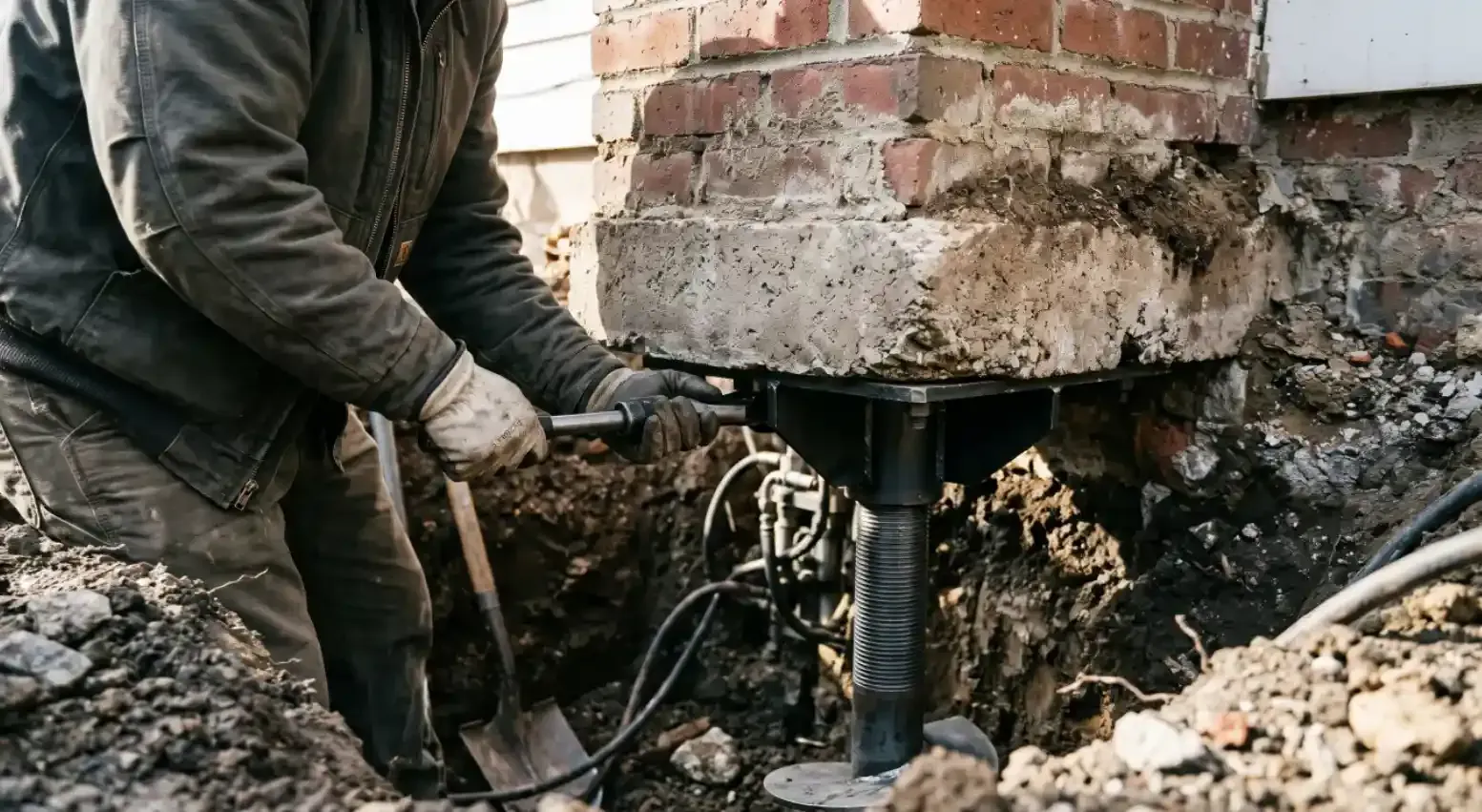
A chimney that leans, tilts, or shows a widening gap between the brick and the siding is not a masonry problem. It is a foundation problem. The footing under the chimney has settled or rotated, and no amount of mortar will fix it. Stabilizing a leaning chimney with helical piers or pressed concrete piers typically costs $2,000 to $6,000, depending on the number of piers and soil conditions. Larger chimneys or severe settlement can cost more. This repair stops the movement permanently, which is far cheaper than rebuilding a chimney that will only lean again.

What Affects Chimney Repair Cost
Two chimneys with the same problem can get very different quotes. These are the main reasons why:
- Height and access. A tall chimney on a steep roof requires scaffolding, lifts, or extra safety equipment, which adds $300 to $1,500 to many jobs.
- Materials. Brick, stone, stucco, and prefabricated metal chimneys all cost different amounts to repair. Matching historic brick can be expensive.
- Extent of damage. A few cracked joints are cheap. Water damage that has spread through the entire stack is not.
- Location of the damage. Repairs above the roofline are easier to reach than damage inside the attic, behind walls, or at the footing below grade.
- Permits and inspections. Some cities require permits for structural chimney work, which adds fees and sometimes an engineer's report.
- Labor rates. Costs vary by region and by whether you hire a general mason, a certified chimney specialist, or a foundation contractor.
Why Chimneys Lean or Separate in Houston
Houston homes face a chimney problem that is less common in other parts of the country. The region's expansive clay soil swells during heavy rain and shrinks during long, dry summers. Because the chimney footing is often poured separately from the main slab, and because the chimney concentrates a huge amount of weight on a small footprint, it reacts to that soil movement differently than the rest of the house.
The result is a chimney that slowly tilts away from the home, opens a gap at the roofline, cracks the flashing, and lets water in. Homeowners often notice the gap first, then the leak, then the cracks in the brick. By that point the footing may have dropped several inches.
Professional chimney foundation repair addresses the cause rather than the symptoms. Piers are driven or screwed into stable soil beneath the clay, the chimney is lifted back toward level, and the footing is locked in place so it cannot settle again. Once the chimney is stable, any masonry repairs that follow will actually last.
Signs You Need Chimney Repair
Catching problems early is the single biggest factor in keeping chimney repair cost down. Watch for:
- White staining, called efflorescence, on the brick
- Crumbling or missing mortar between bricks
- Flaking or popping brick faces, known as spalling
- Rust on the damper or firebox
- Pieces of clay tile in the firebox, which signal a failing liner
- Water stains on the ceiling or walls near the chimney
- A visible lean, tilt, or gap between the chimney and the house
- Cracks in the chimney crown or around the base
Any one of these is worth a professional look. A lean or a gap at the base should be inspected right away, because the chimney will continue to move until the footing is stabilized.
Chimney Repair vs. Chimney Replacement
Repair is almost always the better choice when the structure is sound and the damage is limited to the crown, cap, flashing, liner, or a section of mortar. Replacement makes sense when the brick is deteriorated throughout, the chimney has shifted so badly that it cannot be lifted back into position, or repair costs approach 60 to 70 percent of the price of a new chimney.
For a leaning chimney, the decision usually comes down to the condition of the brick. If the masonry is intact, pier stabilization and lifting is far less expensive than demolition and rebuilding. If the brick is already failing, stabilizing the footing first and then rebuilding on a secure base is the right order of operations.
How to Save on Chimney Repair
A few practical steps can keep your chimney repair cost under control:
- Schedule annual inspections. A chimney sweep or inspector can catch a cracked crown or loose cap before water does real damage.
- Fix water issues first. Most expensive chimney repairs start as small leaks. Caps, crowns, and flashing are cheap insurance.
- Get multiple written quotes. Ask each contractor to itemize the work so you can compare like with like.
- Address drainage and soil moisture around the base. Keeping the soil around the chimney footing consistently moist in dry months reduces settlement in clay soil.
- Hire the right specialist. A mason cannot fix a sinking footing, and a foundation contractor will not reline a flue. Matching the contractor to the problem saves money.
Homeowners looking for trusted
foundation repair in Sugar Land, TX and the surrounding Houston communities should choose a company that offers a free inspection, a written assessment, and a warranty that transfers if the home is sold.
Final Thoughts
Chimney repair cost depends far more on the type of damage than on the size of the chimney. Caps, crowns, and flashing are affordable fixes. Liners and tuckpointing cost more but protect the structure for decades. Leaning and separating chimneys are foundation problems that require pier stabilization, and addressing them early avoids the expense of a complete rebuild.
If your chimney is tilting, cracking at the base, or pulling away from your home, do not wait for the gap to widen. Two Brothers Foundation Repair has stabilized and leveled chimney foundations across the Greater Houston area for over 20 years, with free inspections and a lifetime transferable warranty on every repair. Contact us today to schedule your free assessment.
Frequently Asked Questions
How much does it cost to repair a leaning chimney?
Stabilizing a leaning chimney with helical or pressed concrete piers typically costs $2,000 to $6,000, depending on the number of piers needed and soil conditions. Severe settlement or very large chimneys can cost more.
Is chimney repair covered by homeowners insurance?
Most policies cover sudden damage from events such as storms, fire, or a fallen tree. Damage from wear, neglect, or gradual soil settlement is usually excluded. Check your policy and document the damage with photos before filing a claim.
How often should a chimney be inspected?
Once a year is the standard recommendation, ideally before the heating season. Homes in areas with expansive clay soil should also check for leaning or gaps at the base after extended droughts or heavy rain.
What is the most common chimney repair?
Tuckpointing and mortar repair is the most common masonry repair, while flashing repair is the most common cause of chimney leaks. Both are relatively affordable when addressed early.
Can a leaning chimney be fixed without rebuilding it?
Yes, in most cases. If the brick is still in good condition, piers can be installed beneath the footing to stabilize and lift the chimney back toward level without tearing it down.
How long does chimney repair take?
Minor repairs such as caps, crowns, and flashing take a few hours to a day. Tuckpointing and liner replacement take one to three days. Chimney foundation stabilization usually takes one to two days, while a full rebuild can take a week or more.