

Sump Pump Dry Well: How It Works and Why You Need It
A sump pump dry well is one of the most effective and underused drainage solutions available to Houston homeowners. When a sump pump collects groundwater or rainwater from beneath your home, that water has to go somewhere. Where it goes matters enormously, both for your property and for your foundation. A dry well offers a clean, code-compliant, and soil-friendly way to manage that discharge without sending water toward your neighbors, your slab, or the municipal sewer system.
If you have ever wondered exactly how this underground system functions on its own, our detailed guide on how a dry well works is a great starting point before diving into how it pairs with your sump pump to create a complete moisture management system.
What Is a Sump Pump and Why Does Discharge Matter?
A sump pump is a device installed in the lowest part of a basement or crawl space, typically inside a pit called a sump basin. As groundwater rises around your foundation or rainwater infiltrates from above, it drains into this basin. Once the water reaches a set level, the pump activates and pushes the water out through a discharge pipe to a location outside the home.
In older homes across Houston and the rest of Texas, sump pumps were commonly connected directly to the sanitary sewer system. That practice is now widely banned in many municipalities. A standard sanitary sewer pipe is typically only about 8 inches in diameter, and when a sump pump continuously adds groundwater and stormwater to that system, it can overwhelm the capacity during heavy rain events. The result is sewage backflow into basements, a serious health risk and a nightmare for homeowners.
Today, the question is not whether to redirect the discharge but where to redirect it in a way that protects your property, complies with local ordinances, and does not create new problems by dumping water too close to the foundation.
What Is a Sump Pump Dry Well?
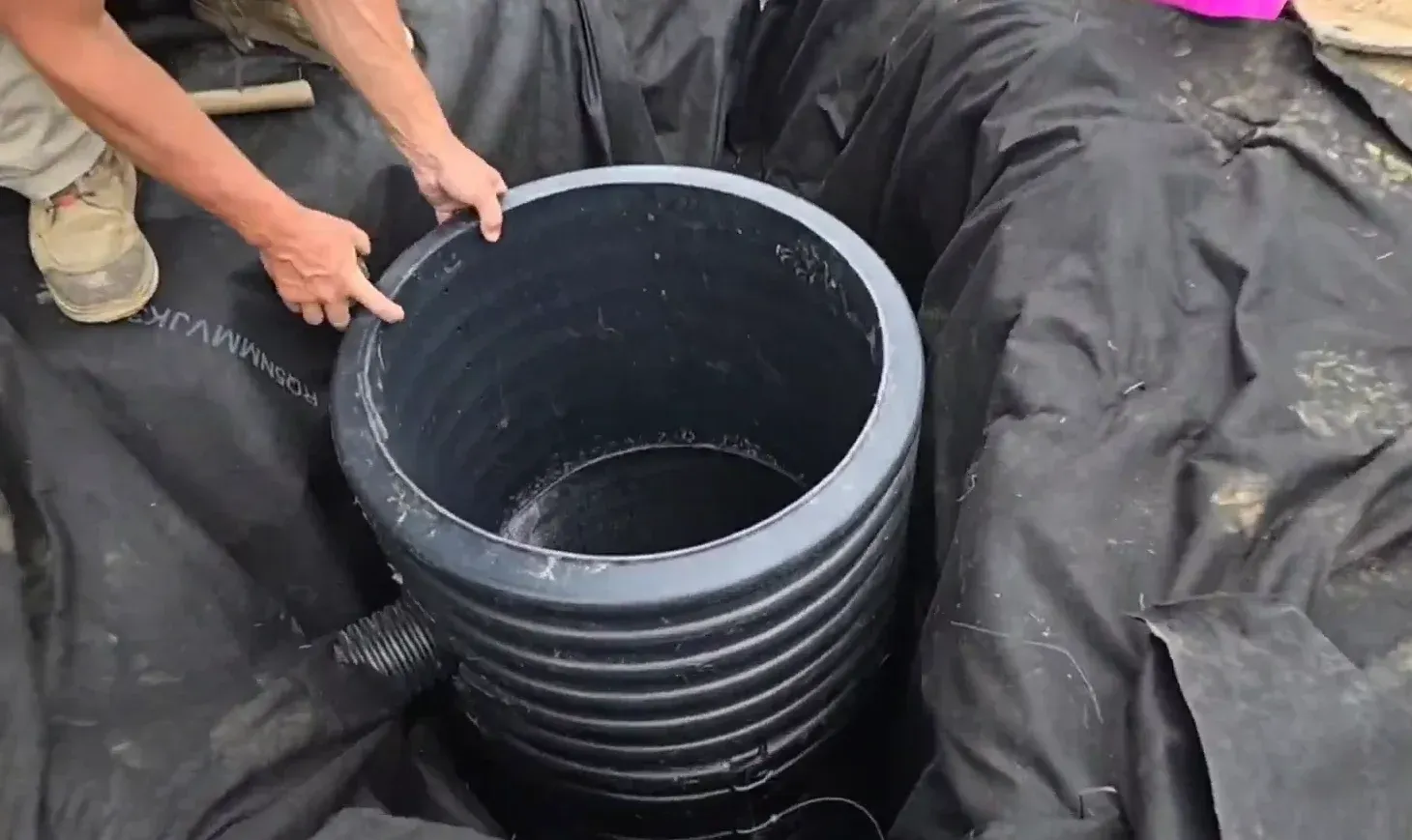
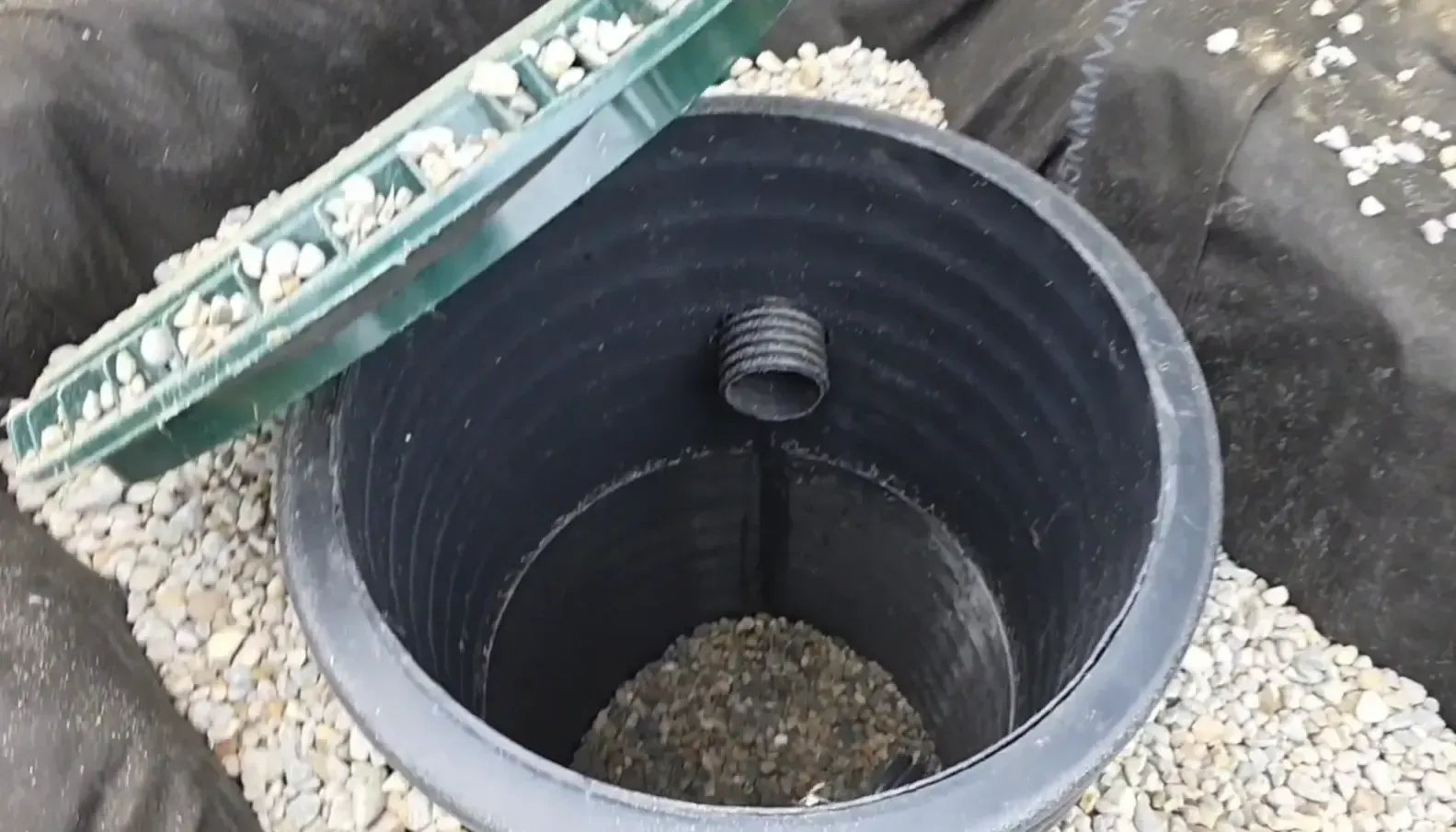
A dry well is an underground chamber, typically a perforated barrel, crate, or modular container, buried in your yard and connected to your sump pump via an underground pipe. When the pump activates, it pushes water through the pipe and into the dry well chamber. That chamber temporarily stores the water and then slowly releases it into the surrounding soil through its perforated walls.
The dry well essentially acts as a hidden buffer. Rather than releasing a large volume of water all at once onto your lawn or driveway, it meters out the moisture gradually, allowing the soil to absorb it at a natural rate. This prevents surface pooling, eliminates concentrated runoff, and keeps excess water far enough away from your foundation that it cannot saturate the clay-rich soils directly beneath your slab.
In Houston, where the soil composition includes a high concentration of expansive clay, this controlled release is critical. Dumping large volumes of water near the home would cause the clay subsoil to swell unevenly, applying differential pressure to your foundation and accelerating cracking and settlement.
Sump Pump Discharge Methods Compared
Not all sump pump discharge methods offer the same level of protection. The table below breaks down the most common options and how they stack up against one another from a foundation protection standpoint.
| Discharge Method | How It Works | Best For | Foundation Risk |
|---|---|---|---|
| Dry Well | Collects and slowly releases water into surrounding soil underground | Yards with moderate drainage and adequate space | Low — water disperses far from foundation |
| Surface Discharge to Yard | Pump hose releases water onto lawn surface | Flat, well-draining yards with no slope issues | Medium — may pool near foundation if grade is poor |
| Storm Drain / Street | Pipe directs water to curb or storm drain | Urban lots near street-level drainage | Low but may violate local codes |
| French Drain Combo | Perforated pipe buried in gravel channels water away | Saturated or clay-heavy soils | Very Low — comprehensive water management |
| Sanitary Sewer (Banned) | Direct pump connection to household sewer line | Older homes (now widely prohibited) | High — causes sewer overflow and backflow |
How a Sump Pump Dry Well Is Installed
The installation process involves a few key steps that should ideally be carried out by a drainage professional, particularly in Houston where soil conditions require careful placement decisions.
Step 1: Site Evaluation
A drainage professional will first assess your yard's topography, soil composition, and existing drainage patterns. The dry well must be placed far enough from the home to prevent water from migrating back toward the foundation, yet accessible enough to connect to the sump pump discharge pipe without excessive trenching.
Step 2: Excavation
A hole is dug at the chosen location, typically 10 to 20 feet away from the home's exterior wall. The depth and diameter of the hole depends on the volume of water the pump typically moves and how well the surrounding soil drains. In clay-heavy soils common to the Houston area, a larger or deeper dry well may be required to compensate for slower absorption rates.
Step 3: Dry Well Chamber Placement
The perforated dry well chamber is placed in the excavated hole and surrounded with gravel or crushed stone. The gravel layer creates an additional buffer zone that helps distribute water evenly into the soil and prevents the surrounding earth from clogging the perforations over time.
Step 4: Pipe Connection and Backfill
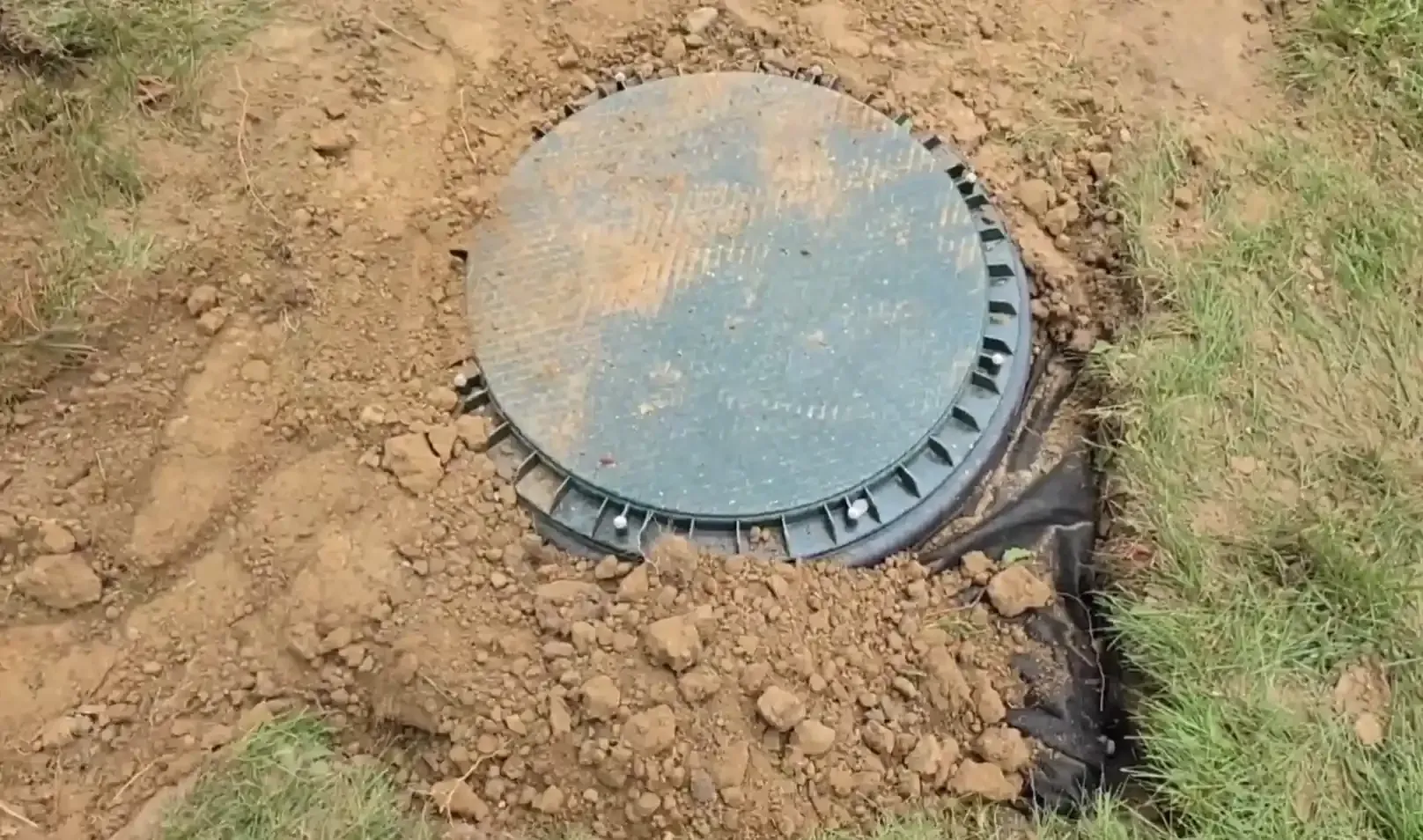
A solid discharge pipe is run from the sump pump outlet through a trench to the top of the dry well. This pipe carries the pumped water underground rather than across the surface. Once the pipe connection is secure, the trench is backfilled and the yard is restored to its original appearance. Most dry wells can be covered with grass or ground cover and become completely invisible once installed.
When a Dry Well Alone Is Not Enough
In some Houston properties, a single dry well connected to the sump pump may not provide sufficient drainage capacity. This is particularly true for homes in low-lying areas, properties near bayous or detention ponds, or lots that naturally collect water from neighboring properties.
In these scenarios, a dry well works best as part of a broader drainage strategy. Pairing it with a French drain system that channels water away from the foundation perimeter, correcting the surface grading around the home, and extending downspouts to direct roof runoff well away from the structure can transform a perpetually wet property into one with reliable, year-round moisture control.
If your Houston home is experiencing recurring drainage issues, standing water near the foundation, or moisture entering your basement or crawl space, it may be time for a professional assessment. Our foundation drainage solutions are designed specifically for Houston soil conditions, combining dry wells, French drains, surface grading, and sump pump systems into a fully integrated drainage plan tailored to your property.
Signs Your Home Could Benefit from a Sump Pump Dry Well
Not every Houston home requires this type of system, but certain conditions make it a particularly smart investment. You should consider evaluating a sump pump dry well setup if you notice any of the following on your property.
Standing water that lingers in your yard for more than 24 hours after a rainstorm is a clear signal that your soil is not absorbing water fast enough. This is common in Houston neighborhoods built on thick clay deposits where drainage is naturally slow.
A sump pump that runs continuously or cycles on and off frequently during wet seasons is handling a significant volume of water. Without a proper discharge destination, that water is likely cycling back toward the foundation or pooling in the yard.
Visible erosion channels in your lawn from sump pump discharge indicate that surface discharge is not working effectively. Water running across the surface at high volume strips topsoil, creates uneven ground, and can gradually slope toward the foundation over time.
Moisture intrusion in the basement or crawl space that persists even after the pump is running suggests that the pump is not moving water far enough away from the home. A dry well placed at the right distance resolves this by creating a controlled release point well outside the foundation's moisture zone.
Maintenance and Longevity
A properly installed sump pump dry well requires minimal maintenance but should not be completely forgotten. Over time, fine soil particles can migrate through the gravel surrounding the chamber and reduce its absorption capacity. Most professionals recommend a periodic inspection every few years to ensure the dry well is functioning as intended.
Signs that a dry well may need attention include water backing up in the discharge pipe, the sump pump running but water levels not dropping, or wet patches appearing directly above the dry well location in the yard. These symptoms typically indicate that the chamber is full of sediment and needs to be flushed or that the gravel surround requires replacement.
In Houston's clay-dominant soil environment, keeping the gravel layer clean and intact is especially important because clay particles are fine enough to infiltrate gravel quickly if the system is not properly filtered during installation.
Final Thoughts
A sump pump dry well is one of the most practical and foundation-protective drainage investments a Houston homeowner can make. It solves the discharge problem created by banning sewer connections, protects the foundation from the moisture swings caused by clay soil expansion and contraction, and does all of this invisibly beneath your lawn without impacting the appearance or usability of your yard.
At Two Brothers Foundation Repair, we have been helping Houston homeowners protect their foundations from water-related damage for over 20 years. If you are unsure whether your current sump pump discharge setup is protecting your foundation or creating new risks, reach out today for a free consultation and property assessment.