

What Is a French Drain? Cost, Types & When You Need One
What is a French drain, and why do foundation contractors bring it up so often? If water pools in your yard after every storm, seeps toward the slab, or leaves soil soggy for days, a French drain is one of the most reliable ways to move that water somewhere harmless. It is also widely misunderstood. Many homeowners confuse it with a surface drain, a swale, or basic
landscaping around the house to prevent water problems. This guide explains how a French drain works, the different types, what drives the cost, the signs your property needs one, and the mistakes that cause installations to fail.
What Is a French Drain and How Does It Work?
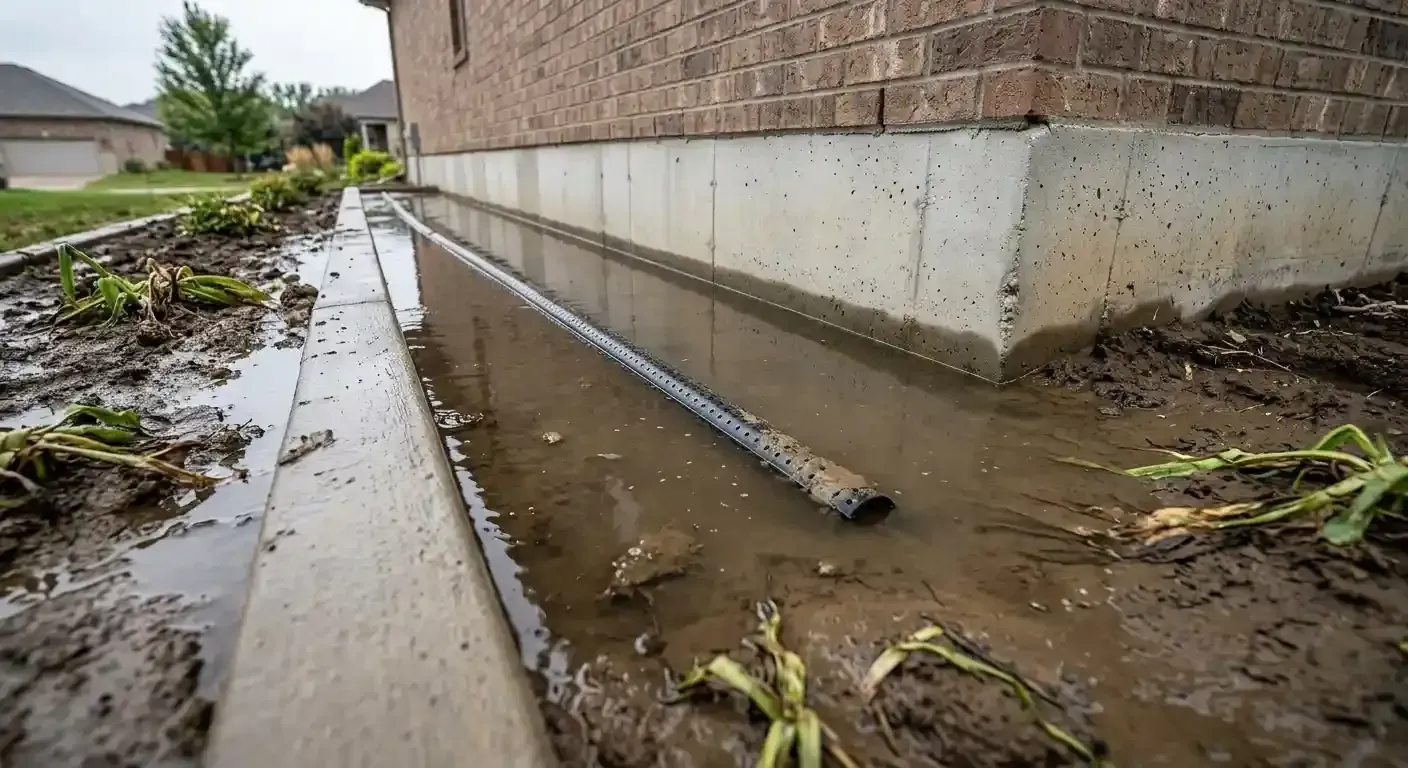
The short answer to what is a French drain: a gravel-filled trench with a perforated pipe at the bottom that collects groundwater and surface water and carries it away from the areas you want to protect. Water moves through gravel far more easily than through soil, so the trench becomes a path of least resistance. Water enters the trench, drops through the gravel, flows into the perforated pipe, and follows the slope of the pipe to a discharge point such as a storm drain, a dry well, a lower area of the yard, or the street.
The name comes from Henry French, a Massachusetts farmer who popularized the design in an 1859 book on farm drainage, not from France. The concept has barely changed since. Modern installations simply use better materials: PVC or corrugated perforated pipe, washed gravel, and non-woven filter fabric that keeps silt out.
The Parts of a French Drain
To fully answer what is a French drain, look at its components:
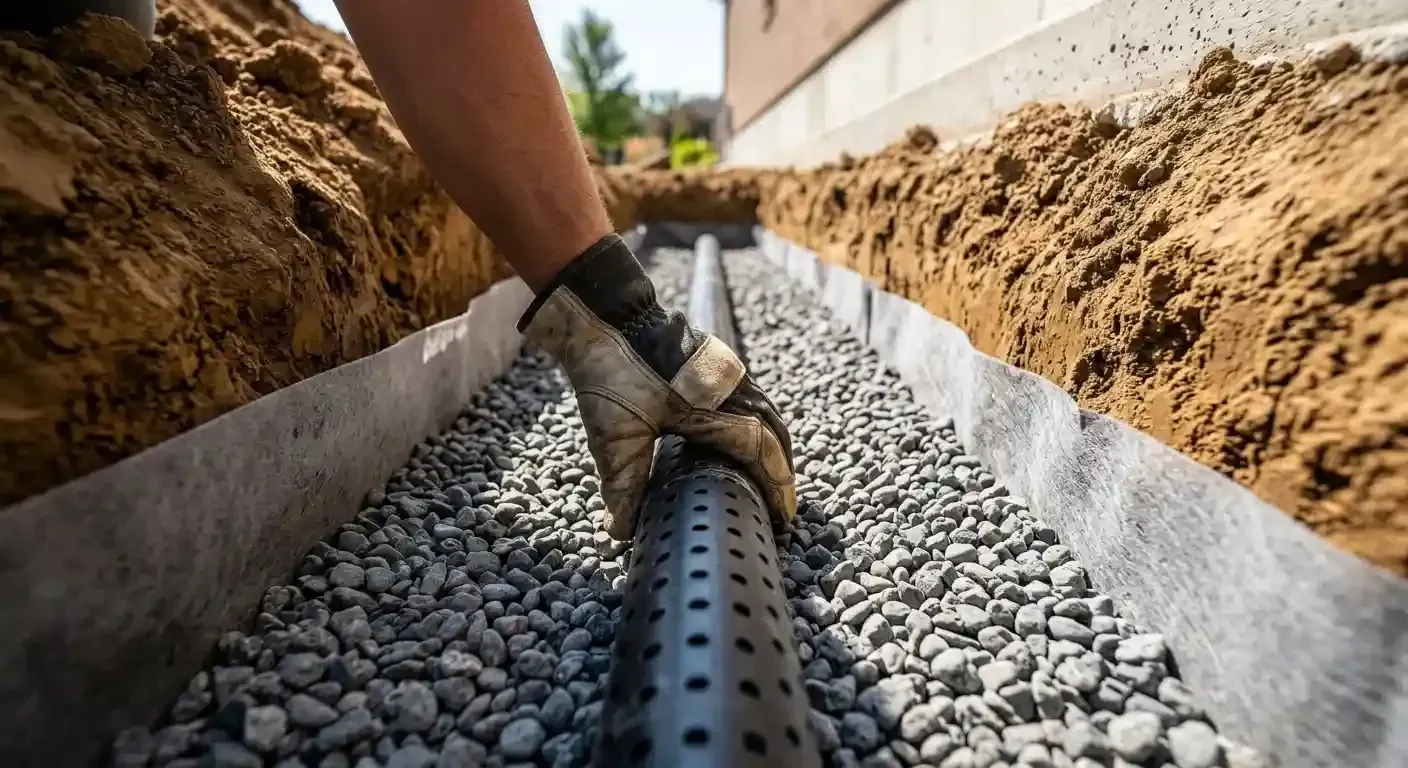
- Trench. Typically 12 to 24 inches deep and 8 to 12 inches wide, sloped toward the outlet.
- Filter fabric. A non-woven geotextile lines the trench and wraps over the gravel to keep fine soil particles out of the pipe.
- Gravel bed. A base layer of clean, washed 3/4 inch gravel that the pipe sits on, with more gravel surrounding and covering it.
- Perforated pipe. A 4 inch pipe with holes or slots that lets water in. The holes face down so water rises into the pipe from below.
- Outlet. The end point where water exits, whether a pop-up emitter, a curb cut, a storm sewer connection, or a dry well.
- Cleanout. An access point at the high end that lets a plumber flush the line if it ever slows down.
Types of French Drains
When people ask what is a French drain, they often picture one design. In practice, contractors use several variations depending on where the water is coming from.
Curtain Drain (Yard French Drain)
A shallow drain placed uphill of a problem area to intercept surface water and shallow groundwater before it reaches the house or a low spot in the lawn. This is the most common residential version and the one most people picture.
Footing or Perimeter Drain
Installed at the base of the foundation, this drain runs around the home at footing depth and collects water that has already reached the foundation wall. It is standard on homes with basements and crawl spaces and is often paired with waterproofing membrane on the wall.
Interior French Drain
Cut into the basement floor along the inside of the foundation wall, an interior drain catches water entering through the cove joint or wall cracks and routes it to a sump pit. It does not stop water reaching the foundation, but it removes it before the floor floods.
Downspout and Combination Drains
Many yard drains also carry gutter discharge. Solid pipe from the downspouts ties into the same trench so roof runoff, often the largest source of water near a foundation, exits far from the slab.
Signs You Need a French Drain
Once you know what is a French drain, the next question is whether you need one. These signs suggest water is threatening the structure:
- Standing water in the yard that takes more than a day to drain after rain.
- Water pooling against the foundation, along the driveway, or beside a patio.
- A soggy or spongy lawn in one area while the rest of the yard is dry.
- Water seeping into a basement, crawl space, or garage, or damp staining at the base of walls.
- Erosion, washed-out mulch beds, or exposed roots after storms.
- Foundation cracks, sticking doors, or uneven floors on the side of the house where water collects.
- A retaining wall that leans or shows water stains, which means pressure is building behind it.
The last two matter most. In expansive clay soil, uneven moisture is the leading cause of foundation movement. A yard that stays wet on one side and dry on the other lifts one edge of the slab and drops the other, and no concrete repair holds until the water is managed.
French Drain vs. Other Drainage Options
Understanding what is a French drain also means knowing what it is not. Each of these solves a different problem, and many properties use more than one:
- Surface drains and catch basins collect water that is already pooling on top of the ground, such as on a patio. They do nothing for water moving through the soil.
- Swales are shallow, grassy channels that guide surface runoff. They work on large lots with room for gentle grading.
- Regrading reshapes the soil so it slopes away from the home. It is the first fix to try and often the cheapest, but it cannot stop groundwater.
- Gutters and downspout extensions manage roof water. They are essential but only handle water from above.
- Dry wells store water underground and let it soak away slowly. They are usually a discharge point for a French drain rather than a replacement for one.
- Sump pumps remove water that has already reached a basement or crawl space. A French drain is what feeds them.
How a French Drain Is Installed
Professional French drain installation follows a consistent sequence, and skipping any step is where most DIY drains go wrong.
- Locate utilities. Gas, electric, water, and irrigation lines are marked before any digging begins.
- Map the water. The contractor identifies where water enters, where it pools, and where it can legally and safely be discharged.
- Set the grade. The trench is sloped at least 1 percent, which is about 1 inch of drop for every 8 to 10 feet of run, so water moves by gravity.
- Dig and line. The trench is excavated to depth and lined with filter fabric with enough overlap to fold back over the top.
- Bed and lay pipe. A few inches of washed gravel go in first, then the perforated pipe with holes facing down, then gravel to within a few inches of the surface.
- Wrap and cover. The fabric is folded over the gravel to keep soil out, then the trench is topped with sod, decorative stone, or soil.
- Finish the outlet. The discharge point is built so it cannot back up, freeze, or erode the area around it.
French Drain Cost: What Affects the Price
People who ask what is a French drain usually ask what it costs next. Pricing is quoted per linear foot, and the range is wide because the job can be anything from a short yard trench to a full footing drain around a house. The main cost drivers are:
- Length and depth. Longer runs and deeper trenches mean more excavation, more gravel, and more pipe.
- Location. A yard drain in open lawn is far cheaper than a perimeter drain dug beside the foundation or an interior drain cut into a concrete floor.
- Soil conditions. Dense clay, rock, and heavy root systems slow the digging and add labor.
- Discharge point. Tying into a storm sewer, building a dry well, or running pipe to the curb adds material and permitting work.
- Obstacles. Driveways, patios, fences, and mature landscaping that must be worked around or restored add to the total.
- Pipe and fabric quality. Rigid PVC costs more than corrugated pipe but resists crushing and is easier to clean.
A French drain is almost always far less expensive than the foundation repair it prevents. The most accurate figure comes from an on-site assessment where a contractor checks the grade and identifies a discharge point that will actually work.
Common French Drain Mistakes to Avoid
Knowing what is a French drain in theory does not guarantee a working one. Most failed drains share one of these errors:
- No slope, or slope in the wrong direction, so water sits in the pipe instead of leaving.
- Skipping filter fabric, which lets silt fill the gravel and pipe within a few years.
- Using dirty or crushed limestone instead of clean washed gravel, which packs down and stops draining.
- Installing the pipe with holes facing up, which lets water pool below the pipe before it can enter.
- No outlet plan, so the drain simply moves water to a new spot next to the foundation.
- Forgetting a cleanout, which makes maintenance impossible without digging.
French Drains in Houston: Why Drainage Matters on Clay Soil
Houston combines flat terrain, heavy rainfall, and expansive clay that holds water for weeks, a recipe for soil that swells against a slab during storms and shrinks away from it in summer. Contractors who handle
foundation repair in Houston, TX routinely find that the drainage problem caused the foundation problem, which is why drain installation, regrading, and gutter work are so often part of a repair plan. A French drain that keeps moisture even around the entire slab does more to prevent future cracking than almost any other single improvement.
Protect Your Foundation Before the Next Storm
Knowing what a French drain is the first step. Knowing whether your property needs one, and where the water should go, takes a trained eye. Two Brothers Foundation Repair offers free drainage and foundation inspections across the Greater Houston area, with a written proposal, more than 20 years of experience on Gulf Coast clay, and a lifetime transferable warranty on foundation repairs. Call 832-957-2755 to schedule your inspection and find out whether a French drain, regrading, or a combination of both is the right fix for your home.
Frequently Asked Questions
What is a French drain used for?
A French drain collects groundwater and surface water and redirects it away from foundations, basements, crawl spaces, retaining walls, and low areas of a yard so the soil around the structure stays evenly moist and the water does not cause damage.
How long does a French drain last?
A properly installed French drain with filter fabric, washed gravel, and a working outlet typically lasts 20 to 30 years or more. Drains built without fabric or with the wrong gravel can clog in a few years.
Does a French drain need maintenance?
Very little. Check the outlet a few times a year to make sure it is clear, and have the line flushed through the cleanout if you notice water draining more slowly than it used to.
Can I install a French drain myself?
A short, shallow yard drain is a realistic DIY project for a handy homeowner. Drains along the foundation, interior basement drains, and any system that ties into a storm sewer are best left to a professional because of the excavation, grading, and permitting involved.
How deep should a French drain be?
Yard drains are usually 18 to 24 inches deep. Footing drains go to the base of the foundation, which can be several feet down. The depth depends on where the water is and what you are protecting.
Will a French drain fix my foundation problems?
A French drain removes the water that causes many foundation problems, but it does not lift a slab that has already settled. If the foundation has moved, drainage is combined with repair methods such as pier installation, then the drain keeps the repaired foundation stable.