

Foundation Crack Repair: Types, Methods & What It Costs
Foundation crack repair starts with one honest question: is this crack cosmetic, or is it a sign that your foundation is moving? Most homeowners spot a crack, feel a jolt of worry, and then wait to see whether it gets worse. That wait is where small problems turn into expensive ones. Some cracks are nothing more than
normal house settling cracks that appear as concrete cures and the home adjusts to its lot. Others are early warnings of soil movement, water pressure, or a failing footing. This guide explains how to tell them apart, how professionals repair each type, what drives the cost, and how to keep new cracks from forming.
Why Foundations Crack in the First Place
Concrete is strong under compression but weak under tension, so anything that pulls or bends a slab or wall will crack it. The most common causes include:
- Shrinkage during curing. Fresh concrete loses moisture as it hardens and shrinks slightly, producing thin, random hairline cracks in the first year or two.
- Expansive clay soil. Clay swells when wet and shrinks when dry. Each cycle lifts and drops the foundation, and repeated cycles eventually crack it.
- Poor drainage. Water pooling against the foundation saturates the soil on one side, creating uneven pressure and uneven settlement.
- Tree roots. Large roots pull moisture from the soil beneath a slab, drying and shrinking it so the foundation sinks in that spot.
- Plumbing leaks. A slab leak or broken sewer line soaks the soil under part of the home and washes out support.
- Poor construction. Undersized footings, missing rebar, or badly compacted fill leave a foundation unable to carry its load evenly.
The cause matters because sealing a crack without correcting it usually means the crack returns or a new one opens nearby. Good foundation crack repair fixes the symptom and the source together.
Types of Foundation Cracks and What They Mean
The shape, direction, and width of a crack tell you a lot before anyone picks up a tool.
Hairline and Shrinkage Cracks
These are very thin, often less than 1/16 of an inch, and run randomly across a slab or wall. They are usually cosmetic. If they stay dry and do not widen, sealing them to block moisture and pests is often all that is required.
Vertical Cracks
Vertical cracks run straight up and down or lean slightly. In poured concrete walls they usually come from shrinkage or minor settling and are among the easiest to fix with injection. They become a concern when they widen past 1/8 of an inch, when one side sits higher than the other, or when water seeps through.
Diagonal Cracks
A crack that runs at roughly a 30 to 75 degree angle often points to differential settlement, where one part of the foundation is dropping faster than the rest. Diagonal cracks that widen at one end are a classic sign of uneven soil support and deserve an inspection.
Horizontal Cracks
Horizontal cracks in a basement or retaining wall are the most serious type. They usually mean soil and water pressure are pushing the wall inward. A horizontal crack paired with a bowing wall is a structural problem that calls for reinforcement, not just sealant.
Stair-Step Cracks
Stair-step cracks follow the mortar joints in brick or block walls in a zigzag pattern and signal that the foundation beneath is settling or heaving unevenly. Small ones in mortar can be cosmetic, but wide ones that break through the brick itself point to movement that needs to be stopped.
How to Tell if a Crack Is Serious
Use these quick checks for a first pass:
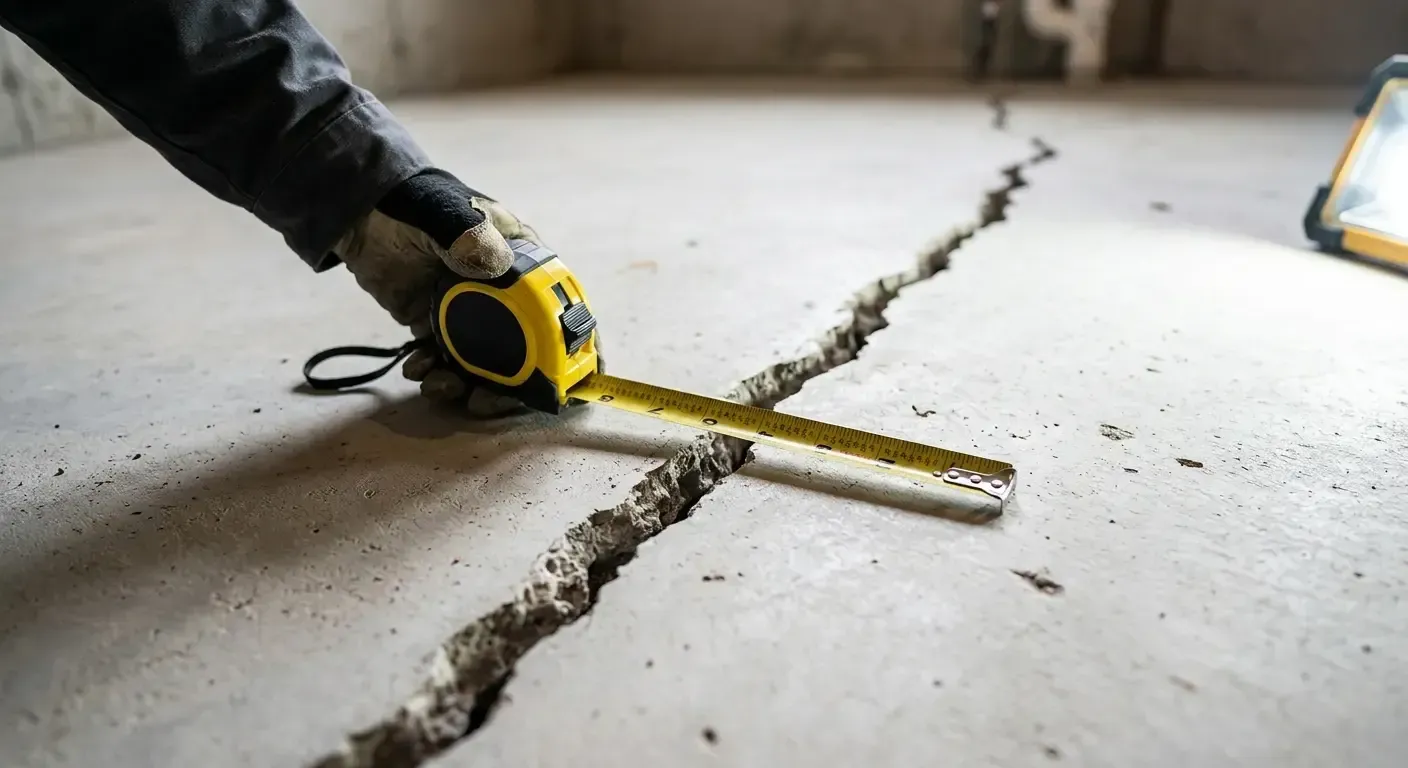
- Width. Cracks under 1/8 of an inch are typically low risk. Cracks 1/8 to 1/4 of an inch should be monitored. Anything wider than 1/4 of an inch, or any crack you can slide a coin into, needs an inspection.
- Growth. Mark and date the ends of the crack. If it lengthens or widens over a few months, it is active.
- Displacement. If one side of the crack is raised or offset, the two sections are moving independently.
- Water. Damp staining, efflorescence, or actual seepage means the crack is a path for moisture and should be sealed soon.
- Companion symptoms. Sticking doors, windows that will not latch, sloping floors, or gaps at trim and ceilings suggest the whole structure is shifting, not just the concrete.
If two or more of these apply, skip the DIY step and get a professional foundation crack repair assessment.
When You Can Seal a Crack Yourself
Narrow, stable, dry cracks in a slab or wall can be sealed by a careful homeowner. Clean out loose debris with a wire brush or compressed air, slightly widen and roughen the crack so the filler has something to grip, then apply hydraulic cement, a vinyl patching compound, or a polyurethane caulk. Deeper gaps get a foam backer rod first. Follow the product cure times exactly and finish with a masonry waterproofing sealer.
The limits are just as important. Surface patching does nothing to stop movement, so a patched crack that reopens tells you the cause is still active. Any crack that is horizontal, leaking, wider than 1/4 of an inch, growing, or paired with bowing or sloping should go straight to a contractor.
How Professional Foundation Crack Repair Works
Professional foundation crack repair is chosen based on what the crack is doing, not just how it looks. A reputable cracked and leaking foundation repair company will inspect the slab, walls, drainage, and plumbing before recommending one of the following methods.
Epoxy Injection
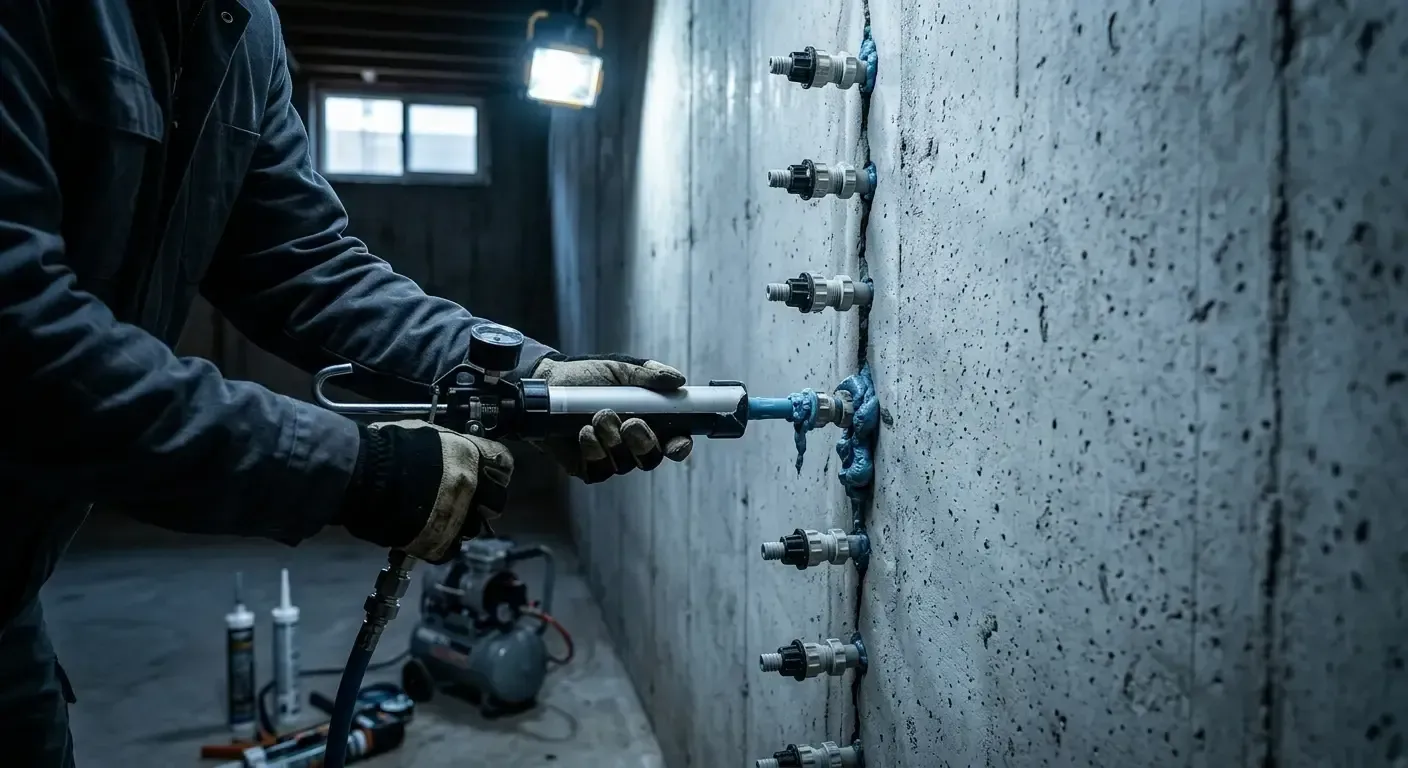
Epoxy is injected under pressure through ports along the crack, bonding the two faces of the concrete back together and restoring structural strength. Epoxy is the right choice for dry, non-moving structural cracks in poured walls and slabs. It is not ideal for cracks that are still shifting, because rigid epoxy can fracture again alongside the original crack.
Polyurethane Injection
Polyurethane foam expands as it cures and stays flexible afterward, which makes it the go-to material for leaking cracks and cracks with slight seasonal movement. The foam fills the entire void, including irregular channels epoxy might miss, and creates a durable waterproof seal. It stops water but does not add structural strength.
Carbon Fiber Reinforcement
For horizontal cracks and bowing walls, carbon fiber straps are bonded vertically across the wall with epoxy. They lock the wall in its current position and prevent further inward movement without the excavation older wall anchor systems require.
Pier Installation for Settlement Cracks
When cracks come from a sinking foundation, the concrete is not the real problem. The soil is. Pressed concrete piers, steel piers, or helical piers are driven beneath the foundation down to stable load-bearing strata. The foundation is then lifted back toward level and locked onto the piers. Once the structure is stabilized, the cracks are sealed. Sealing first and stabilizing later is backwards, because the lift can reopen any repair made before it.
Drainage and Moisture Correction
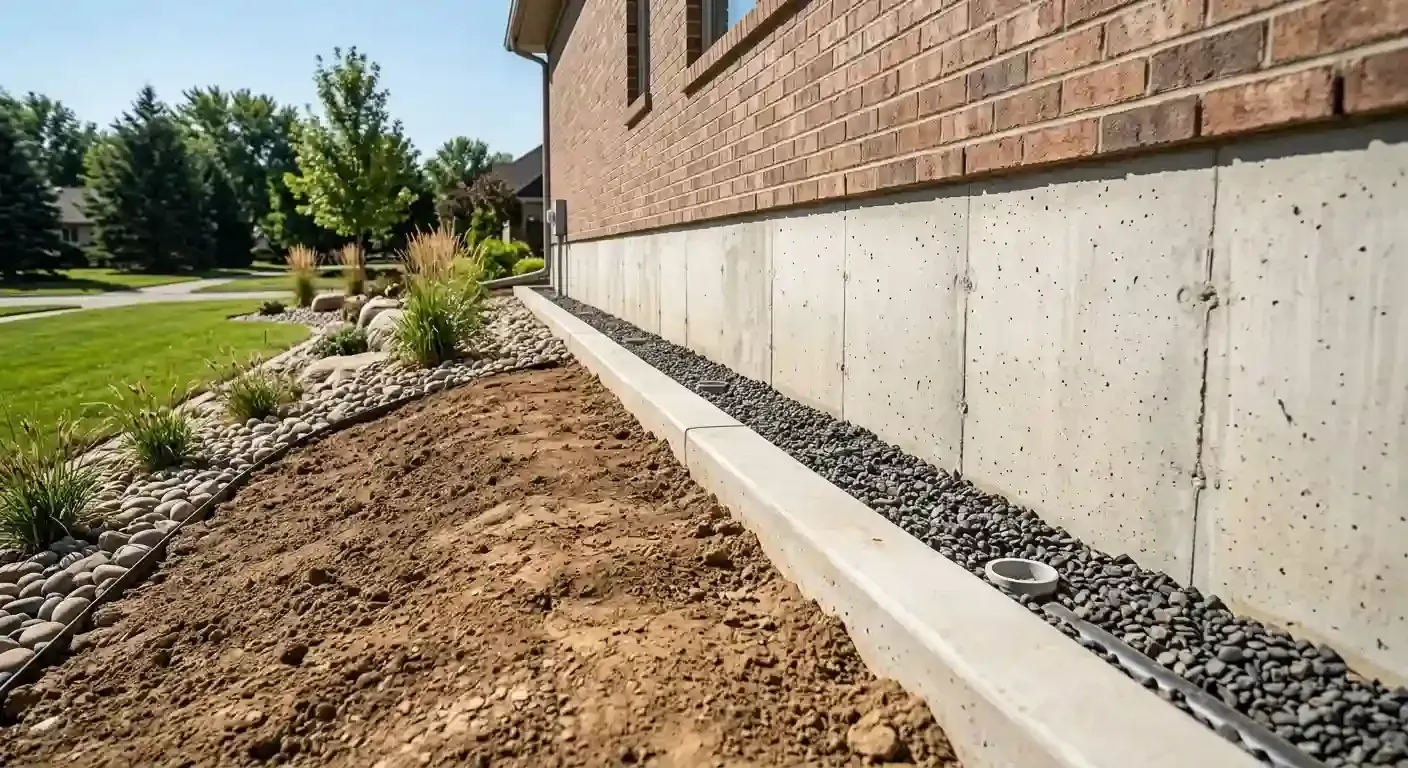
Many crack repairs are paired with drainage work: extending downspouts, regrading soil away from the home, installing a French drain, or adding a foundation watering system to keep clay moisture consistent in dry months. Managing water is what keeps a repaired foundation repaired.
Foundation Crack Repair Cost: What Drives the Price
Foundation crack repair cost varies widely because the range covers everything from a tube of sealant to a full pier system. The main factors are:
- Repair method. Injecting a single non-structural crack is one of the least expensive services a foundation company offers. Pier installation is priced per pier, so a home needing ten piers costs far more than one needing two.
- Number and length of cracks. Injection is often priced by the linear foot or per crack.
- Access. Cracks behind finished walls, under flooring, or in tight crawl spaces take more labor to reach.
- Cause of the damage. If a slab leak or drainage failure is behind the crack, that has to be corrected too, which adds to the total but prevents a repeat repair.
- Warranty. A lifetime transferable warranty carries real value when you sell, and reputable contractors build that protection into pricing.
The most accurate number comes from an on-site inspection with a written, itemized estimate. Be cautious of any quote given over the phone.
Foundation Crack Repair in Houston: Why Local Soil Matters
Houston sits on some of the most expansive clay soil in the country. Long hot summers shrink that clay, then heavy rain and hurricane season swell it again. That constant heave and drop is why cracked slabs are so common here and why foundation repair in Houston, TX almost always includes a plan for moisture control. Local contractors who work with Gulf Coast clay every day know how deep to set piers, when a root barrier is warranted, and how to keep the soil around your slab at a steady moisture level year-round.
How to Prevent New Foundation Cracks
Foundation crack repair lasts longest when it is followed by good habits. A few low-cost steps make a measurable difference:
- Keep gutters clean and extend downspouts at least five feet from the foundation.
- Grade soil so it slopes away from the house on every side.
- Water the foundation perimeter evenly during droughts with a soaker hose or an automatic foundation watering system.
- Plant large trees well away from the slab, or install a root barrier for trees that are already close.
- Fix plumbing leaks quickly and watch for unexplained water bill increases.
- Walk the exterior twice a year and photograph any cracks to compare over time.
Get a Free Foundation Crack Inspection
Foundation crack repair is far cheaper when it is done early, before a hairline crack becomes a leaking wall or a sinking corner. If you have noticed a crack that is growing, leaking, or showing up alongside sticking doors and uneven floors, Two Brothers Foundation Repair offers free, no-obligation inspections with a detailed written proposal, more than 20 years of experience with Houston soil, and a lifetime transferable warranty on every repair. Call 832-957-2755 to schedule your inspection and find out exactly what your crack means and what it will take to fix it.
Frequently Asked Questions
Are all foundation cracks a sign of a serious problem?
No. Thin hairline cracks from concrete shrinkage are common and usually cosmetic. Cracks become a concern when they are wider than 1/4 of an inch, horizontal, growing, leaking, or accompanied by sticking doors and sloping floors.
Which is better for foundation crack repair, epoxy or polyurethane?
Epoxy restores structural strength and is best for dry, stable cracks. Polyurethane stays flexible and is best for leaking cracks or cracks with minor movement. A contractor will choose based on whether the crack needs strength, waterproofing, or both.
How long does foundation crack repair take?
Injection repairs on a few cracks are often finished in a single day. Repairs that involve pier installation or wall reinforcement typically take one to three days depending on the size of the home and the number of piers required.
Will a repaired crack come back?
A properly injected crack should not reopen. If the underlying cause, such as settlement or poor drainage, is not corrected, new cracks can form nearby. That is why a thorough inspection should address both the crack and what caused it.
Does homeowners insurance cover foundation crack repair?
Most standard policies in Texas do not cover damage from normal soil movement or settling. Coverage may apply when the damage results from a covered event such as a sudden plumbing leak. Review your policy and ask your contractor for documentation to support a claim.
Can I sell a house with foundation cracks?
Yes, but Texas law requires you to disclose known foundation problems. Many sellers repair first, because a documented repair with a transferable warranty reassures buyers and lenders and often results in a higher sale price.