

Foundation Settlement: Signs, Causes, and How to Fix It
Foundation settlement is the downward movement of a home as the soil beneath it shifts, compresses, or washes away, and it is the root cause behind many of the cracks, sloping floors, and sticking doors homeowners notice. Some amount of settling is completely normal. Nearly every house sinks slightly in its first few years as the soil adjusts to the new load, and that early movement produces the harmless hairline lines known as
normal house settling cracks. The problem starts when settlement continues, accelerates, or happens unevenly, because uneven movement twists the structure above it. In this guide, we explain how foundation settlement works, how to tell normal settling from damaging movement, what causes it, the warning signs to watch for, and how professionals permanently stabilize a settling home.
What Is Foundation Settlement?
Foundation settlement occurs when the soil supporting a foundation can no longer hold the weight placed on it, allowing part or all of the structure to sink. A house is heavy, often several hundred thousand pounds, and all of that load transfers through the foundation into the ground. When the ground compresses, shrinks, erodes, or was never properly compacted in the first place, the foundation follows it down.
The critical distinction is not whether a home has settled but how it has settled. Engineers generally describe three patterns:
Uniform settlement. The entire foundation sinks evenly, all at once. Because the structure stays level relative to itself, uniform settlement rarely causes serious damage, and many homes experience a small amount without any visible symptoms.
Tipping settlement. One entire side of the foundation sinks while the other stays put, tilting the structure. This is more serious than uniform movement but less common in residential construction.
Differential settlement. Different sections of the foundation sink at different rates or by different amounts. This is the damaging one. Differential movement bends and twists the foundation, and the frame, drywall, brick, and door openings above it show the stress almost immediately. When contractors talk about foundation settlement problems, differential settlement is almost always what they mean.
Normal Settling vs. Problem Settlement
Every homeowner eventually asks the same question: is this normal, or is my house sinking? Here is how to tell the difference.
Normal settling is small, slow, and finished early. It shows up as thin hairline cracks in drywall or mortar, usually vertical, often near windows and doors, appearing in the first one to three years after construction and then stopping. The cracks do not grow, doors still work, and floors stay level.
Problem settlement is progressive. Cracks widen over months, new ones appear, and symptoms multiply: doors that no longer latch, windows that stick, floors that visibly slope, gaps opening between walls and ceilings. Movement that continues past the first few years, or that starts suddenly in an older home, is not the house finishing its settling. It is the soil failing, and it will not stop on its own.
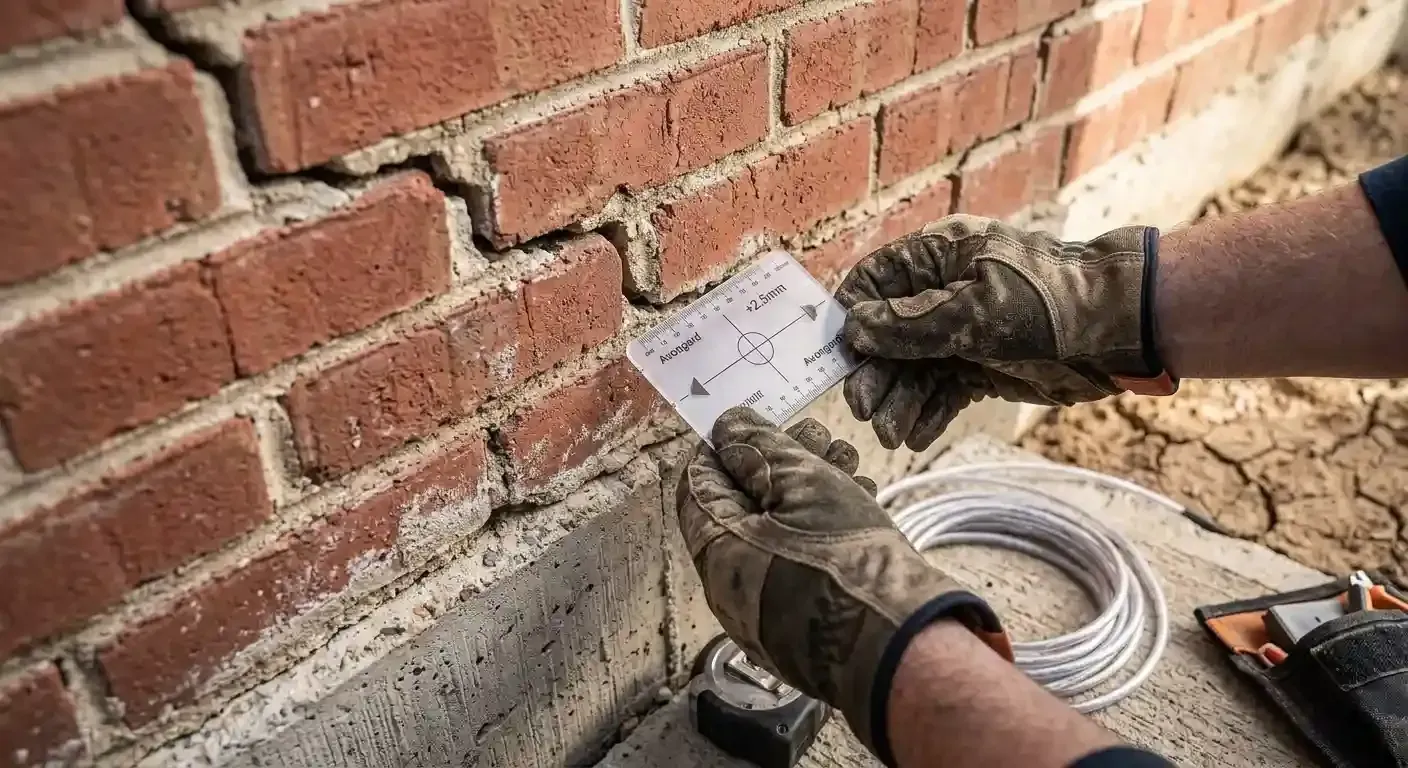
The most reliable indicator is change over time. Mark the ends of a crack with a pencil and date it. If the crack grows past your marks in the following months, the foundation is still moving. Dated photographs work just as well, and they give an inspector a valuable record of how quickly the movement is progressing.
What Causes Foundation Settlement?
Settlement always traces back to the soil. These are the most common reasons the ground under a home gives way.
Expansive Clay Soil
Clay-rich soil swells when it absorbs water and shrinks as it dries. Through repeated wet and dry cycles, the soil under a foundation changes volume season after season, and the foundation rides that movement. During extended drought, clay can shrink so much that it pulls away from the slab entirely, leaving sections of the foundation unsupported. Geotechnical engineers rate soils by their plasticity index, and much of the clay across Texas ranks among the most expansive in the country, capable of seasonal movement measured in inches rather than fractions of an inch.
Poorly Compacted Fill Soil
Many homes are built on lots that were graded with fill dirt. If that fill was not compacted properly before construction, it slowly compresses under the weight of the house for years, sometimes decades. Homes built on deep fill are among the most common settlement cases professionals see.
Moisture Changes Around the Foundation
Poor drainage, clogged gutters, short downspouts, and pooling rainwater saturate the soil on one side of a home while the other side stays dry. That imbalance makes one section of soil soft and weak while the rest stays firm, which is a recipe for differential movement.
Plumbing Leaks and Erosion
A slow leak in an under-slab water or sewer line can wash away supporting soil invisibly for years. Erosion from surface water does the same thing faster. In both cases the result is a void, and the foundation above a void has nothing to stand on.
Tree Roots and Vegetation
Mature trees can draw hundreds of gallons of water from the soil each week during hot months. Large trees close to a foundation dry out the clay beneath one side of the home, shrinking it and letting that side drop.
Signs of Foundation Settlement
Foundation settlement announces itself through the structure above it. Watch for these warning signs:
- Stair-step cracks in brick or block walls
- Diagonal cracks in drywall, especially spreading from the corners of doors and windows
- Doors and windows that stick, rub, or no longer latch
- Sloping, sagging, or bouncy floors
- Gaps between walls and ceilings, floors, or crown molding
- Cracks in the slab or exterior foundation wall
- A chimney tilting or separating from the house
- Trim or caulk joints pulling apart
One symptom on its own may mean little. Several appearing together, or any symptom that worsens over time, is a strong signal that the foundation is actively moving and it is time for a professional evaluation.
How Is Foundation Settlement Repaired?
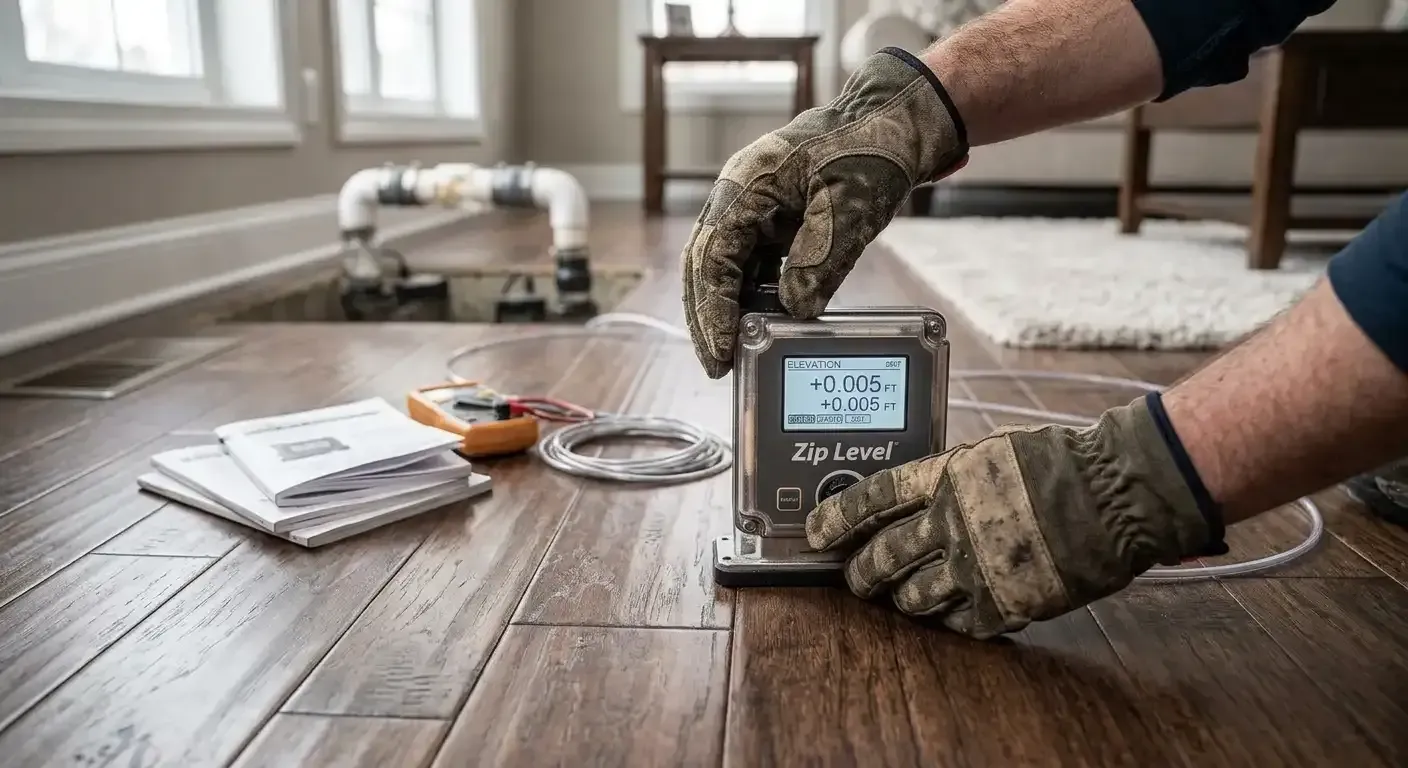
Repair starts with measurement. A professional inspection maps the elevation of the slab across the entire home, typically with a zip level or laser level, revealing exactly which sections have dropped and by how much. That elevation map determines where piers are needed and how many, which is why any repair bid produced without elevation readings is a guess.
From there, settlement repair has one goal: transfer the weight of the home off the failing surface soil and onto something that does not move. In nearly every case, that means underpinning the foundation with piers.
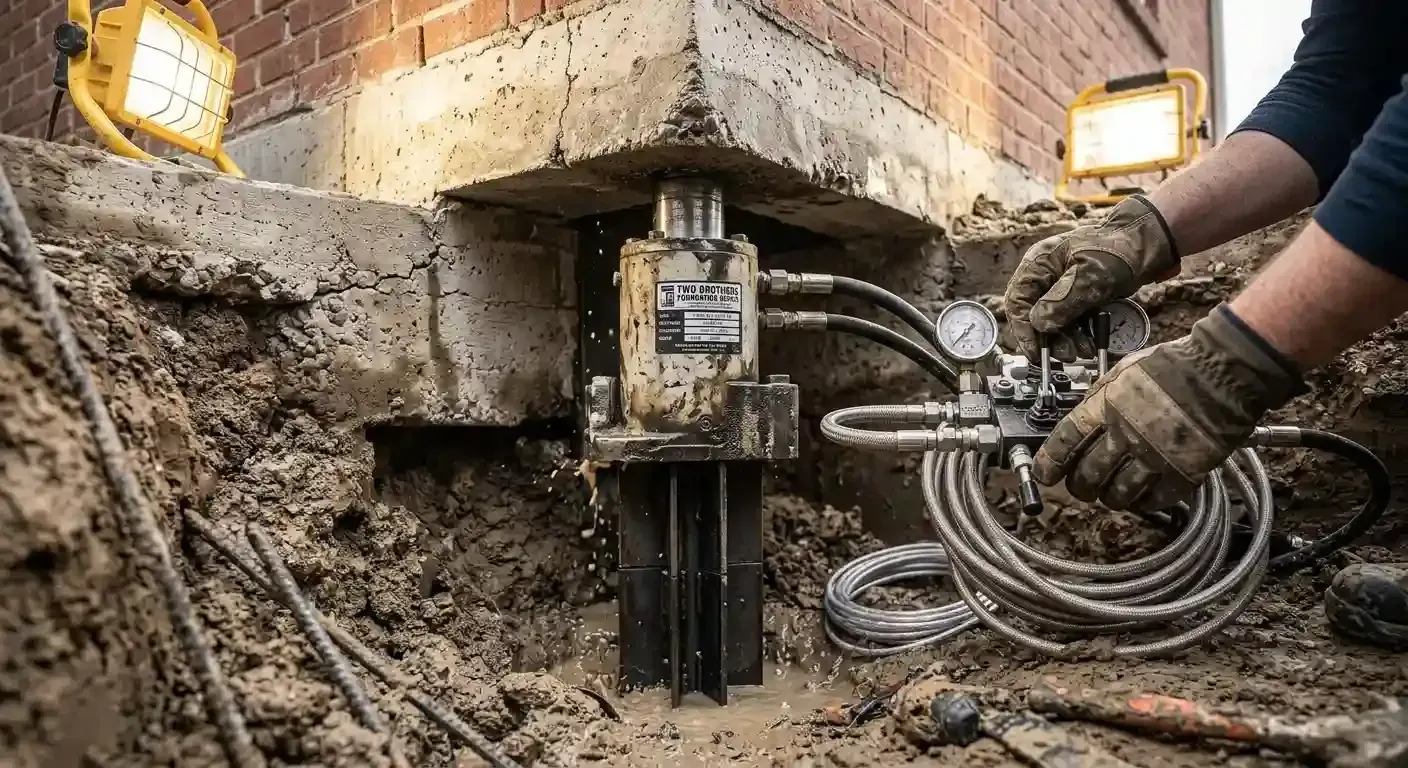
Pressed concrete piers are driven deep into the ground in segments using the weight of the house itself, then capped and shimmed to lift and hold the foundation at the correct elevation. Steel piers are driven even deeper, reaching stable strata or bedrock, and offer the greatest capacity for heavy or severely settled structures. Helical piers are screwed into the soil to a verified resistance and work well for lighter structures and interior repairs.
Once piers are installed, the foundation is carefully lifted back toward its original position and locked in place, closing many of the cracks the settlement opened. If your home shows the symptoms above, our sinking foundation and footing repair services are built for exactly this problem, stabilizing settled foundations with the pier system matched to your soil, your structure, and the severity of the movement.
Good repairs also address the cause. If drainage, a plumbing leak, or tree roots created the problem, the repair plan should correct those conditions too. Otherwise the same forces keep working on the soil around the new piers.
Foundation Settlement in the Houston Area
Few regions in the country see more settlement than Southeast Texas. The Houston area sits on thick expansive clay that swells through the wet spring, shrinks hard through the summer drought, and repeats that cycle every single year. Add hurricane-season downpours, patchy fill soil across fast-growing subdivisions, and the occasional slab leak, and the conditions that cause foundation settlement are essentially built into the region. That is why local homes so often show stair-step brick cracks and sticking doors by their second decade. Our team provides
foundation repair in Katy, TX and across the greater Houston area, with free inspections that measure exactly how much your foundation has moved and where, so you get a repair plan based on elevation data rather than guesswork.
Take Settlement Seriously, but Do Not Panic
Foundation settlement is common, measurable, and very fixable. The difference between a modest repair and a major one is almost always time: soil failure is progressive, so the home that gets evaluated at the first stair-step crack needs fewer piers than the one that waits five more years. If your cracks are growing, your doors are misbehaving, or your floors have developed a slope, get real answers now. Two Brothers Foundation Repair has stabilized settling Houston-area homes for more than 20 years, holds an A+ BBB rating, and backs every repair with a lifetime transferable warranty. Call 832-412-2791 or schedule your free inspection online today.
Frequently Asked Questions
How much foundation settlement is normal?
Most homes settle a small amount, often up to about an inch, evenly and within the first few years after construction. Settlement becomes a problem when it is uneven, continues past those early years, or produces growing cracks and functional symptoms like sticking doors.
What is the difference between settling and sinking?
Settling generally refers to the normal, minor, early movement every home experiences. Sinking describes ongoing or uneven downward movement caused by failing soil. The practical test is progression: normal settling stops, while a sinking foundation keeps producing new and widening symptoms.
Can foundation settlement fix itself?
No. Soil that has compressed, eroded, or shrunk does not push a foundation back up. Symptoms may appear to ease seasonally as clay soil swells with rain, but the underlying movement resumes with the next dry spell and worsens over time.
How much does it cost to fix a settling foundation?
Cost depends on how many piers are needed, the pier type, and how far the foundation has dropped. Minor repairs may involve only a few piers, while severe differential settlement requires more extensive underpinning. A free on-site inspection with elevation measurements is the only accurate way to price the repair.
Is it safe to live in a house with foundation settlement?
Usually yes, in the near term. Residential settlement rarely creates a sudden safety hazard, but it does progressively damage the structure, the plumbing, and the roofline while lowering the home’s value. The longer it continues, the more expensive the eventual repair becomes.
Will homeowners insurance cover foundation settlement?
Generally no. Standard Texas policies exclude damage from soil movement and normal settling. Coverage sometimes applies when a covered event, such as a sudden plumbing leak, caused the soil failure. Review your policy and document the damage; a professional inspection report supports any claim you pursue.