

How to Fix Sump Pump Problems: A Homeowner's Guide
Fix sump pump problems early and you protect your home from the single most expensive water event most basements ever face: a flood during the exact storm the pump was installed to handle. A sump pump spends most of its life sitting quietly in the
sump pit at the lowest point of your basement or crawl space, and because it only matters a few days a year, small failures go unnoticed until water is already rising. The good news is that most sump pump failures come from a short list of causes, and many of them are fixable in under an hour with basic tools. In this guide, we walk through how the system works, the most common problems and their fixes, when repair stops making sense, and how to keep the pump ready for the next big storm.
How a Sump Pump Works
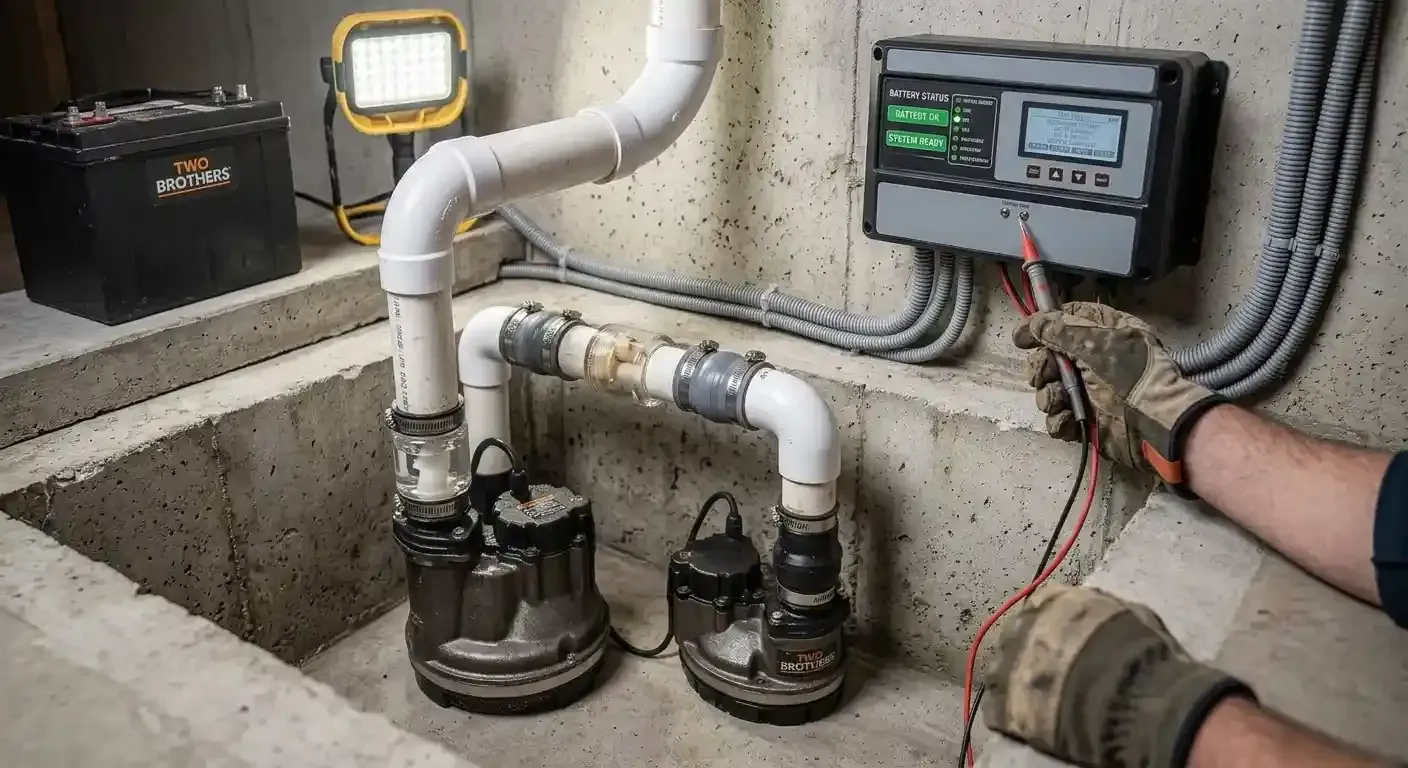
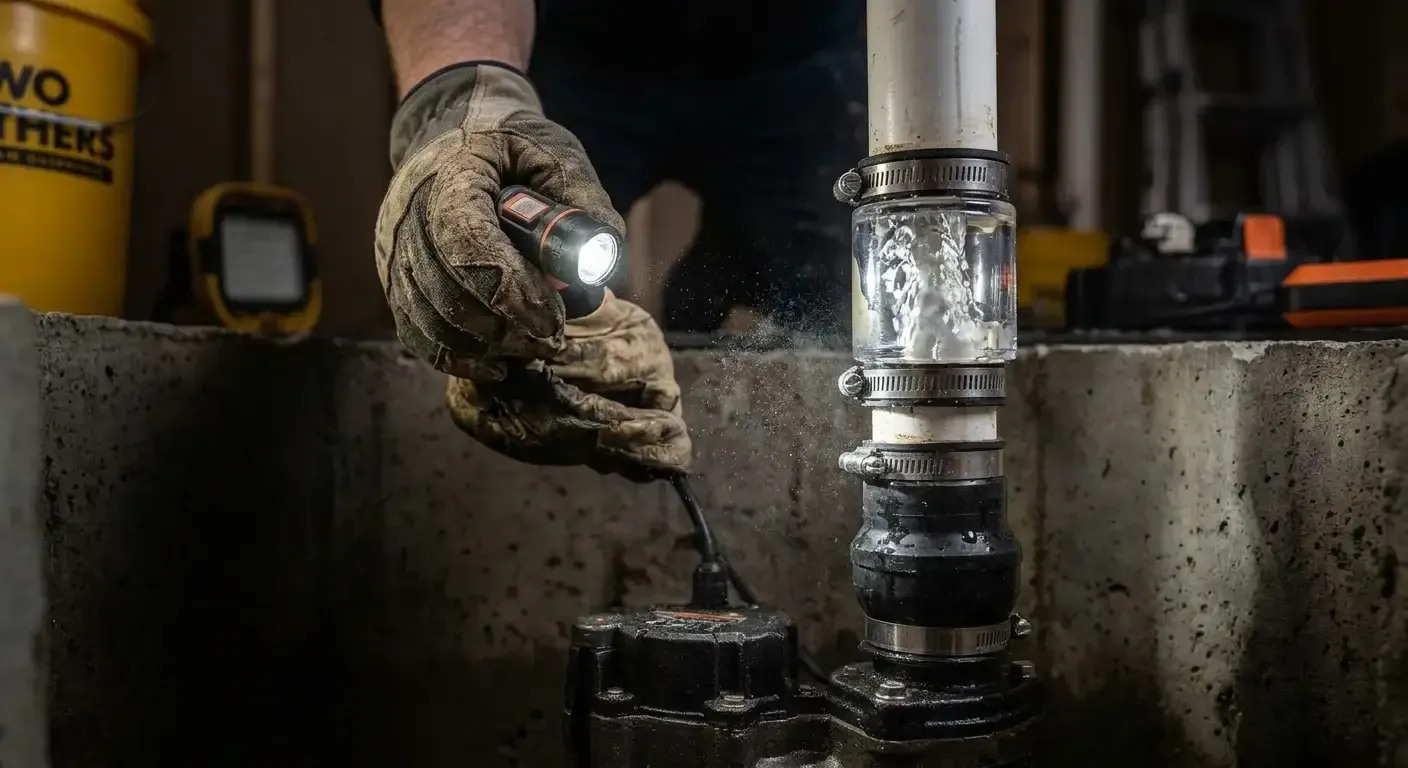
Before you can fix sump pump trouble, it helps to know what each part does. Groundwater and drain water collect in the sump pit, a basin set into the floor. As the water level rises, a float switch lifts and turns the pump on. The pump pushes water up through a discharge pipe, past a check valve that stops water from flowing back down, and out to a discharge point safely away from the foundation. Homes use two main types: submersible pumps that sit underwater inside the pit, and pedestal pumps with the motor mounted on a column above it. The troubleshooting below applies to both. When any link in that chain fails, the pump, the switch, the check valve, the discharge line, or the pit itself, the whole system fails.
Common Sump Pump Problems and How to Fix Them
Most calls for sump pump repair trace back to one of the following six problems. Here is how to diagnose and fix sump pump failures one cause at a time.
1. The Pump Will Not Turn On
Start with power. Check that the pump is plugged in, the GFCI outlet has not tripped, and the breaker is on. Sump pumps trip GFCI outlets frequently, especially in damp basements, so press the reset button first.
If the pump has power, test the float switch. Pour a bucket of water into the pit and watch: the float should rise and trigger the pump. A float that is stuck against the pit wall, tangled in its cord, or jammed by debris is the single most common reason a working pump never turns on. To fix sump pump float problems, reposition the pump so the float moves freely through its full range. If the float moves but the pump stays silent, the switch or motor has likely failed.
2. The Pump Runs but Moves No Water
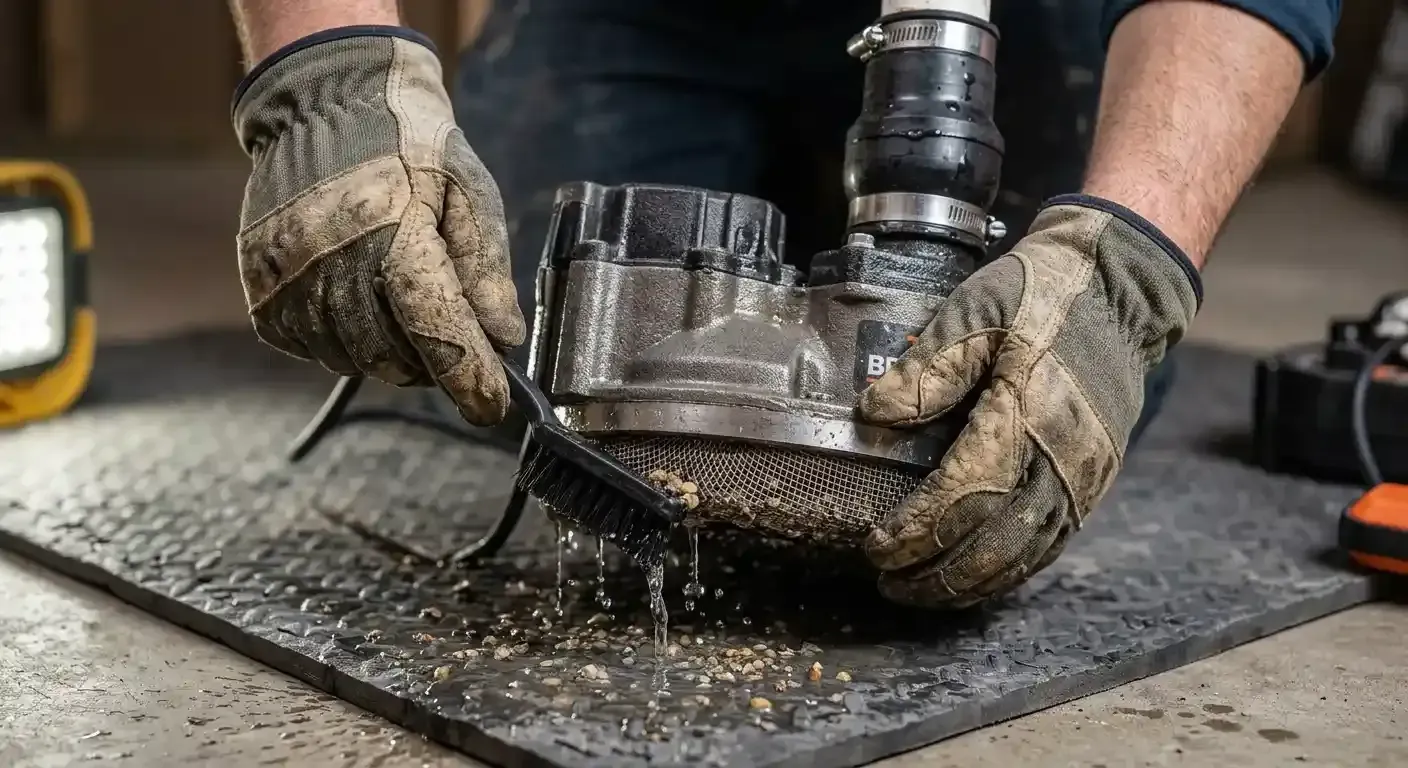
A pump that hums along while the pit stays full usually has a blocked path. To fix sump pump clogs, unplug the pump, lift it out, and clear the intake screen at the bottom, which collects gravel, silt, and debris. Next, check the check valve on the discharge pipe; a failed valve lets every gallon the pump pushes up fall right back into the pit. Finally, inspect the discharge line outside for clogs, crushed sections, or, in winter, ice. A frozen or blocked discharge line will stop the entire system even when the pump itself is perfect.
3. The Pump Runs Constantly
Continuous running usually means one of three things: the float switch is stuck in the on position, the check valve has failed and the pump keeps re-pumping the same water, or the pump is genuinely undersized for the amount of water reaching the pit. Free the float, replace a bad check valve, and if water truly never stops flowing in, the fix is bigger than the pump, which we cover below.
4. The Pump Short-Cycles On and Off
Rapid cycling wears out motors fast. Common causes are a float switch set with too little travel between on and off, a pit that is too small for the pump's capacity, or backflow through a bad check valve. Adjusting the float tether length or replacing the check valve solves most short-cycling.
5. The Pump Is Loud, Rattling, or Grinding
Some motor hum is normal. Banging, rattling, and grinding are not. Rattling often comes from the discharge pipe vibrating against the pit lid or framing and can be fixed with foam insulation or rubber grommets. Grinding usually means debris in the impeller or a failing bearing; clean the impeller, and if the noise continues, the motor is on its way out.
6. The Pump Trips the Breaker or Smells Burnt
Repeated electrical trips or a burning smell point to a shorted motor or a pump that has been running dry. Stop using the pump and replace it. Continuing to run a failing motor in a wet pit is not worth the risk.
When You Cannot Fix Sump Pump Problems Yourself
Some situations call for more than a screwdriver and a bucket of water:
- The motor has failed and the pump needs full replacement
- Water enters the pit faster than any properly sized pump can remove it
- The discharge line is broken or clogged underground
- The pit fills constantly even in dry weather, suggesting a plumbing leak or high water table
- The basement still takes on water even when the pump runs correctly
That last one matters most. A sump pump is the last line of defense, not the whole defense. If your pump is fighting a losing battle every time it rains, the real fix sump pump strategy is reducing how much water reaches the pit in the first place. Our
foundation drainage solutions address the problem at its source, with french drains, yard drainage, and gutter and downspout corrections that route water away from the foundation before it ever gets inside.
Repair or Replace? How to Decide
Sump pumps are not lifetime appliances. Most last 7 to 10 years, and the decision to fix sump pump components versus replacing the unit comes down to age and what failed. Replacing a check valve, adjusting a float, or clearing a clog on a five-year-old pump is easy money. Replacing the motor or switch on a nine-year-old pump is throwing good money after bad, because the rest of the unit is near the end of its life anyway. As a rule: repair cheap external parts at any age, but once the pump itself fails past year seven, replace it, and consider adding a battery backup unit at the same time so the system still works when a storm knocks out power. Write the install date on the pit lid so the age question never becomes a guess.
Sump Pump Maintenance That Prevents the 2 A.M. Emergency
A few minutes of maintenance a few times a year prevents most failures:
- Pour a bucket of water into the pit quarterly and confirm the pump kicks on and drains it
- Clean the intake screen and pit of silt, gravel, and debris
- Confirm the float moves freely through its full travel
- Test the check valve by listening for backflow after the pump stops
- Walk the discharge line outside and confirm water exits well away from the foundation
- Test the battery backup, if you have one, before storm season
The best time to fix sump pump weaknesses is a dry afternoon in spring, not the night a tropical storm parks over your neighborhood.
Sump Pumps in the Houston Area
Houston-area homes put more demand on sump pumps than almost anywhere in the country. The region takes some of the heaviest rainfall totals in the United States, sits on clay soil that sheds water toward foundations instead of absorbing it, and faces a hurricane season that can drop a month of rain in a day. Crawl space homes and the basements that do exist here flood fast when a pump fails. Our team provides
foundation repair in Pearland, TX and throughout the greater Houston area, and because drainage and foundations are inseparable in this soil, we look at the whole water picture: where it comes from, how it moves around your home, and what it is doing to the structure, not just the pit in the floor. After a major flood event, any pump that ran for hours under load should be tested and inspected, because storm duty is exactly when hidden wear turns into outright failure.
Keep Your Last Line of Defense Ready
A sump pump that works is cheap insurance, and a sump pump that fails is a flooded floor, ruined belongings, and a mold problem, all discovered at the worst possible moment. Test the pump before storm season, fix sump pump problems while they are small, and treat repeated failures as a sign that your home’s drainage needs a bigger solution than a pit and a pump. Two Brothers Foundation Repair has protected Houston-area homes from water and foundation damage for more than 20 years, with an A+ BBB rating and a lifetime transferable warranty behind every repair. Call 832-412-2791 or schedule your free inspection online today.
Frequently Asked Questions
Why is my sump pump running but not removing water?
The three usual suspects are a clogged intake screen, a failed check valve letting water fall back into the pit, and a blocked or frozen discharge line. Unplug the pump, clean the intake, test the valve, and trace the discharge line before assuming the pump is dead.
How long do sump pumps last?
Most residential sump pumps last 7 to 10 years, depending on how often they run and the quality of the unit. Pumps in wet climates that cycle frequently wear out faster. Once a pump passes the seven-year mark, plan its replacement rather than waiting for a failure.
Can I fix a sump pump float switch myself?
Often, yes. If the float is stuck against the pit wall or tangled in its cord, repositioning the pump restores normal operation in minutes. If the switch itself has failed electrically, many pumps accept an inexpensive replacement switch, though on older pumps full replacement usually makes more sense.
Should my sump pump run in dry weather?
Occasional cycling can be normal if your home sits over a high water table, but a pump that runs regularly with no rain deserves investigation. Common causes include a plumbing leak feeding the pit, a stuck check valve recycling the same water, or groundwater issues that need a drainage solution.
Do I need a battery backup sump pump?
If your basement or crawl space has ever flooded, yes. Severe storms cause both the heaviest inflow and the most power outages, which means pumps most often lose power at the exact moment they are needed. A battery backup keeps the system running through an outage.
When should I call a professional instead of fixing it myself?
Call a professional when the pump needs electrical repair, the discharge line is damaged underground, the pit takes on water constantly, or the basement floods even with a working pump. Those symptoms point to drainage or plumbing problems that a new pump alone will not solve.