

Mudjacking: How It Works, Costs, and When to Use It
Mudjacking is one of the oldest and most reliable ways to raise sunken concrete back to its original position without tearing it out and pouring a new slab. If your driveway has settled at the garage line, your sidewalk has dropped into a trip hazard, or a corner of your patio now slopes toward the house, this repair can often lift the slab back into place in a single afternoon at a fraction of replacement cost. The method works on the same basic principle as
pressure grouting: a cement-based material is pumped beneath the slab under controlled pressure, filling the empty space below and gently pushing the concrete upward. In this guide, we explain exactly how the process works, what it can and cannot fix, how it compares to polyjacking, what you should expect to pay, and how to decide whether it is the right solution for your property.
What Is Mudjacking?
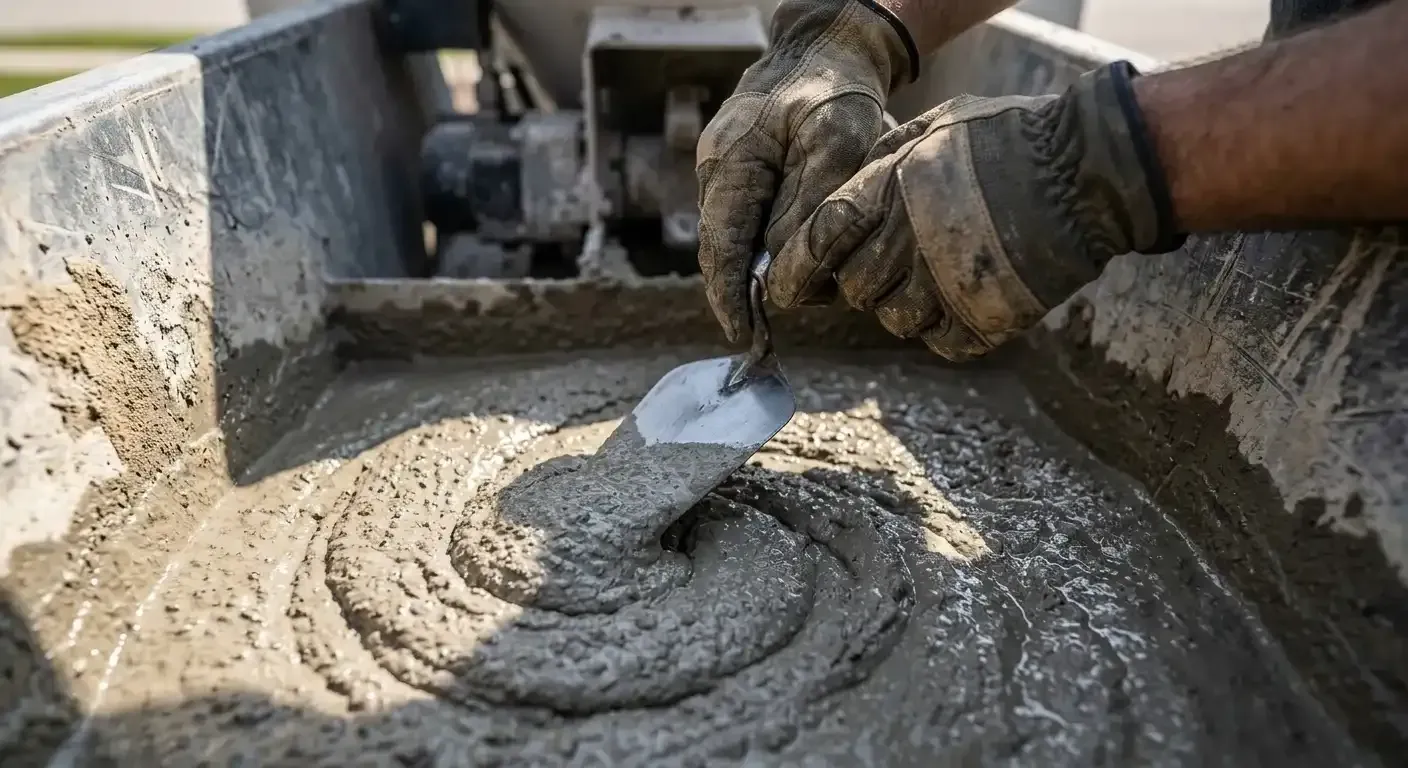
Mudjacking, also called slabjacking or concrete lifting, is a repair technique that raises settled concrete by pumping a slurry of water, soil, sand, and Portland cement through small holes drilled in the slab. As the slurry spreads beneath the concrete, it fills voids left behind by eroded or compressed soil. Once those gaps are full, continued pumping builds hydraulic pressure that lifts the slab, often within minutes.
Concrete does not sink because it fails. It sinks because the ground beneath it fails. Poorly compacted fill, washout from plumbing leaks or poor drainage, and shrinking clay soil during drought all create empty space under a slab. Gravity does the rest. Mudjacking attacks the actual problem by refilling that lost support and restoring the slab to grade.
The technique has been used since the early twentieth century, originally on highways and later on residential concrete. Its long track record is part of its appeal: contractors understand how the material behaves, the equipment is proven, and the results are predictable when the work is done by an experienced crew.
How the Mudjacking Process Works
A professional mudjacking job follows a consistent sequence from inspection to cleanup. Here is what happens on a typical residential project.
1. Inspection and Measurement
The crew inspects the slab, measures how far each section has settled, and checks for problems that would rule the method out, such as severe cracking, crumbling concrete, or active plumbing leaks that would keep washing soil away after the lift. They also identify where voids are likely to sit so injection holes can be placed for even lifting.
2. Drilling Injection Holes
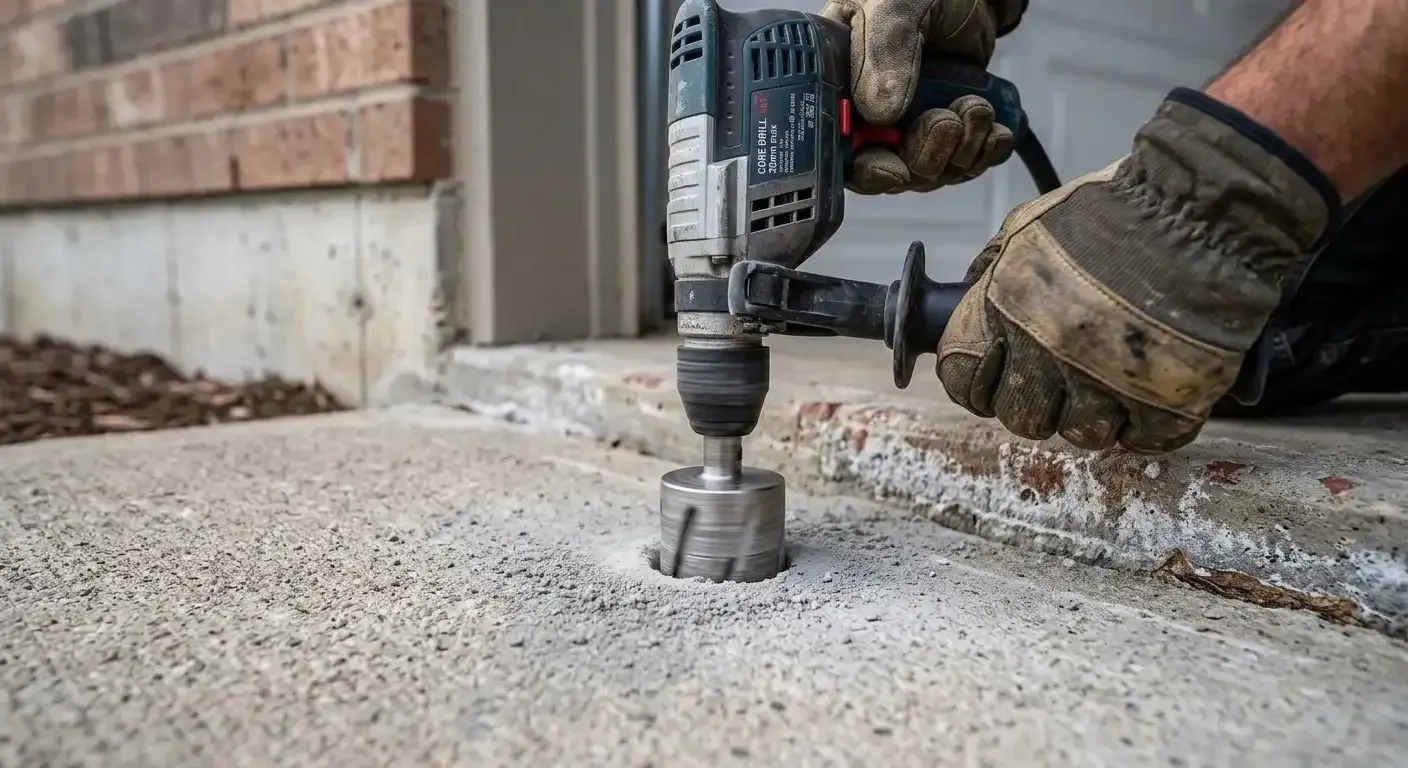
Holes roughly one to two inches in diameter are drilled through the slab in a strategic pattern. A small patio may need only a few holes, while a long driveway may need a dozen or more. Hole placement matters because the slurry must spread evenly; lifting one corner too fast can crack the slab.
3. Pumping the Slurry
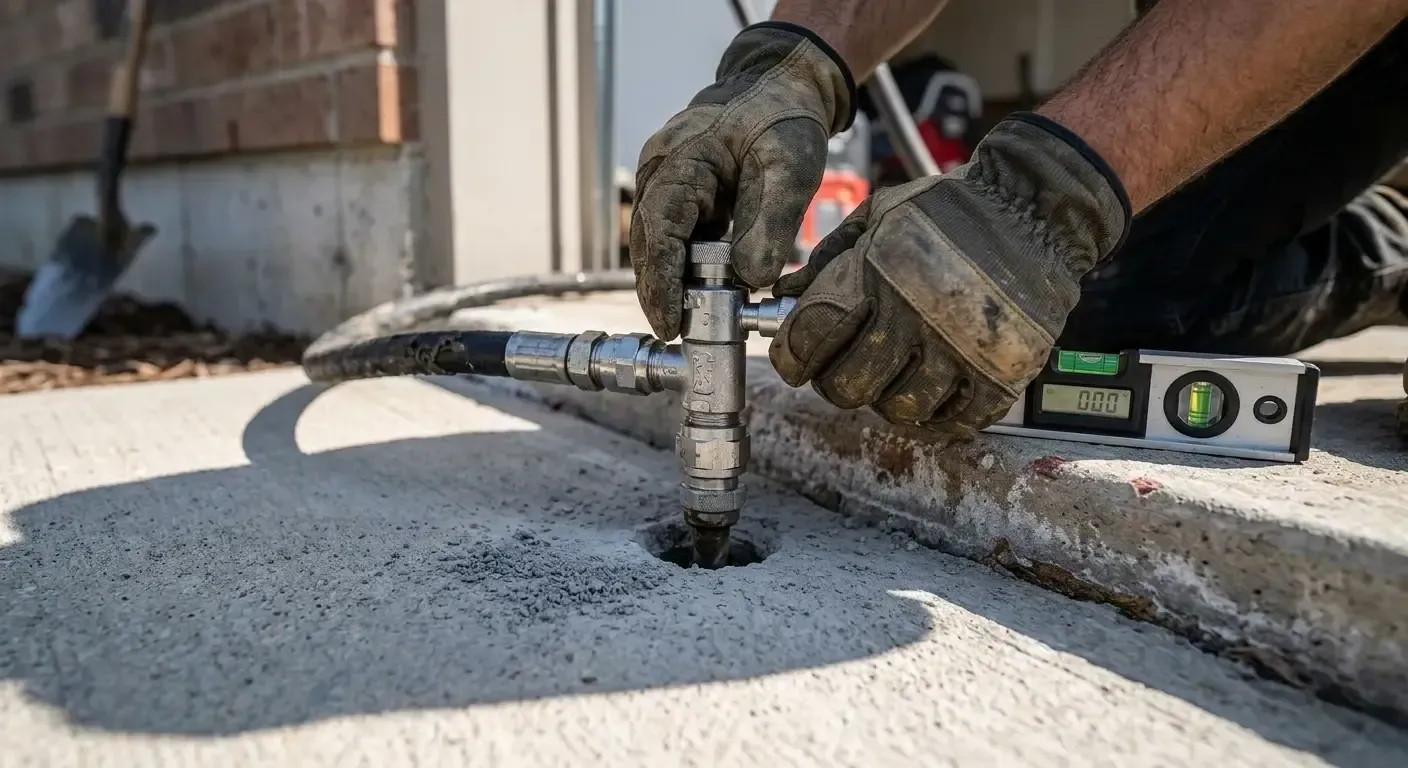
A hose connected to a pump delivers the slurry through each hole. The material flows into the voids first, and once the space below is packed, pressure begins raising the concrete. The crew monitors the lift constantly, moving between holes and checking elevations with a level or laser until the slab sits flush with the surrounding surfaces.
4. Patching and Cleanup
The injection holes are filled with fresh concrete and troweled smooth. The patches remain visible up close, but they blend in as they weather. Light foot traffic is usually fine within hours, and most slabs can handle vehicle weight within 24 to 72 hours as the slurry cures.
What Can Mudjacking Fix?
The method is best suited to non-structural slabs that have settled but remain in sound condition. Common applications include:
- Driveways that have sunk at the street or garage transition
- Sidewalks and walkways with trip hazards between sections
- Patios and pool decks sloping toward the home
- Garage floors that have dropped or tilted
- Porch and stoop slabs pulling away from the entry
- Concrete steps that have settled out of level
For slabs like these, mudjacking is typically completed in a few hours and costs far less than demolition and replacement. If you are dealing with settled exterior concrete around your home, our
concrete leveling services restore sunken driveways, walkways, and patios using the lifting method best matched to the slab and the soil beneath it.
It is important to understand the limits, too. This is a solution for settled concrete, not for a failing house foundation. If your foundation slab itself is sinking, if walls are cracking, or if doors and windows are sticking throughout the home, the correct repair usually involves foundation piers driven to stable soil rather than surface lifting. A reputable contractor will tell you which situation you have before any work is scheduled.
Mudjacking vs Polyjacking: What Is the Difference?
Polyjacking, also called polyurethane foam lifting, is the modern alternative, and homeowners researching concrete lifting will run into both terms. The two methods share the same goal but differ in material and execution.
Material. The traditional method pumps a heavy cement-based slurry that weighs roughly 100 pounds or more per cubic foot. Polyjacking injects a two-part polyurethane foam that expands underneath the slab and weighs only a few pounds per cubic foot, adding almost no load to weak soil.
Hole size. Slurry injection requires holes of one to two inches, while foam needs penny-sized holes around five-eighths of an inch, which makes for less visible patching.
Cure time. Foam hardens within about 15 to 30 minutes, so slabs can carry traffic almost immediately. Slurry can take one to three days to fully cure.
Cost. The slurry method is usually the cheaper option per project, which is a major reason it remains popular. Foam lifting generally costs more but lasts longer in soils prone to washout because the cured foam is waterproof and does not erode.
Weight and longevity. The main criticism of the traditional method is that the slurry is heavy, and on soil that is already weak, that added weight can contribute to future settling. Foam avoids this problem, which is why many contractors now recommend it for slabs over poorly draining or unstable ground. That said, on stable soil with a one-time settling event, a properly executed slurry lift can perform well for many years at a lower price.
There is no universal winner. The right choice depends on the soil, the slab, your budget, and how long you plan to stay in the home, which is exactly what an on-site evaluation should determine.
How Much Does Mudjacking Cost?
Most homeowners pay between $3 and $8 per square foot, with typical residential projects landing between $600 and $1,800 depending on slab size, how far it has settled, and how many voids need filling. Compare that with full concrete replacement, which often runs $8 to $20 or more per square foot once demolition, hauling, forming, and finishing are included, and the appeal is obvious: lifting a slab commonly saves 50 to 75 percent versus pouring new concrete.
Several factors move the price up or down: the volume of slurry required, access for the pump truck, the number of slab sections involved, and local labor rates. Because pricing depends so heavily on what is happening under the concrete, a free on-site inspection with a written estimate is the only reliable way to know your actual cost.
How Long Does Mudjacking Last?
A well-executed lift on stable soil typically lasts 5 to 10 years, and many slabs stay level far longer. The honest answer, though, is that longevity depends on why the slab sank in the first place. If the settling was caused by ongoing drainage problems, leaking gutters, or plumbing washout, the new slurry can erode just as the original soil did, and the slab will settle again. Fixing the water problem, through proper grading, downspout extensions, or drainage correction, is what protects the repair and delivers the longest service life.
Is Mudjacking Right for Houston-Area Homes?
Soil is the deciding factor in Southeast Texas. The Houston region sits on expansive clay that swells during wet months and shrinks hard during summer drought, and that seasonal movement is the leading cause of settled driveways, walkways, and patios here. Heavy gulf storms add washout and erosion on top of the clay cycle.
That combination means slab settling in this region needs a proper diagnosis rather than a one-size-fits-all fix. Some slabs are excellent candidates for a slurry lift, while others over saturated or highly active clay do better with polyurethane foam or, when the home’s foundation itself is moving, with pier-based stabilization. Our team provides
foundation repair in Houston, TX with free inspections, so you get a straight answer about which repair actually fits your soil and your slab before you spend a dollar.
Get a Straight Answer About Your Sunken Concrete
Settled concrete never improves on its own. Trip hazards grow, water pools against the house, and small voids become big ones, so the earlier a slab is lifted, the cheaper and simpler the repair tends to be. Whether your project calls for traditional slurry lifting, polyurethane foam, or a closer look at the foundation itself, Two Brothers Foundation Repair backs its work with more than 20 years of local experience, an A+ BBB rating, and a lifetime transferable warranty. Call 832-412-2791 or request your free inspection online, and get your concrete back on level ground.
Frequently Asked Questions
Is mudjacking a permanent fix?
No repair is truly permanent, but a quality lift on stable soil commonly lasts 5 to 10 years or more. Results last longest when the underlying cause of settling, usually water or poor drainage, is corrected at the same time.
Can mudjacking be done in cold or wet weather?
Work can proceed in most conditions, but heavy rain or saturated ground can delay a project because soggy soil will not hold the lifted slab reliably. In the Houston area, crews schedule around major storm events rather than seasons.
Will mudjacking crack my concrete?
When performed correctly, no. Crews lift slabs gradually and evenly to avoid stress. Slabs that are already severely cracked or crumbling, however, may not be good candidates and could break during lifting, which is why an inspection comes first.
How soon can I use my driveway after the repair?
Foot traffic is usually fine within a few hours. Most contractors recommend keeping vehicles off the slab for 24 to 72 hours while the slurry cures and reaches full strength.
Does mudjacking work on a sinking house foundation?
No. It is designed for settled flatwork such as driveways, sidewalks, patios, and garage floors. A sinking foundation requires structural repair, typically pressed, steel, or helical piers installed to load-bearing soil.
How do I know if my slab needs lifting or replacement?
If the concrete is structurally sound and has simply settled, lifting is usually the smarter buy. If the slab is badly cracked, crumbling, or has failed in multiple sections, replacement is the better long-term investment. A free professional inspection will tell you which applies.