

Concrete Spalling: Causes, Repair, and Prevention Tips
Concrete spalling is what you are looking at when the surface of your driveway, patio, sidewalk, or foundation begins to flake, chip, or crumble away, exposing the rough aggregate underneath. It usually starts small: a patch that looks scaly, a corner that pops loose, a few shallow craters that resemble
pitting in concrete. Left alone, though, spalling rarely stays cosmetic. Each flake that breaks free exposes more of the slab to water and air, and the damage spreads deeper and wider until what began as a surface blemish becomes a structural repair. In this guide, we explain what causes concrete to spall, how to tell whether your damage is cosmetic or serious, the right way to repair it, and what you can do to keep it from coming back.
What Is Concrete Spalling?
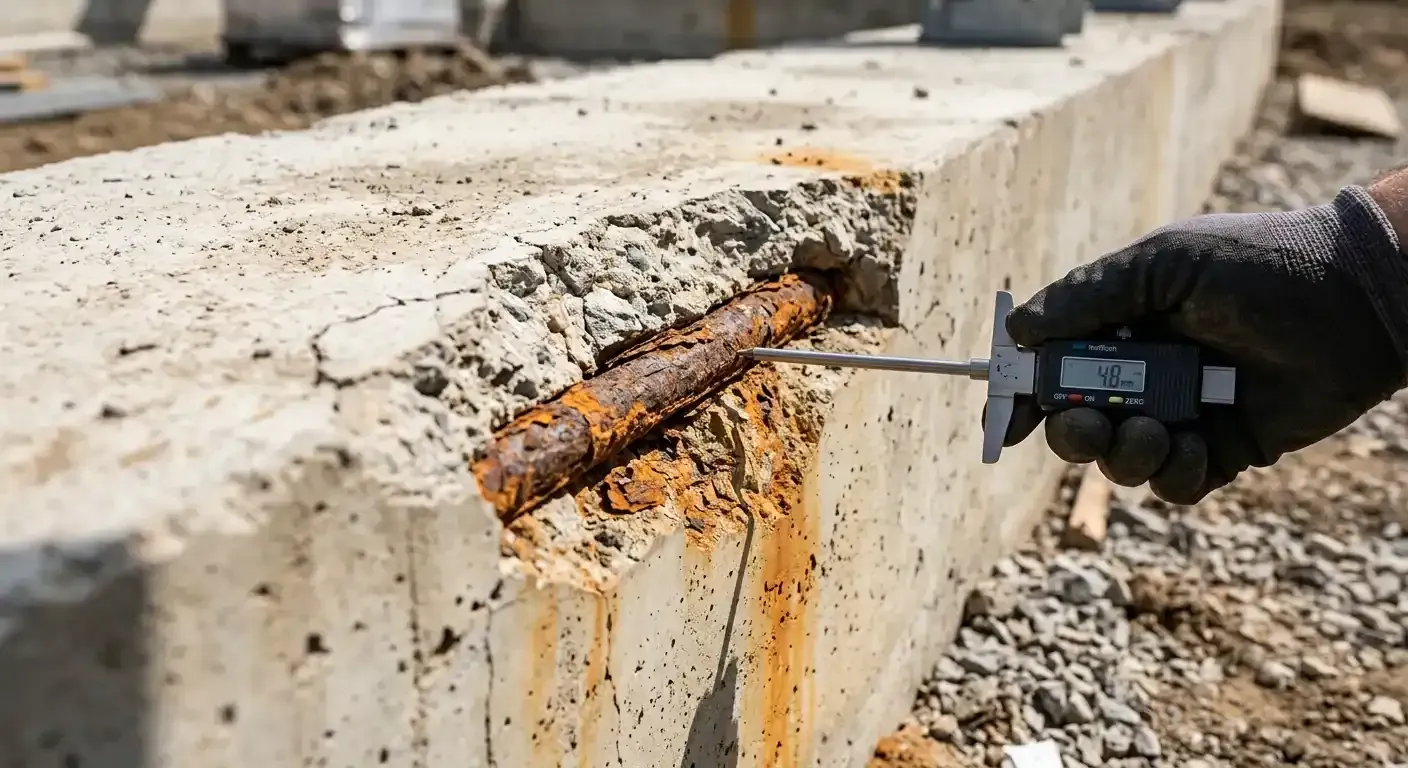
Concrete spalling is the breaking away of the surface layer of a slab, wall, or structural element. The damage can look like flaking, scaling, pitting, or chunks of concrete popping loose. Homeowners sometimes describe it as concrete that is peeling, blistering, or dusting away, but the mechanism underneath is the same, and so is the fix. In advanced cases, concrete spalling exposes the gravel aggregate or even the steel reinforcement inside the concrete.
Spalling happens when internal pressure inside the concrete exceeds the strength of the surface. That pressure can come from freezing water, corroding steel, trapped moisture, or chemical reactions within the slab itself. Because the trigger is internal, patching the surface without addressing the cause almost always leads to the same damage reappearing within a season or two.
You will see spalling most often on driveways, sidewalks, patios, pool decks, garage floors, foundation walls, and the edges of steps, anywhere concrete takes weather, water, and wear at the same time.
What Causes Concrete Spalling?
Spalling has several common causes, and identifying the right one is the first step toward a repair that actually lasts.
Freeze-Thaw Cycles
Concrete is porous, and water works its way into those pores. When temperatures drop below freezing, that water expands by roughly nine percent, pushing outward against the surrounding concrete. Repeated freeze and thaw cycles fatigue the surface until it flakes apart. This is the leading cause in cold climates, and it is made dramatically worse by deicing salts, which allow more freeze-thaw cycles and draw additional moisture into the slab.
Corroding Rebar or Wire Mesh
Most slabs and foundation elements contain steel reinforcement. When water and salts reach that steel, it rusts, and rust occupies up to several times the volume of the original metal. The expanding steel pushes the concrete above it outward until it cracks and breaks free. Rebar-related damage is the most serious form of spalling because it means the reinforcement that gives the concrete its strength is actively deteriorating.
Poor Mix, Finishing, or Curing
Concrete spalling is often built into the slab on the day it is poured. Too much water in the mix weakens the surface. Overworking the finish draws excess water and fine cement to the top, creating a fragile skin. Pouring in hot, dry, or windy conditions without proper curing lets the surface dry too fast and shrink before it gains strength. Slabs with these defects can begin scaling within their first year or two.
Chemical Exposure and Alkali-Silica Reaction
Deicing salts, fertilizers, pool chemicals, and other compounds attack the cement paste that binds concrete together. In some slabs, a slow chemical reaction between the cement and certain aggregates, known as alkali-silica reaction, forms a gel that swells with moisture and fractures the concrete from within.
Constant Moisture Exposure
Slabs that stay wet, because of poor drainage, pooling water, sprinkler overspray, or a high water table, absorb moisture continuously. That saturation feeds every other cause on this list, from freeze-thaw damage to rebar corrosion, which is why spalling so often shows up in the dampest corner of a driveway or the lowest edge of a patio first.
Is Spalling Serious? Cosmetic vs. Structural Damage
Not all spalling threatens your concrete. The difference comes down to depth and what is exposed.
Shallow surface scaling, less than about a quarter inch deep with no visible steel, is mostly a cosmetic and durability problem. It looks bad and it will spread, but the slab is not in immediate danger. Caught at this stage, repair is simple and affordable.
Timing matters more with concrete spalling than with many other concrete defects because the damage feeds on itself. Deep spalling that exposes aggregate across large areas, follows cracks, or reveals rusting rebar is a structural concern. Exposed steel corrodes faster, corroding steel breaks more concrete loose, and the cycle accelerates. On foundation walls, columns, or elevated slabs, advanced spalling can genuinely compromise load-bearing capacity and should be evaluated by a professional promptly.
A good rule of thumb: if you can see steel, if chunks larger than your palm are breaking loose, or if the damage sits on a foundation element rather than flatwork, stop patching and get an inspection.
How to Repair Spalled Concrete
The right repair depends on how deep the damage goes and what caused it.
Surface Repairs for Minor Spalling
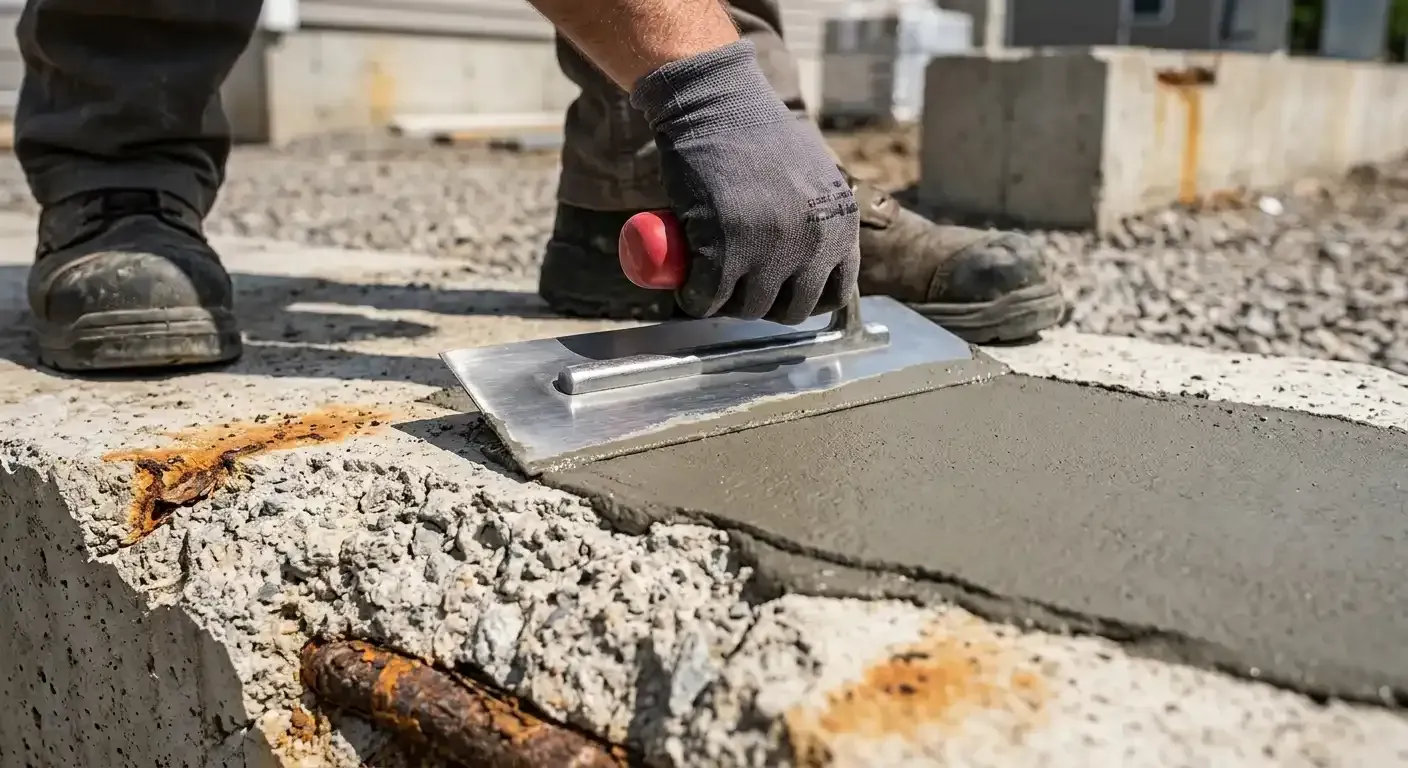
For shallow scaling and flaking, the process is straightforward: remove all loose and weakened material by chipping and wire brushing, clean the area thoroughly, apply a bonding agent, and trowel on a polymer-modified resurfacing compound or repair mortar. Feathering the patch and sealing the entire slab afterward gives the most uniform, durable result. For very shallow but widespread scaling, a full resurfacing overlay often looks better than a patchwork of individual repairs. Standard concrete alone does not bond well in thin layers, which is why purpose-made resurfacers outperform a bag of ready-mix for this job.
Partial-Depth and Full-Depth Repairs
When spalling extends deeper than about a third of the slab thickness, or when it has followed cracks through the concrete, sound repair means cutting out the damaged section to solid material and rebuilding it, not skimming over it. If rebar is exposed, the steel must be cleaned of rust, treated with a corrosion-inhibiting coating, and then encased in fresh repair material. Skipping the steel treatment guarantees the spall returns.
When Replacement or Professional Repair Makes Sense
If more than a third of a slab’s surface is spalled, if the damage is deep and widespread, or if the slab has also cracked or settled, replacement or professional restoration is usually the better investment than chasing patches. Spalled, cracked, or sunken driveways are one of the most common versions of this problem, and our driveway repair services handle everything from crack and surface repairs to leveling and full replacement, so the fix matches the actual condition of the concrete instead of just covering it.
Spalling on foundation walls and grade beams deserves special attention. Because the exposed concrete protects the steel that carries your home’s structural loads, foundation spalling should be assessed and repaired by a foundation professional rather than treated as a DIY patch job.
How to Prevent Concrete Spalling
Preventing concrete spalling is far cheaper than repairing it, and most prevention comes down to keeping water out of the slab:
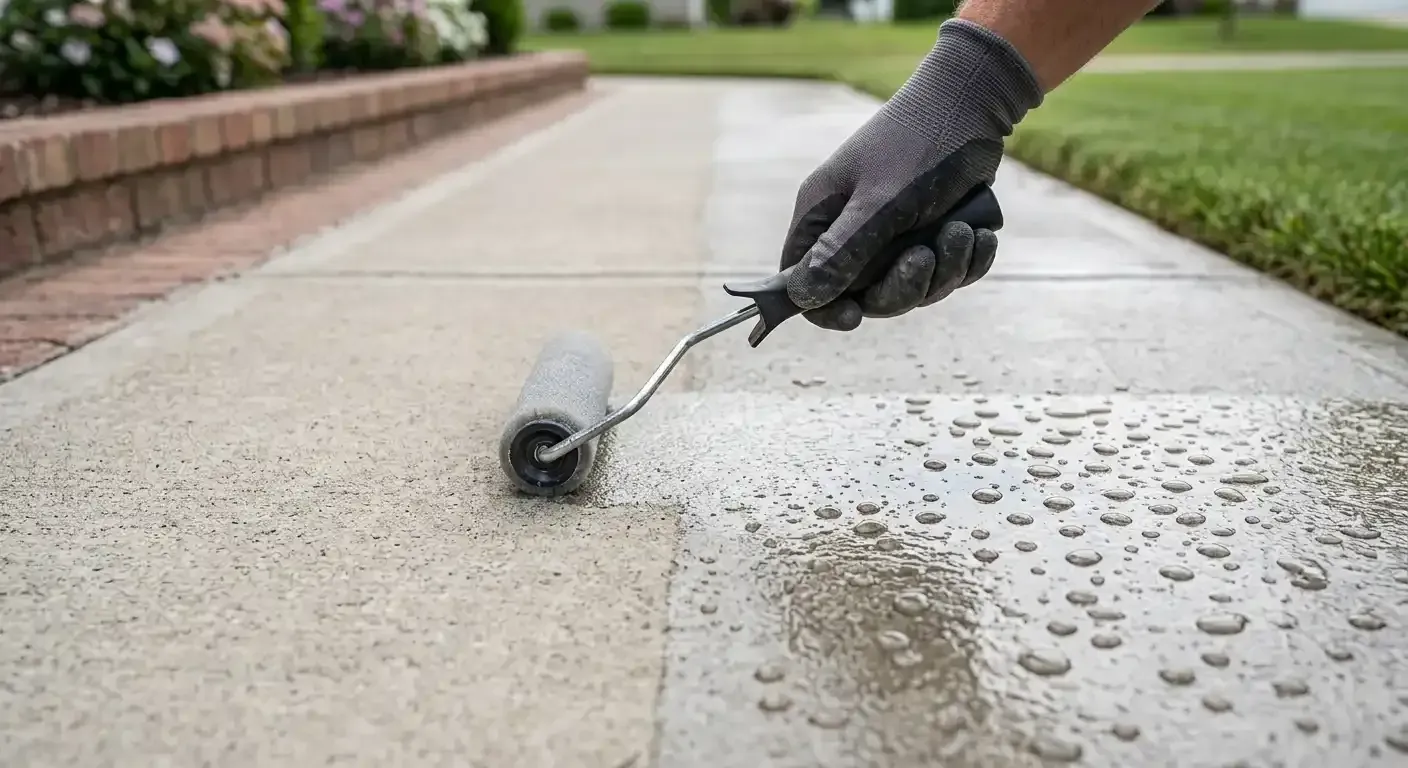
- Seal your concrete with a penetrating water-repellent sealer every few years
- Fix drainage so water does not pool on or beside slabs
- Redirect downspouts and sprinklers away from concrete surfaces
- Avoid deicing salts, especially on concrete less than a year old
- Fill cracks promptly so water cannot reach the interior or the steel
- Insist on a proper mix, finish, and cure on any new concrete you pour
None of these steps is expensive, and together they can add decades to the life of a slab.
Concrete Spalling in the Houston Area
Houston concrete does not face hard freezes often, but concrete spalling is still common here, and the occasional hard freeze that does arrive catches slabs that were never built for it. The bigger local drivers are constant humidity, heavy gulf rains that keep slabs saturated, salty coastal air that accelerates rebar corrosion, and expansive clay soil that flexes slabs seasonally and opens the small cracks that let water in. Add intense summer heat, which stresses surfaces poured or cured poorly, and the region produces plenty of flaking driveways and crumbling patio edges. Our team provides
foundation repair in Houston, TX with free inspections, so if your spalling sits on a foundation wall, a grade beam, or a slab that is also cracking or settling, you can find out exactly what is happening before the damage compounds.
Do Not Let Surface Damage Become a Structural Problem
Concrete spalling is one of the few concrete problems that reliably announces itself early. The flaking you see today is the concrete telling you that water, salt, or steel corrosion is at work underneath, and every season of waiting makes the eventual repair bigger. Whether you need a surface restored, a spalled section rebuilt, or a professional opinion on damage near your foundation, Two Brothers Foundation Repair brings more than 20 years of Houston-area experience, an A+ BBB rating, and a lifetime transferable warranty to every job. Call 832-412-2791 or request your free inspection online before a cosmetic flaw becomes a structural one.
Frequently Asked Questions
Can I just paint or seal over spalled concrete?
No. Paint and sealers applied over loose, flaking material will peel away with it, and sealing trapped moisture inside the slab can make the damage worse. All unsound concrete must be removed and the surface repaired before any coating goes on.
Does concrete spalling mean my concrete was poorly made?
Sometimes, but not always. Poor mixing, finishing, or curing causes early spalling, yet even well-made concrete will spall after years of water intrusion, salt exposure, or rebar corrosion. The age and pattern of the damage usually reveal the cause.
How much does it cost to repair spalled concrete?
Minor surface repairs and resurfacing are relatively inexpensive, often a few hundred dollars for a typical residential area. Deep repairs involving rebar treatment or section replacement cost more, and full slab replacement is the most expensive path. An on-site inspection is the only way to price it accurately.
Will spalling spread if I ignore it?
Yes. Every flake that breaks away exposes fresh concrete and, eventually, steel to water and air. Spalling almost always grows deeper and wider over time, which is why early repair is consistently the cheapest repair.
Is spalling on a foundation wall an emergency?
It is not usually an overnight emergency, but it should not wait either. Foundation spalling can expose the reinforcing steel that supports the structure, and corroding steel accelerates the damage. Have it professionally evaluated promptly, especially if the spalled areas are growing or paired with cracks.
What is the difference between spalling and pitting?
Pitting refers to small, shallow craters in the surface, while spalling describes larger flakes, sheets, or chunks breaking away, often deep enough to expose aggregate or steel. Pitting is frequently an early stage of the same moisture-driven deterioration that leads to spalling.