

Carbon Fiber Strips for Basement Walls: A Full Guide
Carbon fiber strips for basement walls have quickly become one of the most trusted ways to stabilize a cracked or bowing foundation wall without the mess, cost, and disruption of older methods. If you've noticed a horizontal crack creeping across your basement wall or a wall that looks like it's leaning inward, you're likely dealing with pressure from the soil outside, and this modern repair is often the answer. Before diving into how it works, it helps to understand the warning signs of bowing walls in your house so you can catch the problem while this repair is still an option.
In this guide, we cover what these strips are, how they work, when they're the right fix, what they cost, and how they compare to steel, so you can make a confident decision about your home.

What Are Carbon Fiber Strips for Basement Walls?
Carbon fiber is a high-strength material woven from thousands of thin carbon strands. Pound for pound, it is stronger than steel, it does not stretch, and it does not rust or corrode. When formed into flat reinforcing strips and bonded to a foundation wall with industrial epoxy, it creates a rigid, permanent brace that stops a wall from moving any further inward.
That's the core idea behind carbon fiber strips for basement walls: instead of propping the wall with bulky vertical beams, you laminate an unbreakable, non-stretching material directly onto the concrete. The strip and the wall become a single structural unit. Because the same material is used in aircraft, race cars, and aerospace components, it brings serious engineering strength to a repair that sits nearly flush against your basement wall.
Why Basement Walls Crack and Bow
To understand why carbon fiber strips for basement walls work so well, it helps to know what causes the damage in the first place. The usual culprit is hydrostatic pressure, the force of water-saturated soil pushing against the outside of your foundation. When soil around the home absorbs heavy rain or snowmelt, it expands and presses inward. Expansive clay soils are especially aggressive because they swell dramatically when wet.
Over time, that constant lateral pressure causes the wall to crack and slowly bow inward. In poured concrete walls, you'll typically see a horizontal crack across the middle. In concrete block walls, the crack often follows a stair-step pattern along the mortar joints. Left unaddressed, a bowing wall keeps moving, and the further it moves, the more expensive the fix becomes.
How Carbon Fiber Strips Are Installed
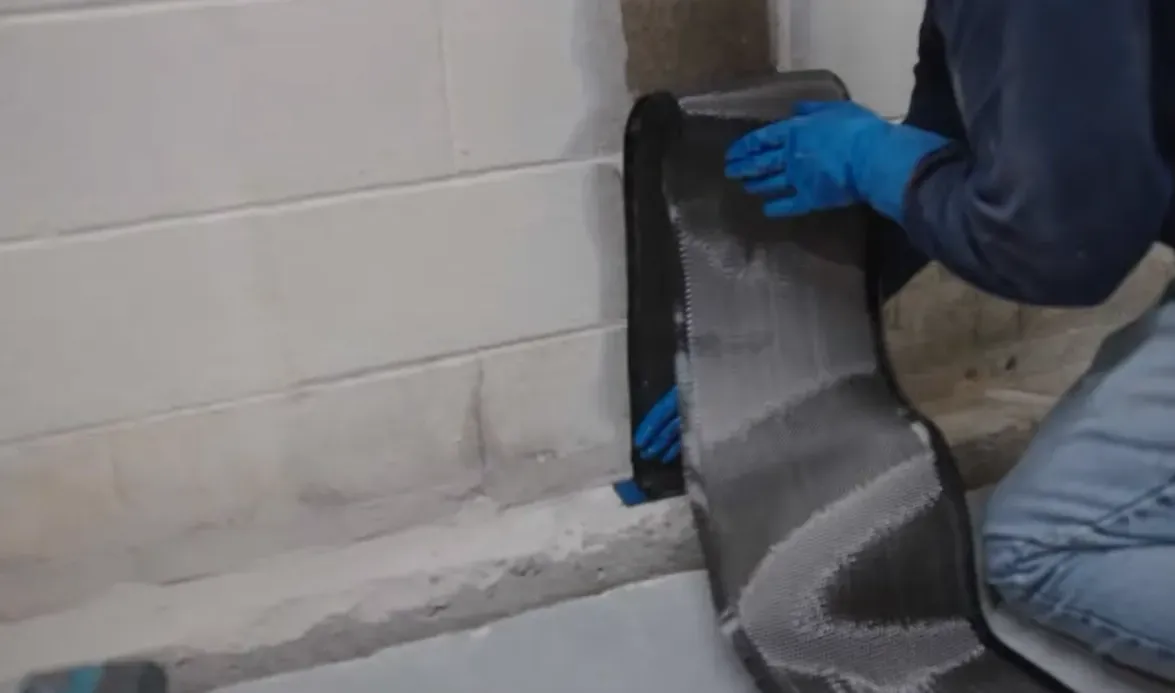
One of the biggest advantages of carbon fiber strips for basement walls is how clean and fast the installation is. The process is straightforward for a trained crew. First, the section of wall where each strip will go is ground smooth so the epoxy can bond directly to the concrete. Next, a bed of high-strength epoxy is applied, and the strip is pressed firmly into it so the resin penetrates the weave and locks the strip to the wall in thousands of tiny points.
The top and bottom of each strip are the critical anchor points. The top is secured to the rim joist or floor framing to stop the top of the wall from sliding inward, while the bottom is anchored to the basement floor slab to prevent shifting or shearing at the base. Once these anchors are set and the epoxy cures, the wall is locked in place. Most whole-wall projects can be completed in a day or two, with only minimal dust and no exterior excavation.
If your wall is also letting in water, a professional may recommend pairing the strips with drainage. Coordinating structural and water solutions through a single
basement foundation repair plan means the crew relieves the hydrostatic pressure and stabilizes the wall in one coordinated project rather than treating each issue separately.
When Carbon Fiber Is the Right Choice
Carbon fiber strips for basement walls are ideal for walls that are cracked or bowing but haven't moved too far. As a general rule, if a wall has deflected inward roughly two inches or less, carbon fiber is usually an excellent, cost-effective fix. Within that range, the strips reinforce the wall and stop further movement reliably.
It's important to set expectations correctly: carbon fiber secures a wall and prevents further bowing, but it does not push the wall back to its original position. If you want the wall straightened, that requires excavation to relieve the outside pressure before the wall is braced. For walls that have moved more than about two inches, or that are actively failing, heavier solutions such as wall anchors, tiebacks, or steel beams may be required instead.
Material also matters. Carbon fiber strips for basement walls work on poured concrete and concrete block foundations. If your foundation is brick or stone, a different approach is needed, so an honest professional evaluation is always the right first step.
What Do Carbon Fiber Strips Cost?
Cost is one of the most common questions, and the good news is that carbon fiber is typically the most affordable structural repair for a bowing wall. Industry pricing generally runs around $725 to $800 per strip installed. A typical basement wall might need one strip every four feet, so a 24-foot wall could require roughly five strips, putting a common project in the range of about $3,600 to $4,000.
The exact figure depends on the length and height of the wall, how many strips the engineering calls for, the spacing between them, and whether any additional work, such as waterproofing or crack sealing, is included. Compared with the alternatives, this is where carbon fiber strips for basement walls really shine: they often cost roughly half of what a comparable steel I-beam repair would run, and they avoid the
far higher expense that comes with waiting until anchors or excavation become necessary.
Carbon Fiber vs. Steel Beams
For decades, the standard fix for a bowing wall was a row of vertical steel I-beams anchored to the floor and the joists above. Steel still has its place, especially for severe wall movement, but for qualifying walls, carbon fiber strips for basement walls offer several clear advantages.
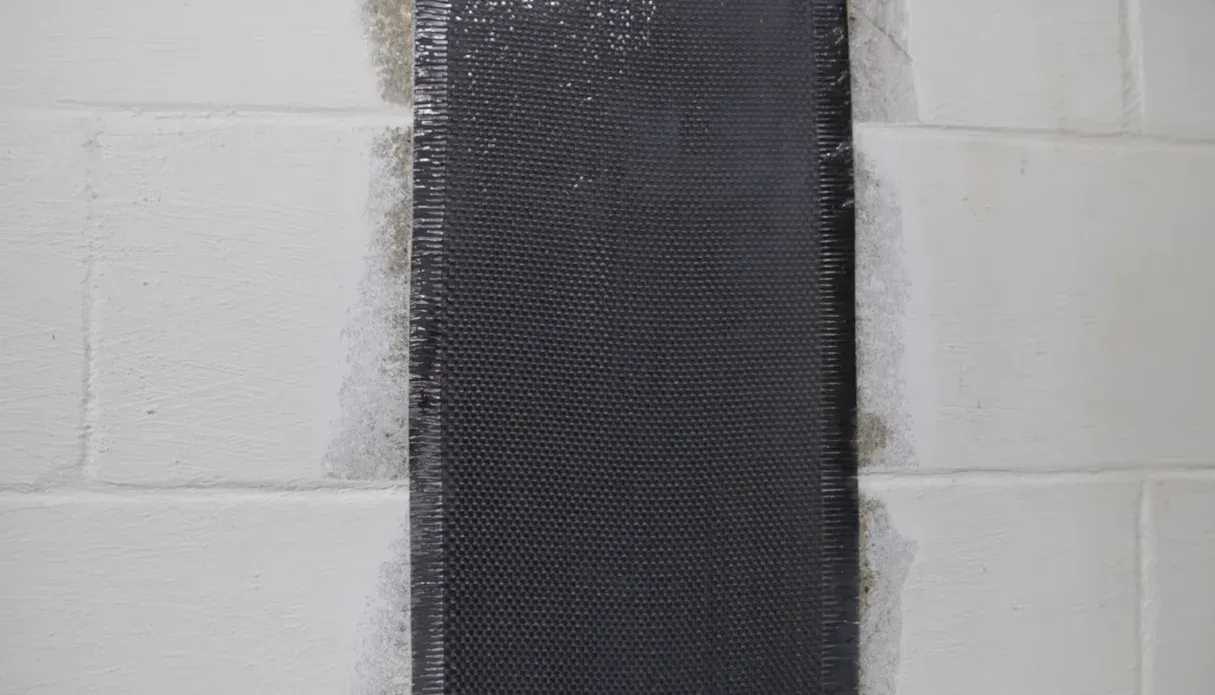
Steel beams are bulky and protrude several inches into the room, which eats up space and complicates finishing a basement. Carbon fiber strips sit nearly flush against the wall, adding only a fraction of an inch, and they can be painted over or hidden behind a finished stud wall so they nearly disappear. Steel can also rust over time, while carbon fiber never corrodes and requires no maintenance once installed. Add in the faster installation and lower cost, and it's easy to see why carbon fiber has become the go-to choice for most homeowners whose walls fall within the appropriate range. For qualifying walls, it delivers comparable holding power to steel while keeping the basement usable, cleaner, and easier to finish later on.
The Pros and Cons at a Glance
The strengths of carbon fiber strips for basement walls are substantial: exceptional strength, a permanent bond, no corrosion, no maintenance, minimal visual impact, quick installation, no exterior digging, and a lower price than steel. Many quality installations also come backed by long-term or lifetime warranties, which speaks to how dependable the repair is. A transferable warranty can also be a selling point later, reassuring future buyers and home inspectors that the foundation has been professionally stabilized and is no longer at risk of moving.
The main limitation is the movement threshold. Because the strips stabilize rather than straighten, they aren't suited to walls that have already bowed severely. This is exactly why early action pays off. The sooner you address a cracking or leaning wall, the more likely carbon fiber will be a viable, budget-friendly solution rather than a larger, costlier project down the road.
Do Carbon Fiber Strips Require Maintenance?
One of the quiet benefits of this repair is that once it's done, it's done. Unlike sump pumps or drainage systems that need periodic checks, carbon fiber requires no ongoing maintenance. The material will not rust, rot, stretch, or weaken with age, so there is nothing to service, tighten, or replace. It's still smart to keep an eye on the surrounding conditions, however. Because the strips address the wall itself and not the water pressure that caused the damage, managing moisture around your foundation, through good grading, working gutters, and extended downspouts, helps ensure the underlying pressure never builds back up against a neighboring section of wall. A quick annual glance at your basement walls for any new cracking is all the follow-up most homeowners will ever need.
Protect Your Foundation Before It Gets Worse
A cracked or bowing basement wall is a problem that only grows with time, and every additional fraction of an inch of movement narrows your options and raises your costs. Carbon fiber strips for basement walls give homeowners a proven, permanent, and surprisingly affordable way to stop that movement in its tracks, all with a clean, one-day installation that keeps your yard and your basement intact.
If you're seeing horizontal cracks, stair-step cracking, or a wall that looks like it's leaning inward, don't wait for the situation to worsen. The experienced team at Two Bros Foundation Repair can evaluate your walls, measure the movement, and recommend the right stabilization plan for your home. Reach out today to protect your foundation while carbon fiber is still the easy fix.
Frequently Asked Questions
What are carbon fiber strips for basement walls and how do they work?
Carbon fiber is a high strength material woven from thousands of thin carbon strands that, pound for pound, is stronger than steel and does not stretch, rust, or corrode. Formed into flat strips and bonded to a foundation wall with industrial epoxy, they create a rigid, permanent brace that stops the wall from moving further inward. The strip and the wall become a single structural unit, anchored at the top to the rim joist or floor framing and at the bottom to the floor slab so the wall cannot slide or shear.
When are carbon fiber strips the right choice?
They are ideal for walls that are cracked or bowing but have not moved too far. As a general rule, if a wall has deflected inward roughly two inches or less, carbon fiber is usually an excellent, cost effective fix that reliably stops further movement. They work on poured concrete and concrete block foundations, but not brick or stone. For walls that have moved more than about two inches or are actively failing, heavier solutions like wall anchors, tiebacks, or steel beams may be needed instead, which is why an honest professional evaluation comes first.
Do carbon fiber strips straighten a bowing wall?
No, and this is an important expectation to set. Carbon fiber secures a wall and prevents further bowing, but it does not push the wall back to its original position. If you want the wall actually straightened, that requires excavation to relieve the outside soil pressure before the wall is braced. Within the two inch movement range, most homeowners choose to stabilize the wall in place rather than take on the larger cost of straightening it.
How much do carbon fiber strips cost?
Carbon fiber is typically the most affordable structural repair for a bowing wall. Industry pricing generally runs around $725 to $800 per strip installed, and a typical wall needs one strip every four feet. That means a 24 foot wall of about five strips commonly falls in the range of roughly $3,600 to $4,000. The final figure depends on the wall's length and height, how many strips the engineering calls for, and whether extras like waterproofing or crack sealing are included. It often costs about half of a comparable steel I beam repair.
Carbon fiber vs steel beams: which is better?
For qualifying walls, carbon fiber offers several clear advantages. Steel beams are bulky and protrude several inches into the room, complicating a finished basement, and they can rust over time. Carbon fiber strips sit nearly flush against the wall, adding only a fraction of an inch, never corrode, and can be painted over or hidden behind a finished wall. Add faster installation and lower cost, and carbon fiber is the go to choice for walls within the appropriate range, while steel still has its place for severe movement.
Do carbon fiber strips require maintenance, and how long do they last?
Once installed, the repair is essentially permanent and maintenance free. The material will not rust, rot, stretch, or weaken with age, so there is nothing to service, tighten, or replace, and many quality installations come with long term or transferable warranties. It is still smart to manage moisture around the foundation with good grading, working gutters, and extended downspouts so pressure does not build against a neighboring section of wall. A quick annual glance at your basement walls for new cracking is all the follow up most homeowners need.
Do carbon fiber strips stop water leaks too?
No. Carbon fiber strips are a structural repair that stabilizes the wall, but they do not address the water pressure that caused the damage. If your wall is also letting in water, a professional may recommend pairing the strips with a drainage system so the crew relieves the hydrostatic pressure and stabilizes the wall in one coordinated
basement foundation repair plan. Two Brothers Foundation Repair can evaluate your walls, measure the movement, and recommend the right combination. Call (832) 412-2791 or
request an inspection.