

Best Concrete for Foundation Repair: Types, PSI, and How to Choose
Walk through enough homes and the same story shows up in different houses. Floors that slope, doors that stick, cracks creeping up the drywall. The damage looks similar, but the right fix almost never is. The real question is not just whether to patch the crack, it is what you patch it with. The best concrete for
foundation repair depends entirely on what your foundation is doing, which part is failing, how much load it carries, and what the soil underneath is up to. Use the wrong mix and the repair fails in a season. Use the right one and it outlasts the rest of the house. If your home is already settling and you are weighing the
cost to fix a sinking foundation, understanding concrete is the first step to spending that money wisely.

Why Concrete Type Matters in Foundation Repair
Most foundation repairs fail for one reason: someone used a single generic mix where the job needed something stronger, more flexible, or more water resistant. Concrete is not one product. The blend of cement, aggregate, water, and additives changes how it cures, how much weight it holds, how it bonds to old concrete, and how it reacts to a foundation that keeps moving.
Three factors decide which concrete is right:
- Compressive strength, measured in PSI, which is how much weight the concrete carries before it cracks.
- Soil and load conditions, since a deep footing under a two-story home needs a different mix than a hairline crack in a slab.
- Repair grade versus ready mix, because repair-grade products bond to old, cured concrete in ways a standard bag never will.
Match the concrete to the conditions and the repair holds. Miss on any one of these and you redo the work in two years.
Types of Concrete Used in Foundation Repair
Each concrete type is built for a different job. Here is how the main options compare and where each one performs best.
| Concrete Type | Best For | Key Trait | Common Uses |
|---|---|---|---|
| Hydraulic Cement | Active leaks | Sets underwater, expands to seal | Cold joints, basement walls |
| High-Strength Concrete | Heavy load areas | 3,500 PSI and up | Footings, structural slabs |
| Polymer-Modified Concrete | Surface repairs | Strong bond, flexible | Spalling, patches, thin layers |
| Epoxy Concrete | Structural cracks | Bonds stronger than the slab | Hairline and structural cracks |
| Rapid-Set Concrete | Fast turnaround | Hardens in minutes | Emergency and cold-weather fixes |
| Reinforced Concrete | Long-term support | Steel plus aggregate strength | Piers, beams, load areas |

Hydraulic Cement
Hydraulic cement sets even underwater and expands slightly as it hardens, creating a tight seal that blocks active leaks. That makes it a strong choice for foundation cracks where water is pushing through. It seals well but is not built to carry structural load on its own.
High-Strength Concrete
When a repair has to bear real weight, high-strength concrete is the answer. Anything rated at 3,500 PSI or higher resists movement and settling under heavy loads, which makes it the go-to for footings and structural slabs. The extra strength keeps the repair stable as the ground shifts around it.
Polymer-Modified Concrete
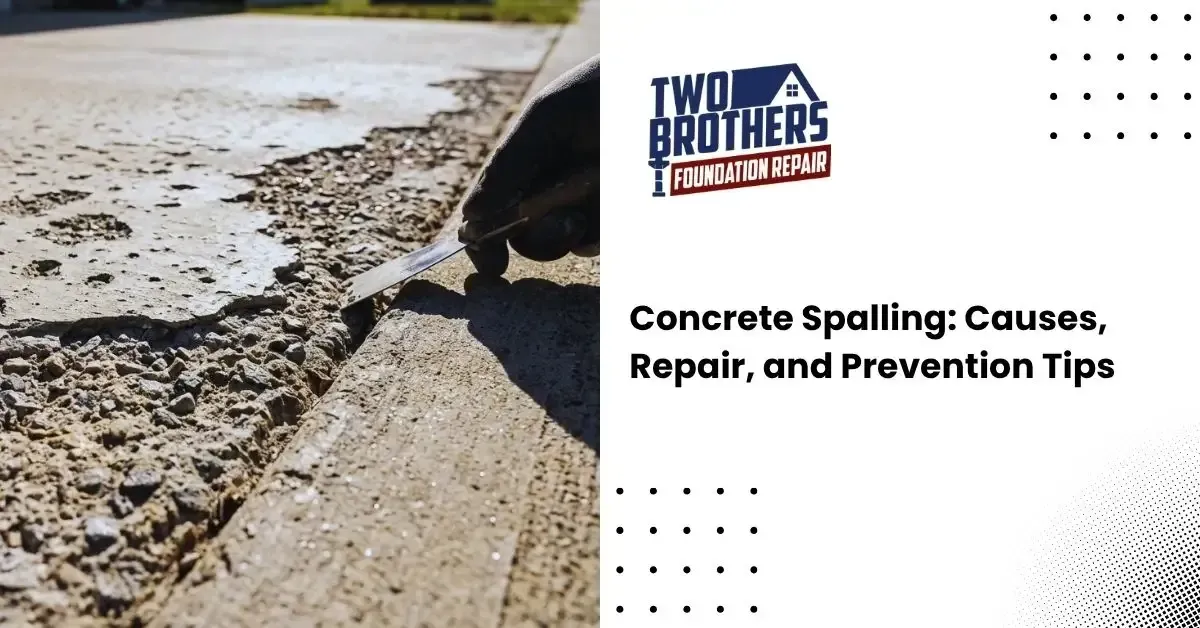
Polymer-modified concrete includes resins that grip old, cured concrete far better than standard mixes, and it stays flexible enough to handle surface movement without cracking. That makes it ideal for spalling, patches, and thin repair layers where bonding matters most.
Epoxy Concrete
For structural cracks, epoxy bonds tighter than almost anything else, and once cured it is stronger than the surrounding concrete. It is trusted for both hairline and structural crack repair where the bond has to hold under stress.
Rapid-Set Concrete
When a repair cannot wait, rapid-set concrete hardens in minutes instead of hours. It is the right call for emergency stabilization and cold or unpredictable weather, though it demands fast, careful work and proper curing so the speed does not cost you strength.
Reinforced Concrete
For heavy-duty or long-term repairs, reinforced concrete combines steel and a strong aggregate mix to carry serious load over time. It is what belongs under piers, beams, and the areas that hold the most weight.
Which Concrete to Use by Repair Type
The type of repair matters as much as the type of foundation. Here is how to match the material to the actual job.
| Repair Job | Best Material | Why It Works |
|---|---|---|
| Footings and load areas | High-strength or reinforced concrete (3,500 PSI plus) | Carries concentrated structural weight |
| Slab-on-grade repair | 3,500 to 4,000 PSI mix | Resists traffic, abrasion, and moisture |
| Structural cracks | Epoxy | Bonds stronger than the slab itself |
| Moving or leaking cracks | Polyurethane or hydraulic cement | Flexes with movement and seals water |
| Spalling and surface damage | Polymer-modified cement | Bonds thin and resists wear |
| Surface protection | Silicone or polyurethane sealant | Blocks moisture and chemicals long term |
A structural crack and a leaking crack look almost identical to a homeowner, but they call for opposite materials. Epoxy locks a structural crack rigid, while polyurethane stays flexible for a crack that still moves. Getting this distinction right is half the battle.
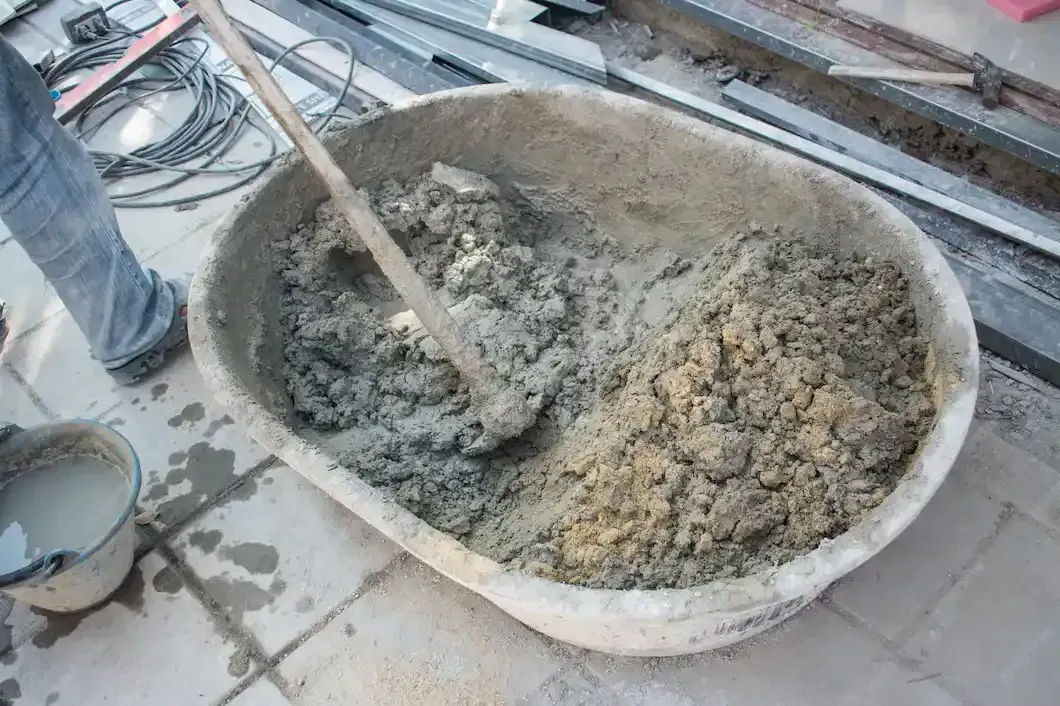
Concrete Mix Strengths and Ratios
Mix design and curing decide long-term strength, so the recipe matters as much as the material itself. Most foundation repairs fall in a predictable range once you know what each number means.
PSI Ratings
PSI measures how much pressure concrete takes before it cracks, and higher numbers mean tougher concrete.
- Most repair slabs and footings land in the 3,000 to 4,000 PSI range.
- Structural and load-bearing repairs usually call for 3,500 PSI or more.
- Light, non-structural patching can sit lower, but most foundation work needs that higher floor.
Mix Ratios
The ratio of cement, sand, and gravel controls how the concrete behaves as it sets.
- A 1:2:3 ratio (one part cement, two parts sand, three parts gravel) is the workhorse for footings and slabs.
- A 1:2:4 ratio cures to roughly 2,900 to 3,000 PSI at 28 days and suits lighter repairs.
- Heavier structural work shifts toward a richer 1:1.5:3 mix for added strength.
The Water-to-Cement Ratio
This is the single most overlooked factor in a repair, and it makes or breaks the result. The water-to-cement ratio is simply the weight of water divided by the weight of cement, and the ideal sits around 0.45 to 0.50. It is tempting on site to add extra water so the mix flows easier, but that water leaves behind tiny pores as the concrete cures, and the finished repair comes out weaker and more porous. Pushing the ratio too high can cut final strength dramatically, turning what should be a 3,500 PSI repair into something far weaker. Sticking to the specified ratio is non-negotiable if you want to hit your target strength.
Curing and Additives
Concrete reaches most of its strength over about 28 days, and keeping it damp during that window prevents the fast surface drying that causes shrinkage cracks. Additives let you tune the mix for conditions: accelerators speed setting in cold weather, retarders slow it in heat so it does not crack before it cures, water reducers raise strength without adding weakening water, and air-entraining agents create microscopic bubbles that protect against freeze-thaw damage.
Reinforcement: Rebar vs Fiber Mesh
Concrete is incredibly strong under compression but weak under tension, which is why reinforcement matters. Steel rebar is the structural backbone. It gives footings, walls, and load-bearing repairs the tensile strength to resist bending and prevent major cracks when the ground moves. Fiber mesh is different. Thousands of tiny fibers mixed into the concrete control the hairline shrinkage cracks that appear on slabs as they dry. They are not interchangeable. Rebar handles load, fiber mesh protects the surface, and many slab repairs use both.
How the Right Concrete Saves Your Repair
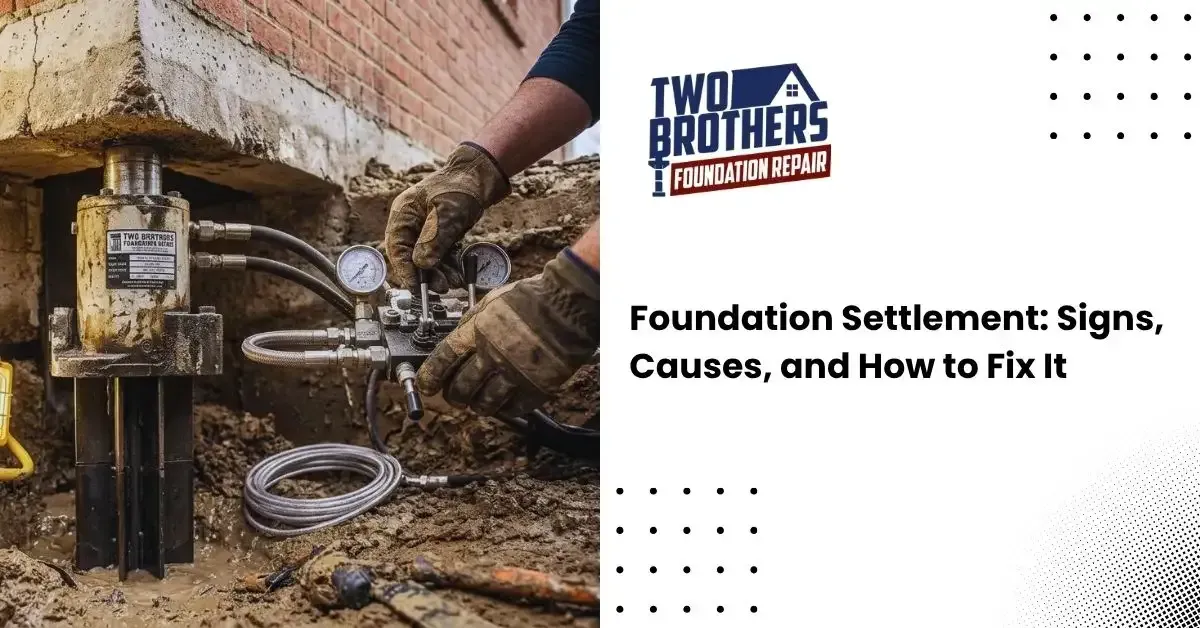
The best concrete in the world still fails if the underlying problem is ignored. A crack sealed with epoxy reopens if the soil under the slab keeps moving. A lasting fix pairs the correct material with the correct repair method, whether that means stabilizing the soil, adding piers, or relieving load on a failing section.
This is where professional concrete slab repair earns its value. A trained crew chooses the concrete for the actual conditions, preps and cleans the old surface so the new material bonds, places and consolidates it around the reinforcement, and addresses the movement that caused the damage in the first place. The concrete is one piece of the repair. Matching it to the cause is what makes the repair hold.
Choosing Concrete for Houston and Texas Soil
Building in Houston and across Texas adds a challenge most regions do not face. Large parts of the area sit on expansive clay that swells when wet and shrinks when dry, putting constant, uneven pressure on foundations. On top of that, sulfates present in some local soils can attack ordinary concrete and contribute to heaving over time. For repairs in these conditions, a higher-strength mix and, where soil tests call for it, sulfate-resistant concrete help the new work stand up to both the movement and the soil chemistry. This is exactly why a generic bag of concrete from the hardware store so often fails on a Texas foundation. The mix has to be matched to the ground it sits in.
Common Concrete Repair Mistakes to Avoid
Most failed repairs trace back to a handful of avoidable errors:
- Using one generic mix for every type of damage.
- Skipping surface prep, so the new concrete never bonds to the old.
- Adding extra water on site, which permanently weakens the cure.
- Rushing the curing window instead of keeping the concrete damp.
- Treating a moving crack like a static one, or sealing the crack while ignoring the soil that caused it.
Avoid these and even a modest repair holds up. Ignore them and the strongest concrete on the shelf still fails.
How Two Brothers Foundation Repair Gets the Mix Right
Not every repair calls for the same concrete, and that is the point. The right material depends on the crack, the load, and the soil conditions under your home. The team at Two Brothers Foundation Repair matches the concrete to each job, measures every ingredient instead of eyeballing the bag, holds the water-to-cement ratio where it belongs, preps and cleans the old surface for a strong bond, and cures the repair properly so it holds for years rather than months. The result is a fix built for your foundation, not a generic patch.
Final Thoughts
Choosing the best concrete for foundation repair comes down to matching the material to the problem and the place. Hydraulic cement seals active leaks, high-strength and reinforced concrete carry heavy loads, polymer-modified concrete grips surface repairs, epoxy locks down structural cracks, and rapid-set handles emergencies. Get the PSI, the mix ratio, and the water-to-cement balance right, reinforce it correctly, account for Texas soil, and fix the cause behind the crack, and your repair will outlast the rest of the house. When the damage is more than a surface patch, a professional crew with the right concrete and the right method is the safest investment you can make.
Frequently Asked Questions
What is the best concrete for foundation repair?
It depends on the damage. High-strength and reinforced concrete are best for load-bearing repairs, epoxy is best for structural cracks, hydraulic cement is best for active leaks, and polymer-modified concrete is best for surface patches.
What PSI concrete should I use for foundation repair?
Most foundation repairs use concrete in the 3,000 to 4,000 PSI range, with structural and load-bearing work calling for 3,500 PSI or more so the repair resists movement.
Can I use regular bagged concrete for a foundation repair?
For minor, non-structural patches, yes. For cracks and load-bearing areas, repair-grade mixes that bond to old, cured concrete are far more reliable, especially on expansive Texas soil.
How long does foundation repair concrete take to cure?
Concrete reaches most of its strength over about 28 days. Keeping it damp during curing prevents shrinkage cracks and helps it reach full strength.
Should I use epoxy or polyurethane for a foundation crack?
Use epoxy for a stable structural crack, since it bonds rigid and stronger than the slab. Use polyurethane for a crack that still moves or leaks water, since it stays flexible and seals.
Why does my foundation repair keep cracking?
Usually because the soil or load that caused the original damage was never addressed, the wrong material was used, or too much water weakened the mix. A lasting fix pairs the right concrete with the right repair method.